Kerbside EV Charging Fight: Who Gets Australia's Next Electrical Boom?
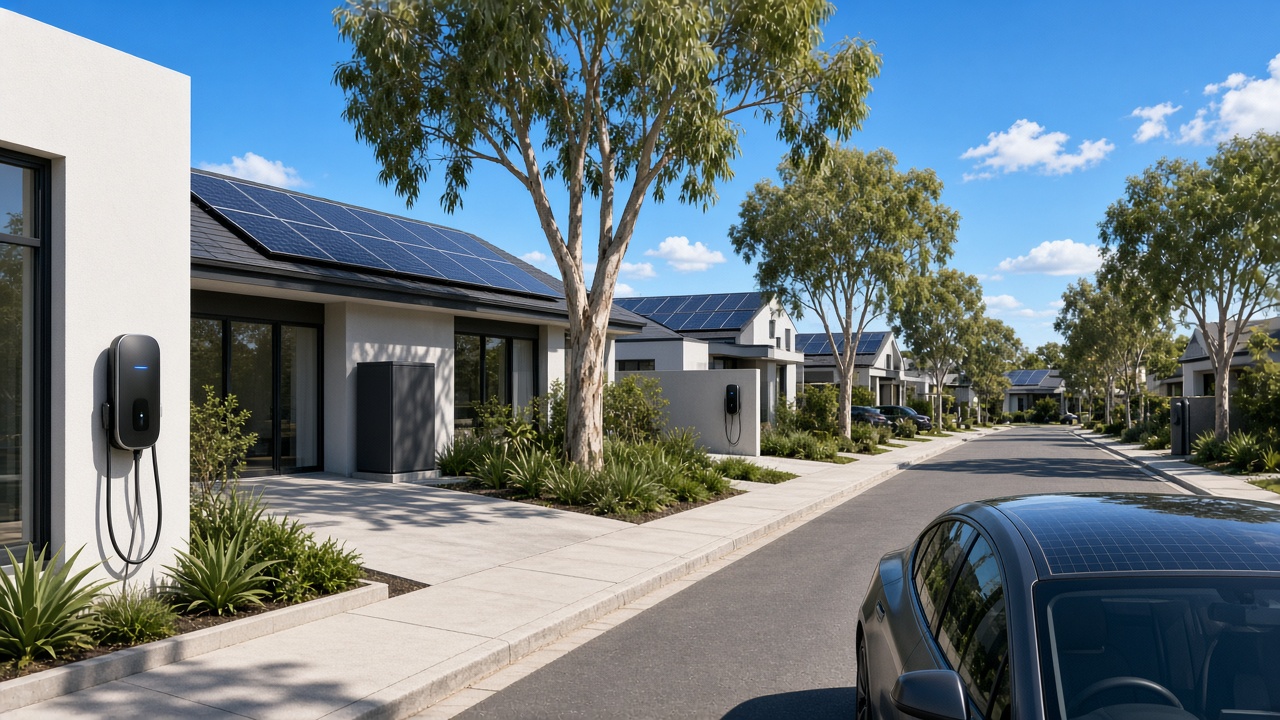
Batteries up 52%, rooftop solar up 35%, and a regulatory fight over who installs kerbside EV chargers. What it all means for Aussie sparkies in 2026.
There's a lot of good news in the Australian electrical industry right now, and one genuinely important fight that every sparky and contractor should be paying attention to. Let's start with the good news, because there's plenty of it.
The rooftop revolution has gone into overdrive
According to Clean Energy Council figures quoted by TAFE Queensland, 180,878 rooftop solar systems were installed in the first half of 2026, up 35% on the same period in 2025. Batteries did even better: 276,011 battery installations over the same period, up 52% on the previous six months.
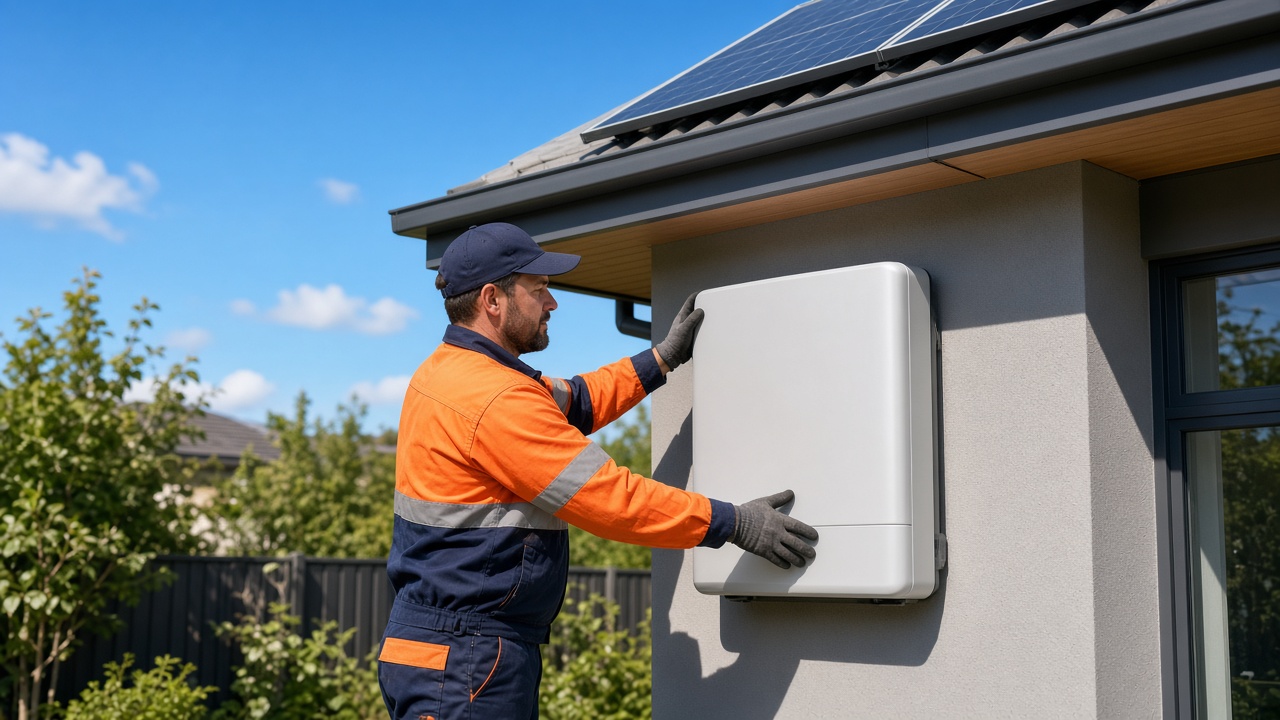
Read that again. Australians installed more batteries than solar systems in the first half of the year. That's a massive shift. Homes aren't just generating power any more; they're storing it, managing it and, increasingly, feeding it back intelligently into the grid. Every one of those installs needs a licensed electrician, and most of them involve switchboard work, metering and often an EV charger conversation too.
This is the kind of work I love seeing the trade own: high-tech, customer-facing, and directly tied to cheaper power bills.
Now the fight: who installs kerbside EV chargers?
Here's the issue. As Electrical Connection reported on 22 October, the Australian Energy Market Commission (AEMC) is considering a rule change request from Energy Networks Australia that would let distribution network service providers (DNSPs), the poles-and-wires monopolies, roll out kerbside EV charging infrastructure as a regulated service.
At the same time:
- The AEMC is running its Electricity Network Regulation Review, looking at which services should be regulated monopoly services and which should stay contestable.
- The Australian Energy Regulator is reviewing the ring-fencing guideline and shared asset guideline, the rules meant to stop network monopolies using their regulated position to gain an unfair advantage in competitive markets.
NECA's position, set out by Neil Roberts, is straightforward: "If a job can be done safely and effectively by the competitive market, it should not be handed to a monopoly network business and paid for through everyone's electricity bills." NECA says the industry needs "fair access, clear rules, faster connections and a level playing field."
Why this matters more than it looks
Kerbside charging sounds niche. It isn't. Plenty of Australians, particularly in inner-city terraces and apartments, don't have off-street parking. Kerbside charging is how a big chunk of the EV transition will actually happen in our cities. If that work becomes a regulated network service, two things follow:
- A large, growing pipeline of installation and maintenance work could move away from independent electrical contractors.
- The cost could be recovered through network charges on everyone's bills, rather than priced competitively.
To be fair to the networks, the argument for their involvement is usually about speed and coordination: they own the poles and the connection points. That's a legitimate point, and I'd love to see faster connections. But I'm with NECA on the principle. Competition has delivered Australia's world-leading rooftop solar story. Contractors installing chargers, batteries, solar, switchboards and metering every day are proof the competitive market can deliver.
What this means for you
If you're a contractor: this is a moment to get involved, not just watch. Industry associations make submissions to these reviews on members' behalf, and real-world evidence from contractors about installation times, costs and safety outcomes carries weight. Talk to your association.
If you're a licensed electrician: the demand side is extraordinary regardless of how the kerbside question lands. Battery installs up 52% in six months means the battery designer-installer skill set is one of the smartest investments you can make right now. Even better, it's free in some states: the TAFE Centre of Excellence Clean Energy Batteries is funding the Grid-Connected Battery Storage Systems Designer-Installer Skill Set (UEESS00191) for eligible licensed electricians in Queensland, and has now expanded it to Western Australia through North Metropolitan TAFE.
If you're an apprentice or considering the trade: look at where this is all heading. Victoria's government says jobs supporting EV infrastructure in that state alone are expected to quadruple to around 14,300 workers by 2040, and home battery jobs to nearly triple to around 2,600, per its 22 October announcement. That's a career, not a phase.
The bigger picture: an energy "supercycle"
Powering Skills Organisation's August 2026 workforce update, High Load, Short Supply, describes the current moment as an energy "supercycle": a convergence of national priorities driving demand for energy trades "higher and for longer than a typical five-to-ten-year economic cycle." PSO previously estimated Australia needs an additional 42,000 energy trades workers by 2030, and notes that the landscape has shifted since those estimates were modelled.
That's the context for the kerbside debate. There's more than enough work for everyone. The question is whether it's delivered competitively by the people already doing it brilliantly, or carved off into regulated monopolies.
What about New Zealand?
Kiwi sparkies are watching the same electrification wave, with solar, batteries and EV charging all growing across the Tasman. We'll cover NZ-specific regulation and hiring in upcoming posts, so stay tuned.
My take
I'm genuinely optimistic about where the Australian electrical trade is heading. Solar, batteries and EVs are turning electricians into the frontline of the energy transition, and the numbers prove households want what we're installing. The kerbside charging question is a test of whether the rules keep up with that reality. Keep it competitive, speed up connections, and let the trade do what it does best.
Looking for your next role in solar, batteries or EV charging? Browse the latest electrical jobs across Australia and New Zealand on ElectricalRoles.com.au.