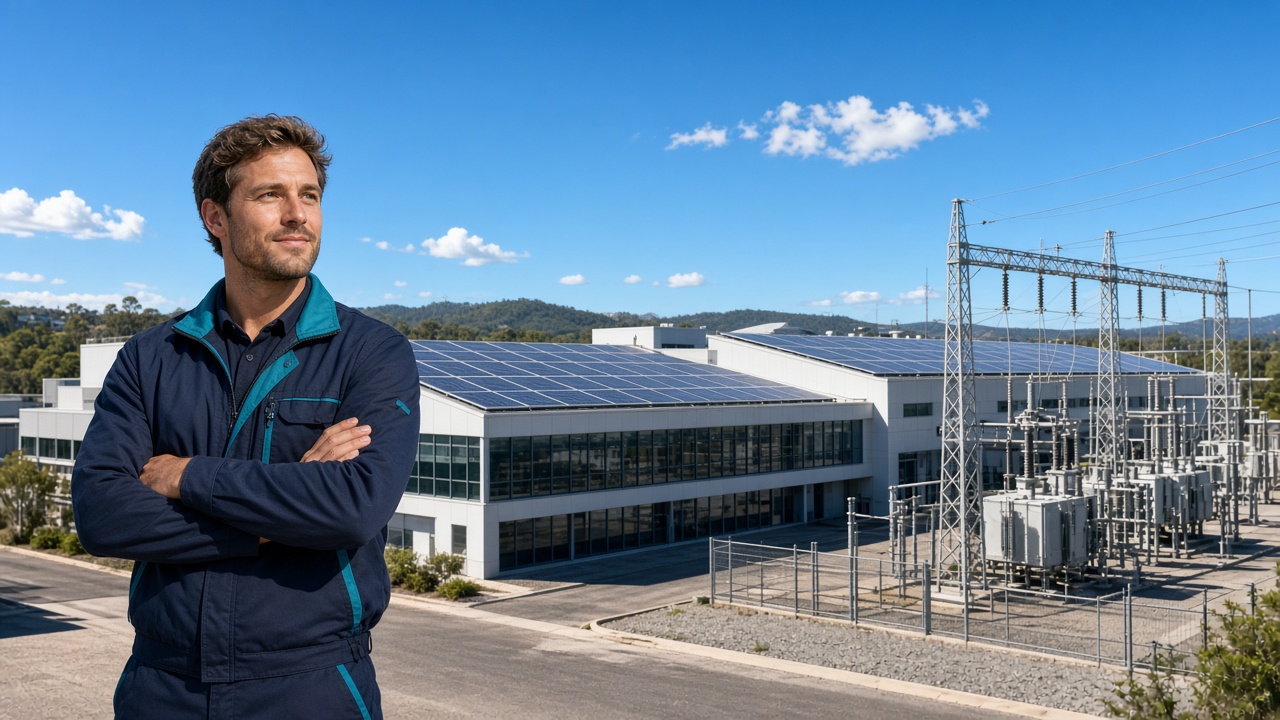
Australia's Grid Queue Hits 80.9 GW: What It Means for Sparkies
AEMO's connection queue now tops the NEM, PEC is live, home batteries soar and NZ's grid is busy. Here's what October's news means for electricians.
Every few weeks I sit down with the latest numbers from AEMO, the Clean Energy Regulator and Transpower, and every few weeks I come away with the same feeling: the electrical industry across Australia and New Zealand has never had a bigger order book. October 2026 has been a standout month. The queue of projects trying to plug into our grid is now bigger than the grid itself, a 900-kilometre interconnector has started carrying power, renewable investment has already broken its annual record with a quarter to spare, and households are bolting batteries onto their homes faster than anyone forecast.
Here's my rundown of what happened, why it matters, and, most importantly, what it means if you earn your living with a multimeter and a licence.
The connection queue is now bigger than the NEM
On 21 October AEMO released its latest Connections Scorecard, and the headline figure is a beauty: 80.9 GW of generation and storage projects are working their way through the connection process. That's up 43% in a year, and for the first time it has overtaken the NEM's current capacity of about 77 GW.
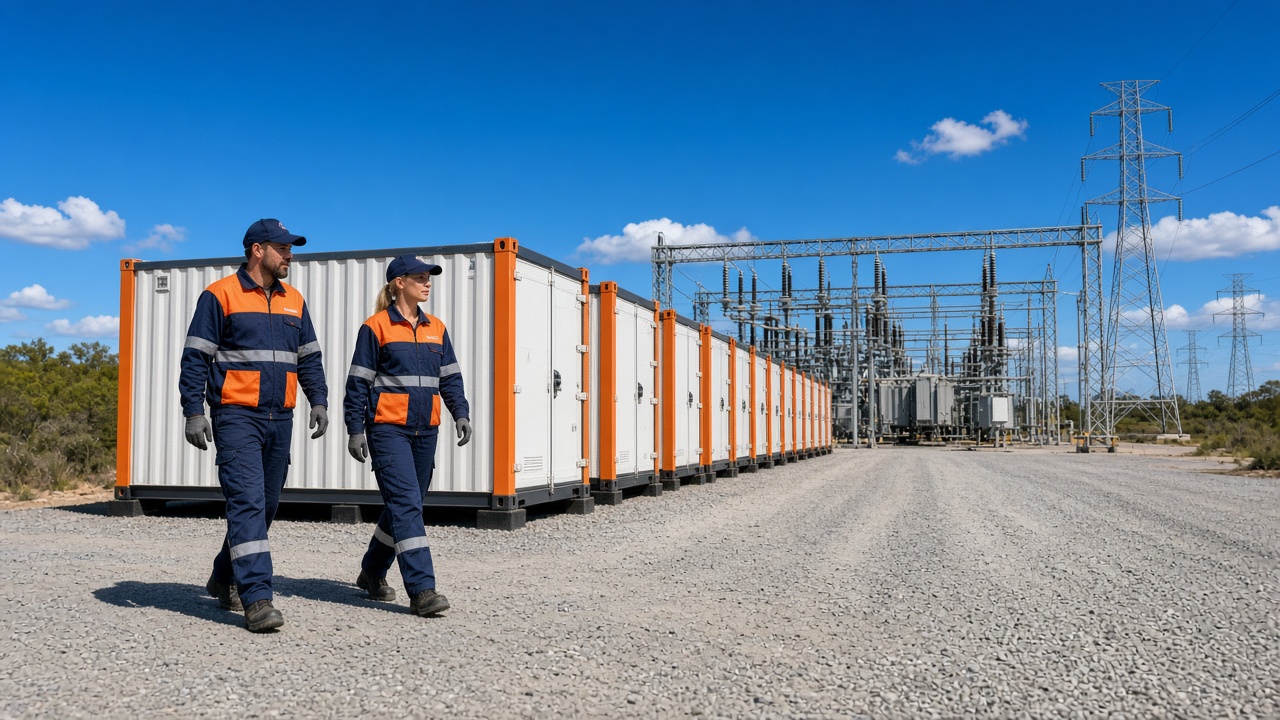
Batteries are the story. Grid-scale batteries make up 55% of the capacity in the pipeline, with hybrid solar-and-battery projects another 19%, wind 15%, and solar and hydro 5% each. In the September quarter alone AEMO received 25 new applications totalling 7.5 GW, and 19 of them were batteries. Nearly 40% of the battery projects can deliver between three and ten hours of storage, which is a big step up from the short-burst batteries we were building a few years ago.
AEMO's James Lindley was refreshingly honest about it: "A strong pipeline is encouraging, but what ultimately matters for consumers is getting viable projects connected and operating in the power system." He's right. About 88% of the pipeline is still in the early application and implementation stages, and not every project will make it to commissioning. But here's the context that makes me optimistic about the work: around 15 GW of generation is scheduled to retire over the next decade while consumption is forecast to rise by more than 40%. Something has to fill that gap, and somebody has to build it.
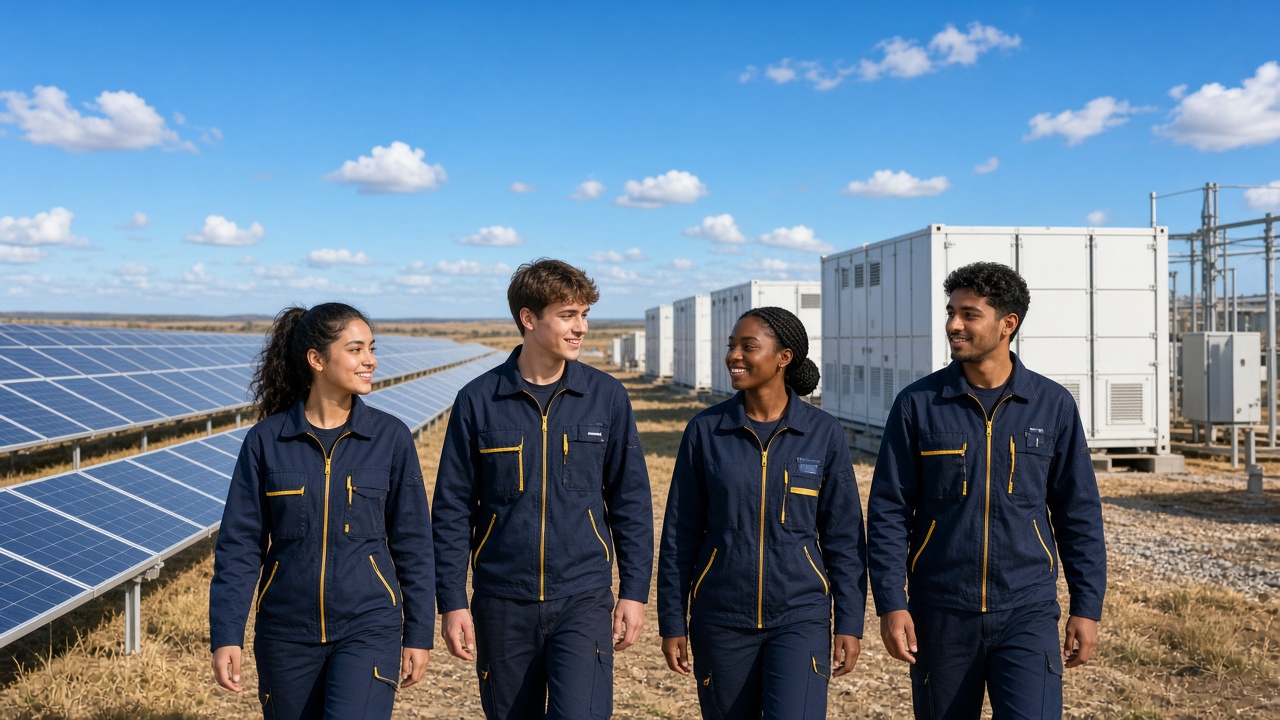
For electricians, a battery project isn't one job. It's civil and earthing works, HV switchyards, transformers, protection and control, SCADA, communications, and then years of maintenance. The commissioning end in particular is where I'm seeing employers struggle to find people.
Project EnergyConnect starts moving power
On 1 October AEMO began progressively bringing Project EnergyConnect into operation. It's a 900-kilometre interconnector delivered by ElectraNet in South Australia and Transgrid in New South Wales, and it creates the first transmission loop in the NEM, linking SA, Victoria and NSW. Transfers will ramp up as testing allows, with full commissioning expected by the end of 2027.
What I love about this one is that it's a reminder of how long the transmission game is. PEC first appeared in AEMO's 2020 Integrated System Plan. Six years later, it's carrying power. AEMO's Teresa Smit noted the existing 44,000 km transmission network is being extended to support "a near doubling of electricity consumption by 2050". The 2026 ISP puts transmission at around $6 billion of the $106 billion in annualised capital investment to 2050 under its Step Change scenario, and AEMO's modelling says that spend avoids around $30 billion in other costs.
If you're a linesworker, substation tech, protection specialist or HV-qualified sparky, that's a multi-decade pipeline. Careers get built on projects like this, not just paycheques.
Renewable investment breaks its annual record early
On 15 October the Federal Government released new Clean Energy Regulator data showing 2.1 GW of large-scale renewable capacity reached final investment decision in the September quarter. That takes 2026 to 5 GW year to date, already beating the previous full-year record of 4.9 GW with three months still to run. Wind had its best quarter on record at 1.1 GW, and solar FID is at 3.5 GW for the year, about 30% above its previous annual record.
Final investment decision is the number I watch most closely, because it's the moment money is actually committed. Pipelines and announcements are nice; FID means contracts, mobilisation and crews on site. A record FID year in 2026 translates into construction work in 2027 and 2028.
Home batteries keep smashing forecasts
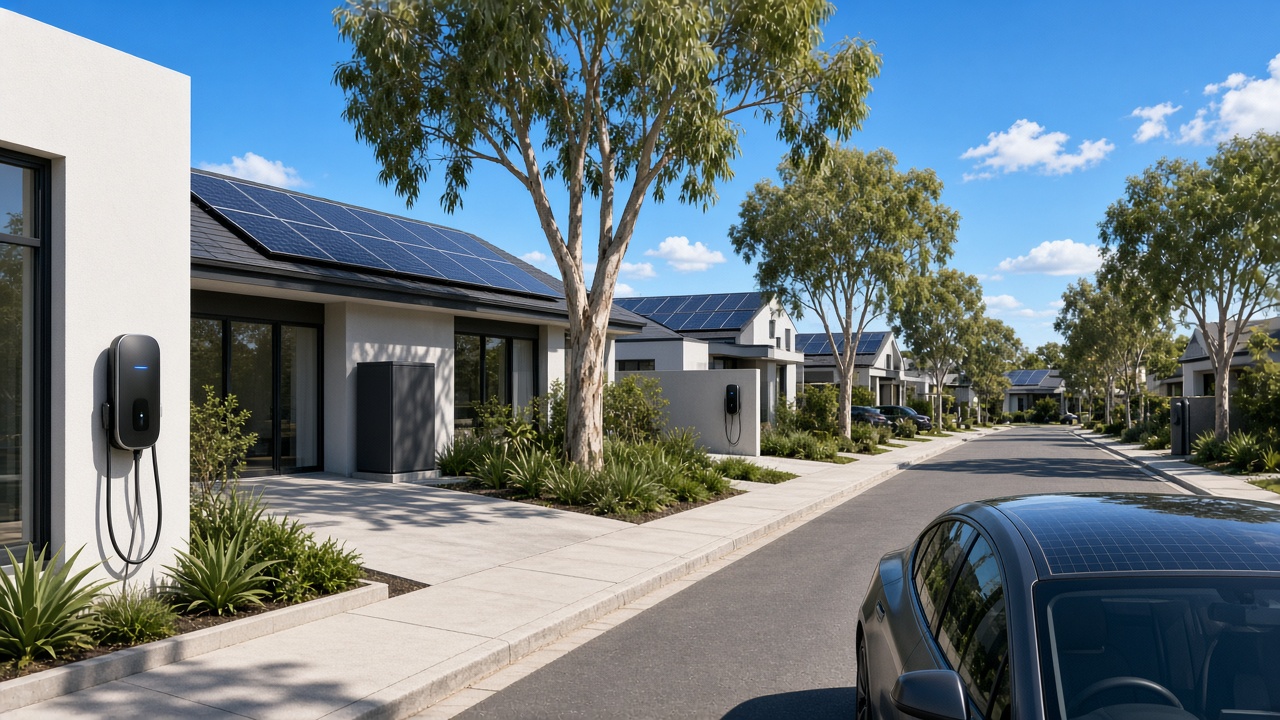
The same release showed approved capacity under the Cheaper Home Batteries Program hit 15.3 GWh by the end of September, up from under 2 GWh a year earlier. Another 1.9 GWh was added in the September quarter alone. NSW leads with 5.6 GWh, with Victoria and Queensland at about 3.2 GWh each. Roughly half of approved installs are retrofits onto existing solar.
The Clean Energy Council's Rooftop Solar and Storage Report for January to June 2026 counted 276,011 home battery installations in the half, up 52% on the previous six months, alongside 180,878 rooftop solar systems. On current trends it says consumer battery capacity could beat AEMO's 2029–30 forecast by 79%. And the momentum hasn't faded: Amber estimates Australians installed about 966.5 MWh of home batteries in September, up 12.5% on August.
One thing every installer should have in their calendar: the rebate steps down over time. The Clean Energy Regulator's STC factor table shows 6.8 STCs per usable kWh for May to December 2026, dropping to 5.7 from January 2027. Expect a busy run into Christmas as customers try to beat the change.
There's also a quieter rule change worth knowing about. From 1 October, mid-scale solar systems up to 1 MW became eligible under the Small-scale Renewable Energy Scheme, up from 100 kW, with applications expected to open in mid to late November. That opens up a lot of commercial rooftops, warehouses and farms. If you're a commercial solar contractor, this is your moment.
The regulator is watching, and that's good news
Not everything this month was a victory lap. On 26 October the CER published its July–September compliance update. A Victorian installer was convicted and fined $10,000 for false statutory declarations about attending installations, two accredited installers were declared ineligible for three years and 12 months respectively, and one company was permanently suspended from the scheme.
CER Chair Tony Chappel said the regulator remains "satisfied that there is no systemic fraud in the SRES, but there are a few bad players, which are being dealt with." I'm glad to see it. A boom attracts cowboys, and every dodgy install chips away at customer trust for the thousands of sparkies doing it properly. Be on site, fill in your certificates, follow AS/NZS 5139. Your accreditation is worth far more than any shortcut.
Across the ditch: New Zealand's grid is busy too
New Zealand has its own version of this story. Transpower says that as of 8 October it is delivering 16 new generation projects that will add 3,342 MW to supply, plus 18 load and customer projects for networks and industrial users electrifying their operations. Its October update reports more than 1,000 MW of renewable energy started commissioning in the past year.
Transpower has also opened consultation on its Waikato Regional Interconnection Capacity project, running from 21 October to 2 December, with a new grid connection at Hamilton East its preferred option and grid-scale batteries and demand management also on the table. That sits alongside the bigger Waikato and upper North Island programme for a region that accounts for nearly 40% of the country's electricity demand, and the Commerce Commission's June approval of $1.1386 billion for HVDC Stage 1, which will lift the inter-island link to 1,400 MW.
What I'd do with this if I were on the tools
Pull all of that together and the message is clear: the work is shifting towards storage, HV and commissioning, and it's shifting fast. Here's my practical advice.
- Get battery-endorsed if you aren't already. Home batteries are the fastest-growing segment in the trade, and the January 2027 rebate step-down will keep demand high through summer.
- Move up the voltage ladder. HV switching, protection and testing are the scarcest skills on grid-scale battery and transmission projects. The sparkies who hold switching authorities are the ones naming their price.
- Look at commissioning. With 80.9 GW in the queue and AEMO pushing to get projects to full output, commissioning techs who can prove systems and document results properly are gold.
- Think regional. Renewable energy zones, battery sites and transmission corridors are mostly outside the capitals. If you're open to FIFO, DIDO or a sea change, the options multiply.
- Kiwis, watch the Waikato. Between WUNI, the Waikato interconnection work and HVDC Stage 1, the North Island will need a lot of experienced hands over the next few years.
I'll be honest: not every project in that 80.9 GW pipeline will get built, and there will be delays and hiccups along the way. But the direction of travel has never been clearer. Electrification is the biggest infrastructure build of our lifetimes, and electricians are the people who turn the announcements into reality. I think that's genuinely exciting.
If you're ready to be part of it, browse the latest electrical jobs across Australia and New Zealand on ElectricalRoles.com.au.