What Does a Data Centre Electrician Do? Pay, Skills and Pathways
Data centre electricians are among Australia's most in-demand tradies. What the job involves, real pay rates from current ads, who's hiring and how to start.
A few years ago, if you told a young sparky their career would be shaped by artificial intelligence, they'd probably have assumed you meant a robot was coming for their job. The reality has turned out to be the opposite. AI runs on data centres, data centres run on electricity, and every one of them has to be built, commissioned and kept alive by licensed electricians. That has quietly turned the data centre electrician into one of the most in-demand roles in the Australian trade.
This is the next entry in my "what does this electrical role do" series. I'll walk you through what the job actually involves day to day, the different flavours of it, what it pays according to real ads I looked at this month, who's hiring, and how to make the jump if you're currently doing domestic or commercial work.
Why data centres suddenly need so many sparkies
The scale is hard to overstate. Writing in Electrical Connection this week, NECA's Stewart Joyce pointed out that AEMO counts 162 operational data centres in Australia, using about 2% of grid-supplied electricity. AEMO projects that could reach around 12 TWh, or 6% of grid supply, by 2030 and roughly 12% by 2050. In NSW alone, the state government announced in March that 15 data centre projects worth a combined $51.9 billion would progress through its Investment Delivery Authority.
The line from that article that stuck with me: NECA has told policymakers that one forthcoming project alone was forecast to need 2,000 electricians. That's a single site. Meanwhile Jobs and Skills Australia's central modelling, quoted in the same piece, says the country could need around 32,000 additional electricians by 2030 just for the clean energy transition, and those forecasts were made before the current data centre wave became part of national planning.
You can see the pressure in pay. The Australian Financial Review reported in September that data centres in Sydney and Melbourne were offering overtime-fuelled incomes of $200,000 to electricians with just two years' experience. That's the top of the market, not the norm, but it tells you which way the wind is blowing.
What a data centre electrician actually does
A data centre electrician isn't a separate trade. You hold the same Certificate III in Electrotechnology and the same state licence as any A-grade or unrestricted electrician. What's different is the environment and the stakes. A data centre is a building whose whole purpose is to never, ever lose power. Every circuit is designed with redundancy, every change is planned, and every test is documented.
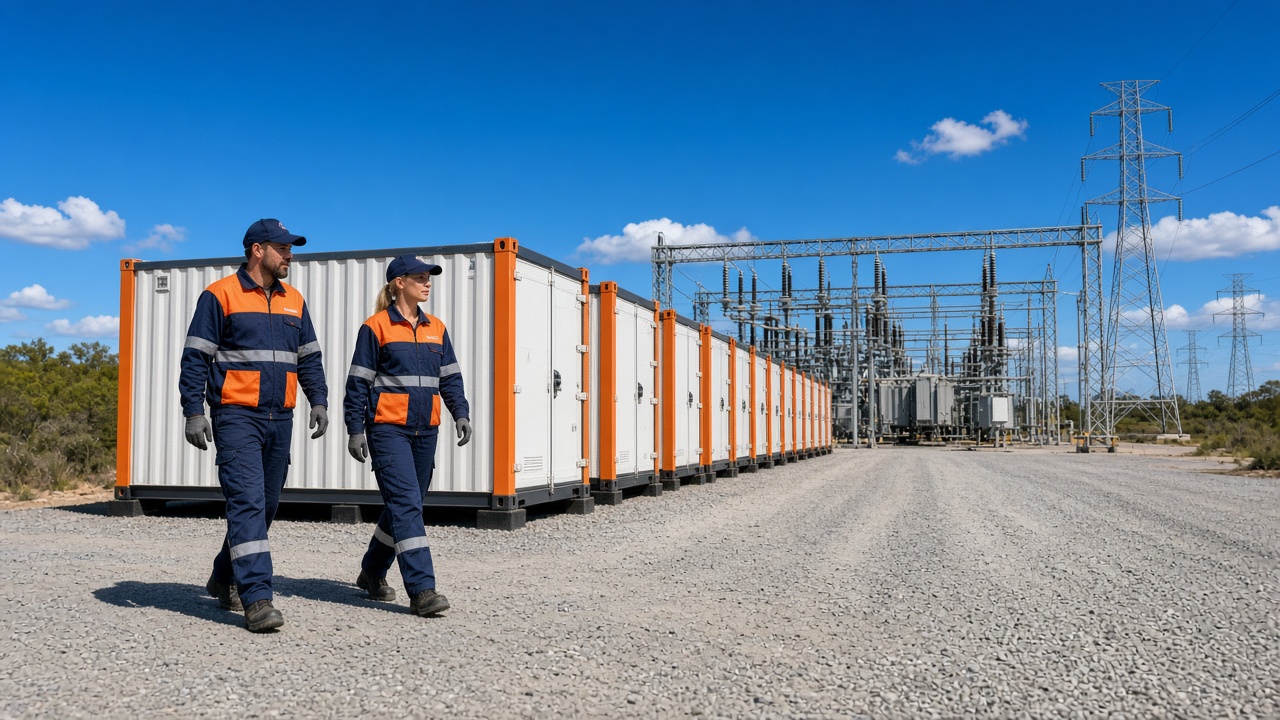
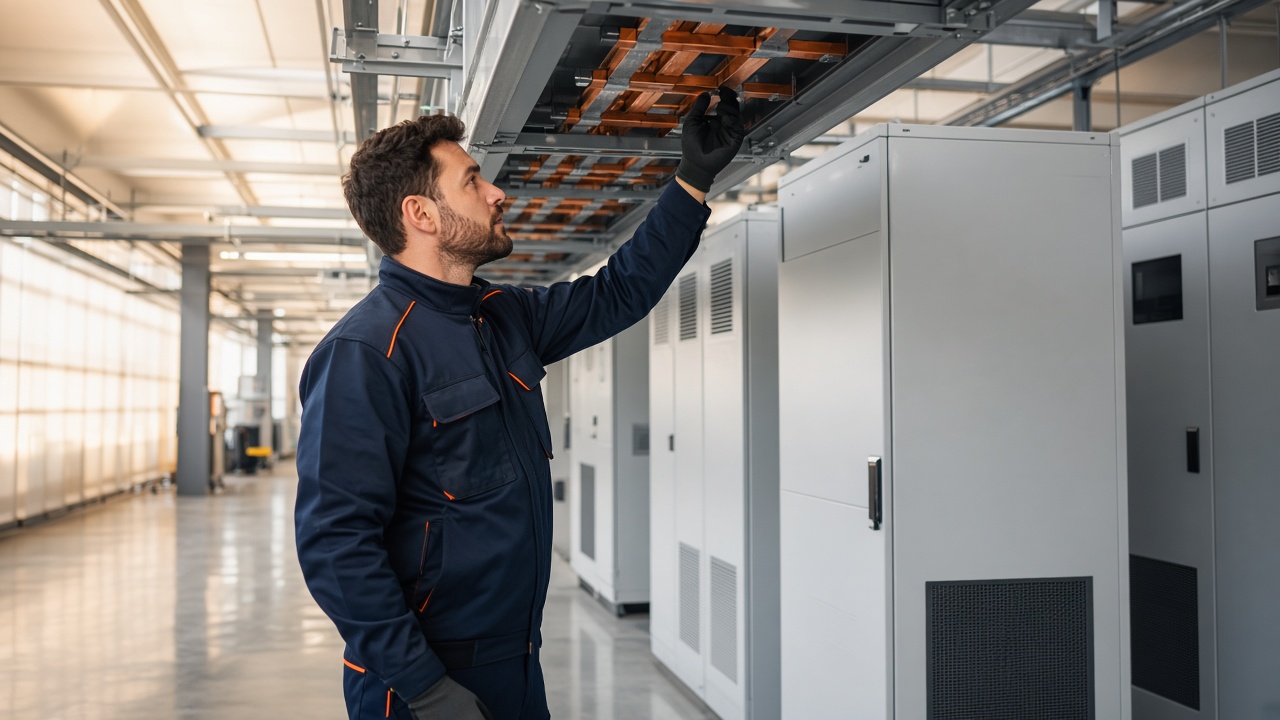
According to Joyce, the electrical scope on these sites can include substations, transformers, switchgear, protection systems, UPS, batteries, generators, power distribution units, busway, earthing, communications cabling, fibre, fire systems, security, access control and building management systems. In practice, the work splits into a few distinct jobs:
- Construction and fit-out. Running cable tray and containment, pulling and terminating large cables, installing busway and switchboards, fitting out data halls and power rooms. This is the volume end of the market and the most common entry point.
- Testing and commissioning. Proving that every system works exactly as designed, often against detailed scripts, and then proving that the whole facility keeps running when things fail. This is where integrated systems testing comes in: deliberately pulling the utility feed and watching UPS, batteries and generators pick up the load.
- HV and switching. Many large sites take a high-voltage supply and have their own substations. Electricians who can write and carry out switching programs, and who hold the right authorisations, are the scarcest people on site.
- Critical facilities operations. Once a site is live, it needs 24/7 technicians to monitor plant, respond to alarms, carry out planned maintenance and coordinate contractors. These roles usually run on rotating shifts and pay shift loadings.
I'll say this plainly because it surprises people: the hardest part of the job isn't technical skill. It's discipline. On a live data hall you don't freelance. You follow method statements, permits and change controls to the letter, and you document everything. If you love doing things properly, this environment will suit you down to the ground.
What it pays right now
I went through the data centre electrician listings on SEEK this month to see what employers are actually advertising, rather than relying on rumours. A sample of what I found:
- A data centre fit-out project in West Footscray, Melbourne advertising $47 to $60 an hour for multiple electricians, plus allowances.
- A 24/7 Service Technician role for data centres in Marsden Park, Sydney listed at $120,000 to $140,000 a year with shift allowance.
- Cable jointers and HV electricians for critical infrastructure work in Western Sydney at $60 to $75 an hour plus super and overtime.
- A CBRE data centre Shift Technician (Electrical) role in Lane Cove listed at around $149,900 a year inclusive of super, plus bonus.
- Even apprentices are in the mix: a year 2 to 3 electrical apprentice role on a Derrimut data centre was advertised at $97,600 to $122,800 inclusive of super.
The pattern is consistent. General fit-out work pays a solid premium over typical commercial rates, shift and operations roles trade a slightly lower base for higher packages through loadings, and HV, jointing and commissioning sit at the top. Overtime on construction projects is where the eye-popping annual figures come from, so always check what's base and what depends on hours.
Who's hiring
The employer list reads like a who's who of the digital economy. Alongside the big electrical contractors and labour hire firms running construction projects, I found operator roles advertised directly by Amazon Web Services in Melbourne, NEXTDC in Brisbane and on the Sunshine Coast, and CDC Data Centres at Marsden Park and Eastern Creek in Sydney. CDC's ads mention structured training through its own CDC Academy. There are also facilities roles at research organisations like CSIRO in Canberra.
Geographically, Western Sydney and Western Melbourne are the hotspots, with Brisbane growing. If you live near Marsden Park, Eastern Creek, Derrimut, West Footscray or Truganina, there's a good chance a data centre is being built within a short drive of your house.
New Zealand is earlier in its data centre journey, but the same skills apply. HV, commissioning and critical systems experience travel well across the ditch, and I expect Kiwi demand to follow the Australian curve.
How to make the move
If you're a licensed electrician doing domestic or commercial work and this sounds appealing, here's what I'd do:
- Get your commercial and industrial basics sharp. Large cable installation, terminations, three-phase distribution and switchboard work are the core of most fit-out roles.
- Start with a fit-out project. Construction-phase work is the most common entry point, and many people use it to learn the environment before moving into commissioning or operations.
- Invest in testing and HV. Testing competency, HV switching and isolation training, and thermography are the skills that move you up the pay scale. One SEEK ad I saw was specifically offering electricians the chance to upskill into thermography at $57.50 to $70 an hour.
- Keep your paperwork tidy. White Card, current licence, first aid, LVR and CPR, plus a clean record of the work you've done. Data centre employers check this stuff carefully.
- Show you can work to process. In interviews, talk about permits, isolation procedures and documentation. That matters as much as how quickly you can terminate a cable.
One honest caution. As NECA points out, there's a real risk that big projects simply poach apprentices and electricians from smaller contractors rather than growing the overall workforce. If you're an apprentice, think carefully before jumping ship mid-apprenticeship for a bigger hourly rate, and talk to your employer and RTO first. Finishing your trade properly will pay off for decades.
My take
I'm genuinely excited about this. The AI boom is often talked about as something happening "in the cloud", but the cloud is made of copper, steel, switchgear and very skilled people. Data centre work is technical, well paid and future-proof, and it puts electricians right at the centre of the biggest technology shift of our time. If you've ever wanted a career that feels cutting-edge without leaving the tools behind, this is it.
Ready to explore it? Browse data centre, commercial and industrial electrical jobs across Australia and New Zealand on ElectricalRoles.com.au.