Green Lights Everywhere: Vic Approvals, Sundown and Waroona
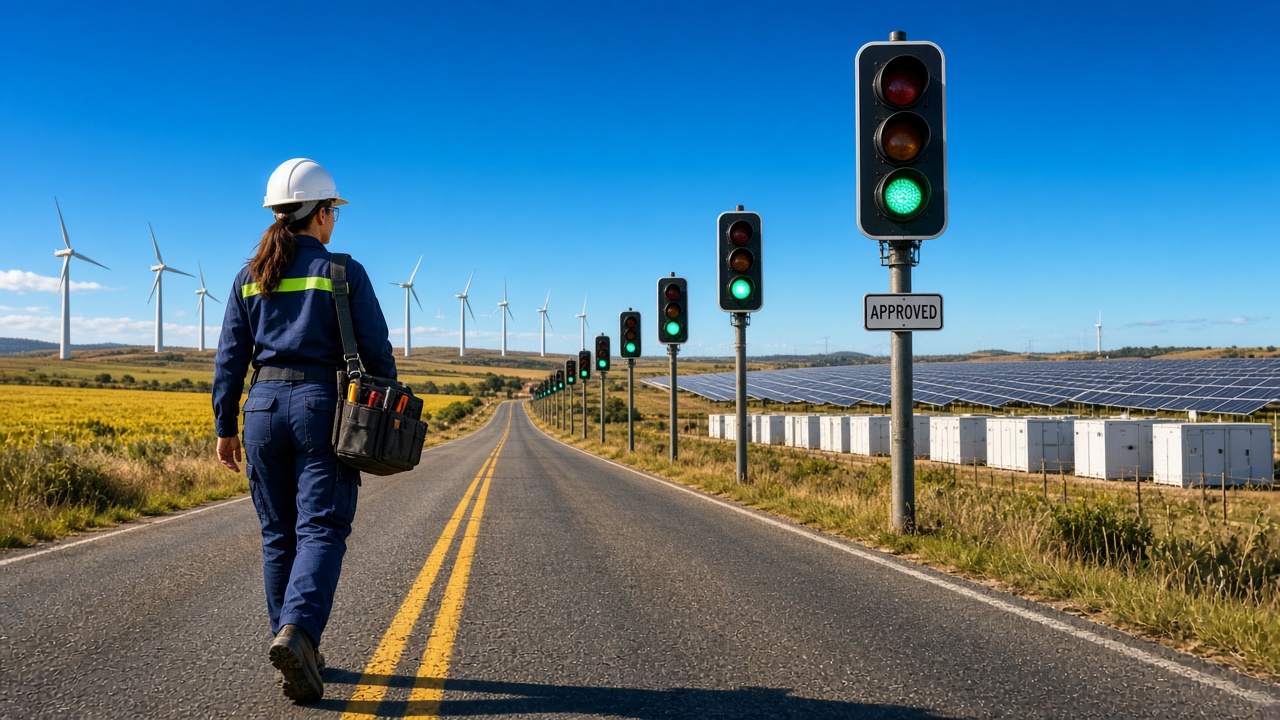
Six Victorian wind and battery approvals, Sundown's federal tick, Waroona's $280m loan and Hallett's last battery pack: the pipeline for sparkies.
Every fortnight I sit down with a coffee and read through the project news to answer one question: where will electricians actually be working in 2027 and 2028? This fortnight the answer was easy. The lights have been flicking to green right across the map.
In the space of about ten days we've had six approvals in Victoria worth nearly $4 billion, a federal tick for a big solar and battery project in New England, a $280 million loan to push Western Australia's biggest grid-connected solar-battery hybrid into full construction, the final battery pack craned into place in South Australia, and a 420 MW solar farm put forward for fast-track consenting in New Zealand. On top of that, WA has awarded the build contract for a new clean energy training facility and Swinburne has released new microcredentials aimed squarely at sparkies.
None of these projects builds itself. Every one needs cable pulled, switchboards terminated, inverters and battery enclosures connected, protection tested and systems commissioned. Here's what happened and what I think it means for your career.
Victoria: six projects, nearly $4 billion, approved in one rush
Victoria's planning minister Sonya Kilkenny approved two wind farms and four utility batteries just before the state government went into caretaker mode ahead of the 28 November election, according to Renew Economy. The total development value is close to $4 billion.
The line-up:
- Moreton Hill wind farm (Squadron Energy): $1.5 billion, 420 MW, up to 62 turbines about 35 km southwest of Ballarat, connecting via a new underground 220 kV line to the Berrybank terminal station.
- Meering West (Virya Energy): a $2 billion, 1.3 GW wind project in the state's north, paired with a 500 MW / 1,000 MWh battery.
- Gippsland battery (European Energy): 600 MW, with 1,200 or 2,400 MWh of storage.
- Tragowell battery (Potentia Energy): 200 MW / 800 MWh.
- Cobden and Camperdown batteries: two smaller projects from Australian Renewable Energy Services.
A couple of honest caveats. The two wind farms still need federal environmental approval, and some of them depend on transmission that's still being planned, so not every shovel hits the dirt tomorrow. But the four batteries haven't been referred for federal assessment, and batteries tend to move fast once the planning permit is done.
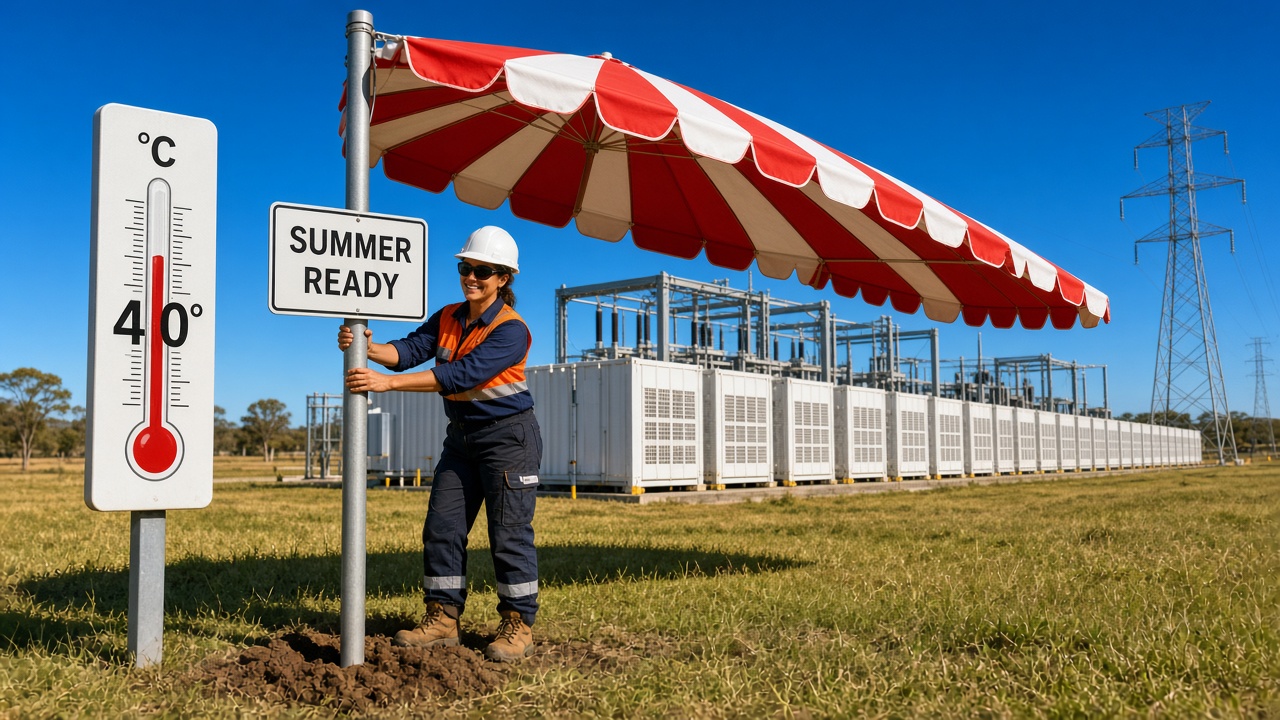
That underground 220 kV link at Moreton Hill caught my eye. That's real cable jointing and HV termination work in regional Victoria, the kind of job that keeps a crew busy for a long stretch. And with Yallourn's 1.48 GW coal plant due to close in 2028, the pressure to get new storage and generation built in Victoria isn't going away, whatever happens on election day.
NSW: Sundown gets its federal green tick
Up in the New England renewable energy zone, Recurrent Energy's Sundown project at Spring Mountain, around 30 km east of Inverell, has received federal EPBC approval, reports Renew Economy. It's 350 MW of solar plus a 150 MW, four-hour battery, and it already had state approval from the NSW Independent Planning Commission in August.
There are conditions around biodiversity offsets and a management plan, and the grid connection is the usual open question. But with both state and federal approvals in hand, Sundown is now one of those projects worth adding to your watch list if you're in northern NSW or southern Queensland and fancy a solar farm build close to home.
WA: Waroona ramps up with a $280 million loan
In Western Australia, Frontier Energy has signed a syndicated loan of up to $280 million, led by Natixis and Sumitomo Mitsui Banking Corporation, to fully fund stage one of its Waroona Renewable Energy Project, about 120 km south of Perth, according to Renew Economy.
Stage one is a 132 MW solar farm with an 81.5 MW battery, and it's expected to be the largest solar-battery hybrid on WA's main grid. Executive chairman Jamie Cullen says site works are "ramping up", with financial close expected in November, the first drawdown in early 2027 and first generation in 2028.
For Perth and Peel sparkies, that's a great one: a big build within commuting distance rather than a FIFO roster. Solar farm electricians, DC and AC terminations, battery connection and HV commissioning will all be needed over the next 18 months or so.
SA: Hallett's final battery pack is in
In South Australia, EnergyAustralia has craned the last battery pack into place at its Hallett battery, next to its existing gas plant at Canowie, around 210 km north of Adelaide, reports Renew Economy. It's 50 MW / 245 MWh, a five-hour battery, with approval to add another 150 MW later. Commercial operation is expected in mid-2027.
What I love about Hallett is how fast it moved. Construction started in late February, after the project reached financial close in what EnergyAustralia called "an unusually fast timeframe." It's also a smart template: building storage on an existing power station site and reusing the grid connection that's already there. I expect we'll see a lot more of that, and it's good news for electricians, because "battery bolted onto an existing site" means brownfield work, live-site permits and a lot of careful integration with existing switchyards.
With the packs in, Hallett now moves into the phase where electricians really earn their keep: terminations, testing, protection checks and commissioning.
New Zealand: Meridian's 420 MW Western Bays goes for fast-track
Across the Tasman, Meridian has put its proposed Western Bays Solar Farm, on the western side of Lake Taupō, into the fast-track consenting process, the NZ Herald reports. At up to 420 MW it would be one of New Zealand's largest solar farms, with the option of distributed on-site batteries totalling up to 250 MW and up to eight hours of storage.
Meridian also says its development pipeline includes around 8.8 TWh of secured options plus 6.5 TWh of advanced prospects, which is more than a third of New Zealand's current electricity demand. If even part of that gets built, Kiwi sparkies with solar, battery and HV experience are going to be very busy for the rest of the decade.
The training pipeline is getting an upgrade too
Here's the bit that makes me most optimistic. The projects are only half the story. The other half is whether we can train enough people to build them, and there was real progress there too.
WA's Munster TAFE clean energy facility. On 10 November the WA Government awarded the construction tender to BADGE Constructions for a two-storey clean energy training building at South Metropolitan TAFE's Munster campus. It'll have automation, instrumentation and battery labs plus a control room, and is expected to support an extra 840 course enrolments a year. The government also says around 22,000 extra workers will be needed in WA's clean energy sector by 2035, and that the Electrotechnology pre-apprenticeship and Certificate III in Electrotechnology Electrician are fee-free or low-fee.
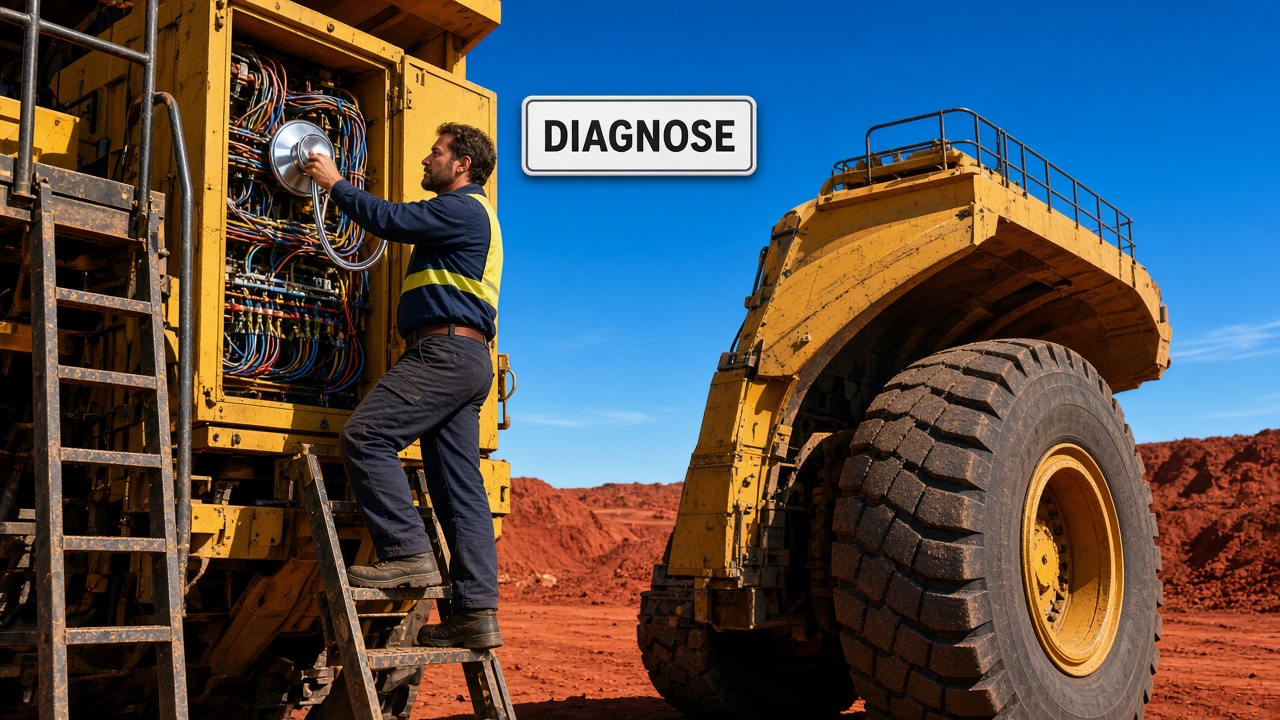
Swinburne's microcredentials for licensed electricians. In Victoria, Swinburne has released five new microcredentials for licensed electricians working on integrated systems, where solar, batteries, EV chargers, loads and the grid all interact. They cover configuration and commissioning, testing and fault-finding, and keeping up with changing standards. Senior educator Ash Reid summed up what electricians told them: "Commissioning and fault-finding are where electricians told us they need more support, particularly as every system and brand behaves differently." I couldn't agree more. The sparky who can walk into a home with solar, a battery and an EV charger that aren't talking to each other, and fix it, is worth their weight in gold right now.
What I'd do with this news
If you're an electrician in Australia or New Zealand, here's my practical take:
- Follow the projects, not just the job ads. By the time a role is advertised, the good contractors have often already picked their crews. Note the projects above, find out who the EPC and electrical contractors are, and get your CV in front of them early.
- Get commissioning-ready. Batteries like Hallett and the four new Victorian ones all need testing and commissioning. Building up your test equipment skills, protection basics and documentation habits pays off quickly.
- Think "brownfield." Adding batteries to existing power station and substation sites is clearly a growing trend. Experience working safely on live, operating sites is a real differentiator.
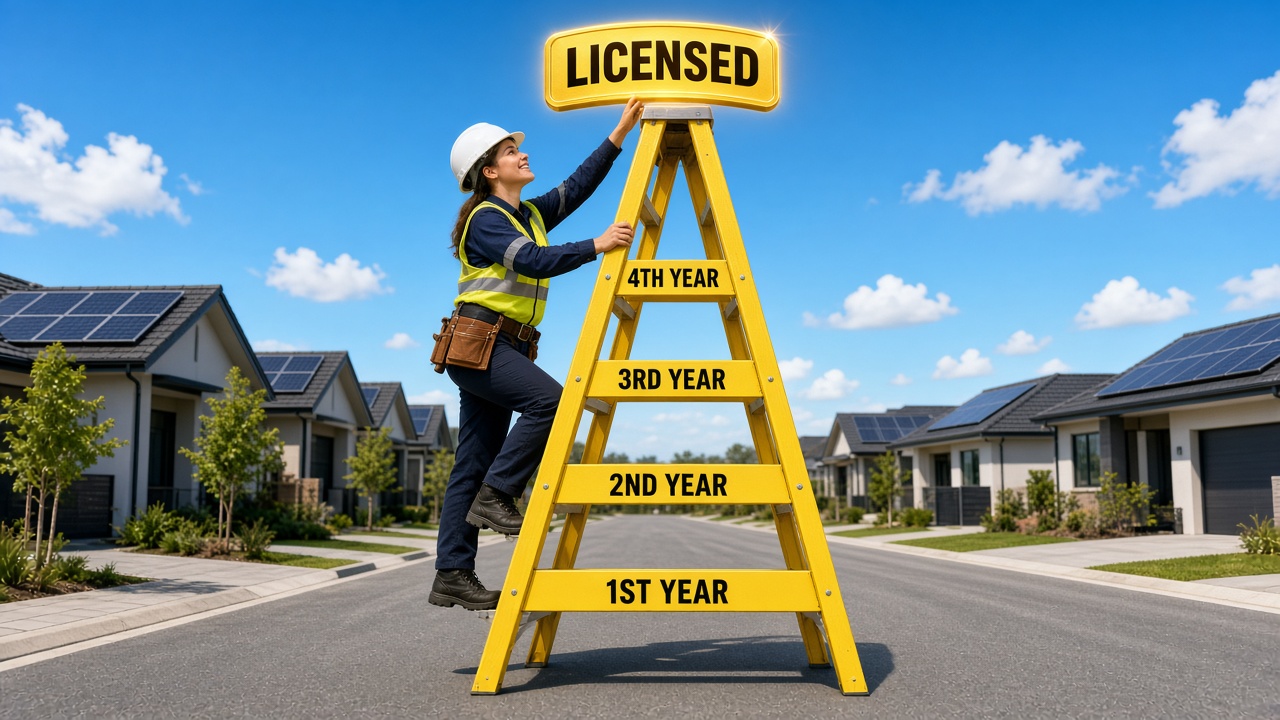
- Upskill in small, sharp chunks. Microcredentials like Swinburne's are exactly the right size for a busy tradie. A few short courses in integrated systems can lift your day rate and your confidence.
- If you're starting out, the timing is brilliant. Fee-free pre-apprenticeships in WA, new facilities coming, and a project pipeline that stretches years ahead. It's a great time to pick up the tools.
Approvals, money, cranes and classrooms: that's a lot of green lights in one fortnight. I'm genuinely excited about where this is heading, and the people who'll turn all of this into working power stations are electricians.
If you want to be part of it, browse the latest electrical jobs across Australia and New Zealand and set up a job alert so the right role finds you first.