
NZ Wiring Rules Deadline 12 November: What Sparkies Must Do

From 12 November 2026, new NZ electrical work must meet AS/NZS 3000:2018. Which jobs can finish on the old rules, the RCD changes and a quick checklist.
If you're a sparky in Aotearoa, circle 12 November 2026 on the calendar. That's the day the 12-month grace period under the Electricity (Safety) Amendment Regulations 2025 runs out, and the old 2007 edition of the Wiring Rules stops being an option for new work. From then on, any new installation or alteration where construction begins after 12 November has to be built to AS/NZS 3000:2018, including Amendments 1, 2 and 3, with New Zealand's own local modifications.
That's eight days from today. I don't think this is a crisis. Plenty of NZ electricians switched over months ago, and the transition rules are actually pretty reasonable. But it's exactly the kind of deadline that catches a busy contractor on a Friday afternoon, so here's my plain-English rundown of what changes, which jobs can still finish under the old rules, and a short checklist you can run through with your team this week.
What actually changed on 13 November 2025
WorkSafe's update explains that the amendment refreshed the standards cited in Schedules 2 and 4 of the Electricity (Safety) Regulations 2010. That's roughly 440 standards updated in one go. The headline is AS/NZS 3000 moving from the 2007 edition (with Amendments 1 and 2) to the 2018 edition with Amendments 1 to 3. Several others moved too, and depending on your niche, some of these matter just as much:
- AS/NZS 5033:2021 for photovoltaic arrays, which is the big one for solar installers
- AS/NZS 4777.1:2024 for low voltage grid-connected generation, cited specifically for mains parallel systems connected to the national grid
- AS/NZS 3001.1 and 3001.2:2022 for connectable installations and their supply
- AS/NZS 3003:2018 for electrical medical installations
- AS/NZS 3012:2019 for construction and demolition sites
- AS/NZS 3019:2022 for reconnecting installations that have been off for more than six months
- AS/NZS 4836:2023 for safe working practices
- AS/NZS 60079.14:2022 for hazardous area installation work
The regulations came into force on 13 November 2025, and since then you've been allowed to use either the old or the new standards for new work, within limits. That flexibility is what ends next week.
Which jobs can still finish under the old rules
This is the bit people get muddled on, so here it is straight from WorkSafe and the Electrical Workers Registration Board's guidance. It all comes down to when construction started.
- Started before 13 November 2025? You can keep using the old standard until the job is finished. No deadline.
- Started after 13 November 2025 under the old standard? It has to be finished by 12 November 2026. If it isn't, you issue a Certificate of Compliance for the work done up to that date, and the rest has to meet the new standard.
- Construction begins after 12 November 2026? New standard. No exceptions.
Two details are worth knowing. First, WorkSafe says "construction" includes the design phase, so if a quote or tender was already underway, the work can be done to the old standard. My advice is to keep that quote or tender date on file with the job. If anyone asks later which standard applied, that piece of paper is your answer.
Second, repairs are treated more gently. You can keep using the old standard for repair and maintenance work on existing installations, as long as they're not unsafe, and there's no time limit. The moment a repair turns into an alteration or addition, though, the new bit has to meet the newly cited standard. Only the parts you change need to comply. Nobody is asking homeowners to rewire perfectly good houses because the book got updated.
The RCD changes are the ones to drill your team on
If I had to pick one area where good electricians could get caught out, it's residual current devices. A lot of New Zealand's local modifications to AS/NZS 3000:2018 are about RCDs, and they reflect how much our loads have changed. There are inverters, EV chargers, heat pumps and variable speed drives everywhere now.
Here's what WorkSafe lists:
- Selection: any RCD in an installation has to be selected and installed to suit the types of load it's protecting, with consideration given to pulsating and constant DC fault currents and waveform distortion.
- Type: where the clause applies, protection has to meet Type A requirements (IEC 61009.1 or IEC 61008.1) or Type F or Type B (IEC 62423).
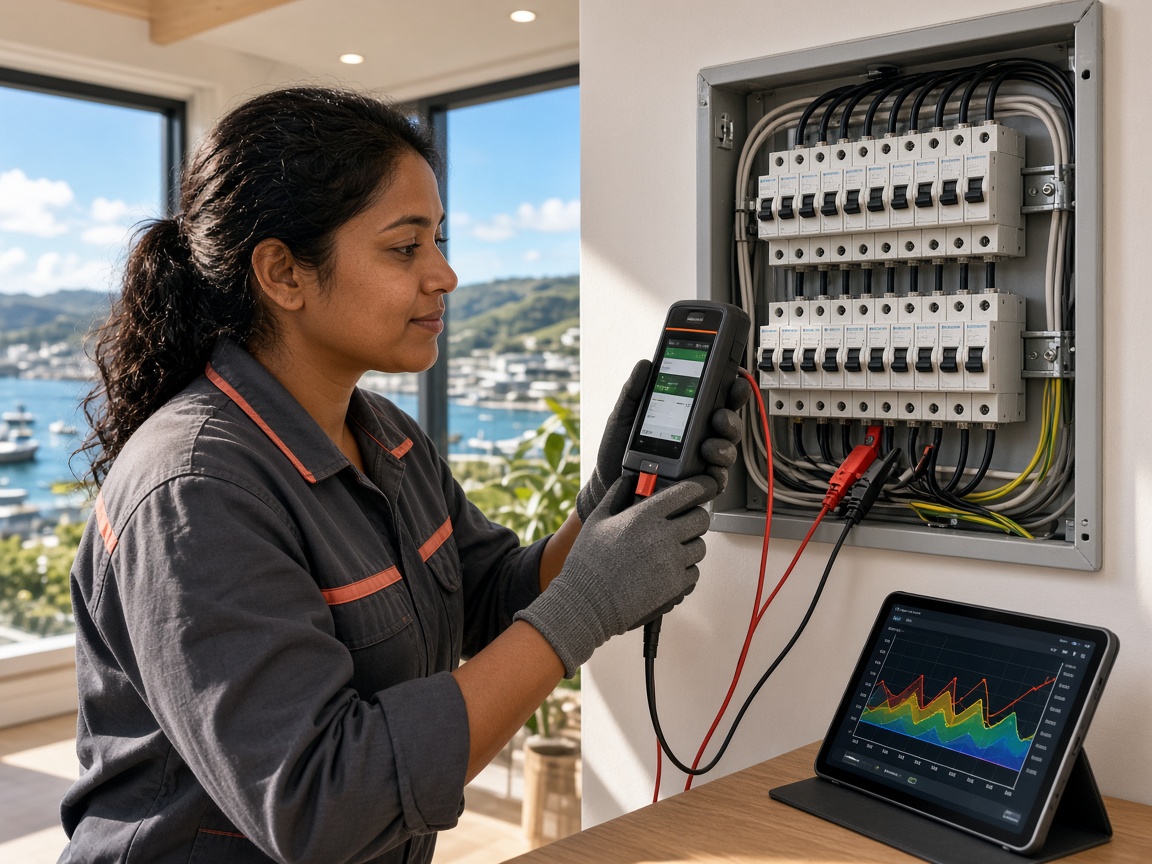
- Testing: in clause 8.3.10, the wording that allowed function testing "by the operation of the integral test device" has been deleted. Function testing now has to cover trip time, confirm the RCD's functions operate as intended and that it provides protection against electric shock, and, for residual sinusoidal AC and pulsating DC, check for DC leakage and constant DC where applicable.
In practice, this means pressing the test button and ticking a box isn't the job any more. If your apprentices learned to test that way, if your testers can't do the checks you now need, or if your certificate templates still have the old wording, sort it out now rather than on the first job after the 12th. Talk to your test equipment supplier. Most modern multifunction testers handle this well, and if yours doesn't, it's probably time for an upgrade anyway.
A quick note on PEN switching
One part of the 2025 amendments has already been reversed. The EWRB confirmed on 8 October 2026 that the Government had restored the prohibition on PEN switching through the Electricity (Safety) Amendment Regulations 2026, in force from 2 October 2026, while an independent expert review is carried out. The EWRB expects little impact, because PEN switching saw little to no uptake while it was allowed. But if someone on your crew read about it last year and filed it away as "allowed now", update them. It isn't.
Paperwork: your CoC tells the story
Here's where I think the smart operators will stand out. The EWRB's guidance says it plainly: make sure your Certificates of Compliance clearly show which version of the standard was used for each stage of work. For a job that straddles the deadline, the CoC for work completed up to 12 November is the record of what was built to the old standard. Everything after that is on the new one.
That might feel like admin for the sake of admin. It isn't. Clean records protect you if a question comes up years down the track. They make inspections smoother, and they tell customers you run a professional business. Insurers care about this too. It's worth a quick call to your broker to check that your liability cover still matches the work you do, especially if you've moved into solar, batteries or hazardous areas since your policy was set up.
My 20-minute checklist for this week
Grab a coffee, get the team together and run through this:
- List every open job with the standard it's being built to and the date construction or design started.
- Flag anything started after 13 November 2025 under the 2007 rules. Either finish it by 12 November or plan a CoC at the cut-over and do the rest to the new standard.
- File the quote or tender date for any job relying on the design-phase allowance.
- Update your RCD test procedure and check your test gear can do the required function tests.
- Update certificate templates so the standard and edition are recorded on every CoC.
- Brief your apprentices and anyone you supervise on which edition applies to which job, and that PEN switching is off the table again.
- Check your quoting templates. Every new quote from now on should be priced to AS/NZS 3000:2018, including any RCD type changes.
Why I'm optimistic about this
It's easy to groan at a new rulebook, but I think this update is good news for the trade. The 2007 Wiring Rules came from a world before home batteries, before EV chargers on every second driveway, and before heat pumps were the default. The 2018 edition and the newly cited standards for solar, grid-connected generation and RCD selection are much closer to the jobs Kiwi sparkies are actually doing in 2026. The work is getting more technical and more valuable, and the people who are fluent in the current standards will be the ones customers and employers want.
It's also a nice bit of timing that 12 November is the same day Master Electricians runs the New Zealand Electrical Summit 2026 at Eden Park in Auckland. The programme covers the electrification opportunity, AI in the trade and insurance for electricians, and the 25th anniversary Apprentice Challenge goes Trans-Tasman, with New Zealand's division winners taking on Australia's best. If you're in Auckland, it's a pretty good way to mark the switch to the new rules: free trade show entry, a room full of people who care about doing the job properly, and some serious apprentice talent on show.
If you're an NZ electrician thinking about your next move, whether that's solar and batteries, commercial, industrial or crossing the ditch, have a look at the latest electrical jobs on ElectricalRoles. Employers on both sides of the Tasman are hiring people who know the current standards inside out. After next week, that should be all of us.