
Record 2.4 GW Build, Trans-Tasman Apprentices and NSW's $4k Boost
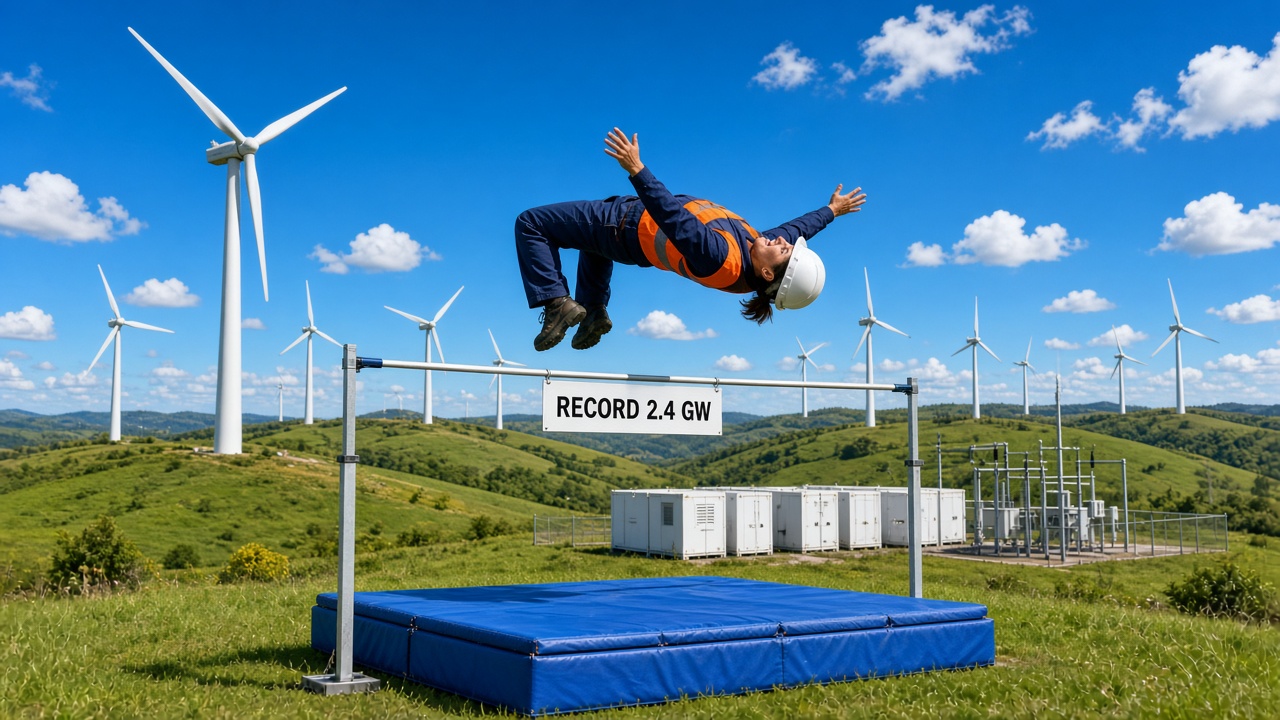
Record 2.4 GW of renewables committed, NSW's $4,000 Home Energy Saver discounts, a quality crackdown and the first Trans-Tasman Apprentice Challenge.
What a week to be in the electrical game. In the space of a few days we've had a record quarter for renewable projects committed to construction, a brand new discount scheme in NSW putting solar, batteries and electric hot water within reach of thousands more households, and the first ever Trans-Tasman Apprentice Challenge, which Australia won (sorry, New Zealand, but your apprentices took home two category titles, so honours are pretty even).
There's also a firm reminder from regulators that quality matters. I'll cover that too, because I think it's actually good news for anyone who does the job properly. Here's what happened and what I'd do about it.
A record quarter: 2.4 GW committed to construction
On 19 November, IEEFA and Green Energy Markets released the Q3 2026 Australian Renewable Energy Scorecard, and the headline is a beauty. Between July and September, 2.4 GW of renewable energy projects were committed to construction. That's an all-time record, and 20% above the previous high set in the first quarter of 2022.
Wind made up the lion's share, with 1.5 GW committed. A few other numbers stood out to me:
- Queensland now has more than 90% of the wind turbines under construction that it needs to bridge the gap to its 2030 requirements under AEMO's Integrated System Plan.
- Western Australia and South Australia have closed 60% of the gap to their 2030 wind requirements.
- Big batteries are motoring. In the June quarter, batteries under construction covered 21% of the new storage needed by 2030. This quarter added another 13%, taking it to 34%. The scorecard says that at this rate, the remaining gap could be in construction in less than a year and a half.
And here's the bit that matters most for anyone reading this site: projects already in construction represent around $8 billion in investment and 21,600 job years of employment. If the remaining fully approved renewable and large-scale battery projects proceed to construction, the scorecard estimates around $51 billion in investment and 142,500 job years.
Let's be realistic, though. As Renew Economy reported, BloombergNEF's 2026 outlook has Australia reaching 61% or 64% renewables by 2030 rather than the 82% target, and the scorecard itself notes that what's under construction is still well short of what needs to be operating by 2030. The gap is widest in NSW. Approvals aren't the bottleneck: only about 6% of fully approved projects have also been contracted, so the hold-up is mostly finance and offtake deals.
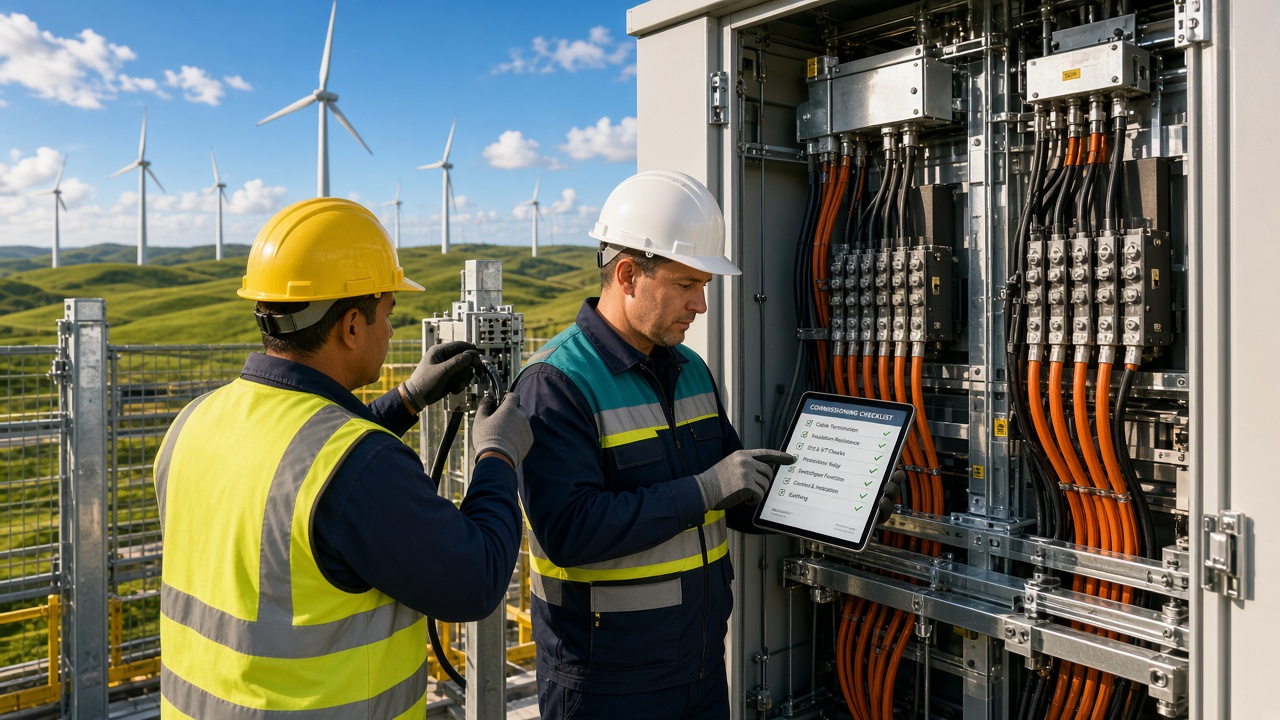
My take? Whether we hit 82% in 2030 or a few years later, the direction of travel is locked in, and the work pipeline is enormous either way. Every one of those wind farms and batteries needs substations, cabling, HV terminations, protection testing and commissioning. If you've been wondering whether to get your HV tickets or move into commissioning, this scorecard is your answer.
Home batteries cooled, but they're still well above where they were
The same scorecard had one softer number. After changes to the federal Cheaper Home Batteries rebate, small-scale battery installations dropped 44% in the September quarter and average system sizes fell 20%. Rooftop solar, though, remained materially above recent-year averages, and the size of storage going in is still more than double the average from before the program began in July 2025.
If you run a residential solar and battery business, I wouldn't panic about one quarter. Q2 was a record, and the underlying demand from households wanting to cut their bills hasn't gone anywhere. It's a good moment to tighten your quoting, sharpen your follow-up on old leads, and look at the next opportunity, which, in NSW at least, landed last Friday.
NSW adds up to $4,000 off energy upgrades
From 9am on Friday 13 November, low-income households in NSW, including renters, can apply for discounts of up to $4,000 under the Minns government's Home Energy Saver program, as Renew Economy reported.
The key details:
- Discounts are open to homeowners and renters with a combined gross household income of up to $80,000 a year, or an eligible concession card. Renters need their landlord's permission.
- Eligible upgrades include rooftop solar, home batteries, heat pump water heaters, reverse-cycle air conditioners, DC ceiling fans, certain EV chargers, insulation, draught-proofing and double glazing.
- The discounts can be combined with the program's zero-interest loans of up to $15,000, which have already been approved for more than 17,000 households since June.
- The program is generating work for more than 700 suppliers and installers across the state, many of them small businesses.
One detail I love: about 53% of loan recipients so far are outside Greater Sydney. That's a lot of work flowing to regional sparkies, and regional contractors who are set up to quote and install the full bundle (solar, battery, hot water heat pump, split systems) are in a brilliant position. If you're in NSW and not already across the program's supplier requirements, it's worth checking the program website this week.
The quality bar keeps rising
Now to the less glamorous but genuinely important news.
On 18 November, the Clean Energy Regulator declared a South Australian accredited installer ineligible to install solar PV or battery systems under the Small-scale Renewable Energy Scheme for five months, under its "three strikes" rule. Systems he installs during that period won't be eligible for STCs. The CER also said that since 1 July 2025 it has contacted more than 830 installers about adverse inspection outcomes, including 718 first-time advisory letters and 121 warning letters for repeated non-compliance.
CER Chair Tony Chappel's message was simple: "do it once and do it well."
The day after, WA's Building and Energy announced that a Caversham electrical contractor had been fined $15,000 (plus $825 costs) after signing off a home battery system in Mandurah that a Western Power inspection found was incorrectly wired and could back-feed the grid during an outage. The detail that jumped out at me: the electrician's test sheet didn't have a section for checking the battery system at all, yet a notice of completion was lodged declaring the work tested and compliant.
WA's Director of Energy Safety, Dan Kearney, put it plainly: "The buck stops with electrical contractors, who must instil a strong culture of compliance and equip their workers with proper testing procedures and documents."
I don't share these stories to wag a finger. The overwhelming majority of sparkies do excellent work. But there's a very practical lesson for every contractor: make sure your test sheets and procedures actually cover batteries and inverters, not just the traditional circuits. If your paperwork was designed before batteries became a big part of your work, now's the time to update it. That's a one-afternoon job that protects your crew, your customers, line workers and your business.
Across the Tasman: apprentices steal the show
My favourite story of the week came from Eden Park in Auckland, where Master Electricians New Zealand held its annual Excellence Awards alongside the first ever Trans-Tasman Apprentice Challenge. The results were reported on 18 November, and the event marked 25 years of the competition.
Fifteen apprentices competed in practical modules in front of a live crowd: five New Zealand finalists in Industrial, five in Domestic and Commercial, and five Australian finalists in Domestic and Commercial. Luke Softley of A2 Electrical Services took the supreme Trans-Tasman title, while New Zealand's Rickus Moll (Dalton Electrical) won Industrial and Christopher Maciulaitis (Aotea Electric) won Domestic and Commercial.
New Plymouth's HEL Rimu was named Master Electrician of the Year, recognised for work spanning rural jobs, industrial automation, solar, software and data communications, plus its investment in training. And Dalton Electrical won the Workforce Development and Training award after investing around AUD $680,000 equivalent in staff training over the past year, more than 10,300 hours, or roughly 3% of all hours worked.
Master Electricians NZ chief executive Alexandra Vranyac-Wheeler summed up the bigger picture: "New Zealand and Australia chase essentially the same skilled people. The energy transition runs on electrotechnology, and electricians are tomorrow's system builders."
I couldn't agree more. And the projects keep coming in NZ too. Earlier this month Meridian's proposed Western Bays Solar Farm west of Lake Taupō was accepted into the fast-track approvals process. It's up to 420 MW of solar with a 250 MW battery and a 9.7 km 220 kV transmission line, with a substantive application expected in early 2027 and construction potentially starting in late 2028.
What I'd do this week
If I were a sparky or contractor in Australia or New Zealand right now, here's where I'd put my energy:
- Back the big build. Look at HV, substation, cabling and commissioning roles on wind, battery and transmission projects, especially in Queensland, WA and SA where the construction commitments are strongest.
- Get across Home Energy Saver if you're in NSW, and package solar, batteries, hot water heat pumps and split systems into simple bundles.
- Update your test sheets so every battery and inverter install is checked, tested and recorded properly.
- Invest in your apprentices. Dalton Electrical's 3% of hours on training isn't a cost, it's why they're winning awards and attracting talent.
The momentum is real, and it's an exciting time to be holding a set of tools. When you're ready for your next move, browse the latest electrical jobs across Australia and New Zealand.