
Samsung Buys Powertech: Big Batteries Need HV Sparkies
Samsung C&T bought Perth's Powertech for its 300 engineers and techs as big battery builds ramp up. What it means for HV and commissioning sparkies.
If you only read one piece of electrical industry news this week, make it this one. In the space of a few days, a global construction giant bought a Perth electrical contractor for its people, a Victorian battery locked in a 10-year deal, a WA solar-and-storage project signed off a $280 million debt facility, and Hazelwood confirmed its second big battery will be grid-forming. Put those four stories side by side and the message for sparkies is loud and clear: utility-scale batteries have moved from "interesting niche" to "steady pipeline of serious HV work", and the companies building them are now paying real money to secure the skilled people who can deliver.
I want to unpack what happened, why it matters for your career, and what I would do this summer if I were an electrician looking to ride the big battery wave.
Samsung C&T buys Powertech, and the real prize is the workforce
According to pv magazine Australia, South Korea's Samsung C&T has taken a majority stake in Perth-headquartered electrical EPC contractor Powertech in a deal valued at about $100 million. The story first surfaced in the AFR's Street Talk column, citing PwC sales documents that forecast Powertech's FY26 revenue at $115 million.
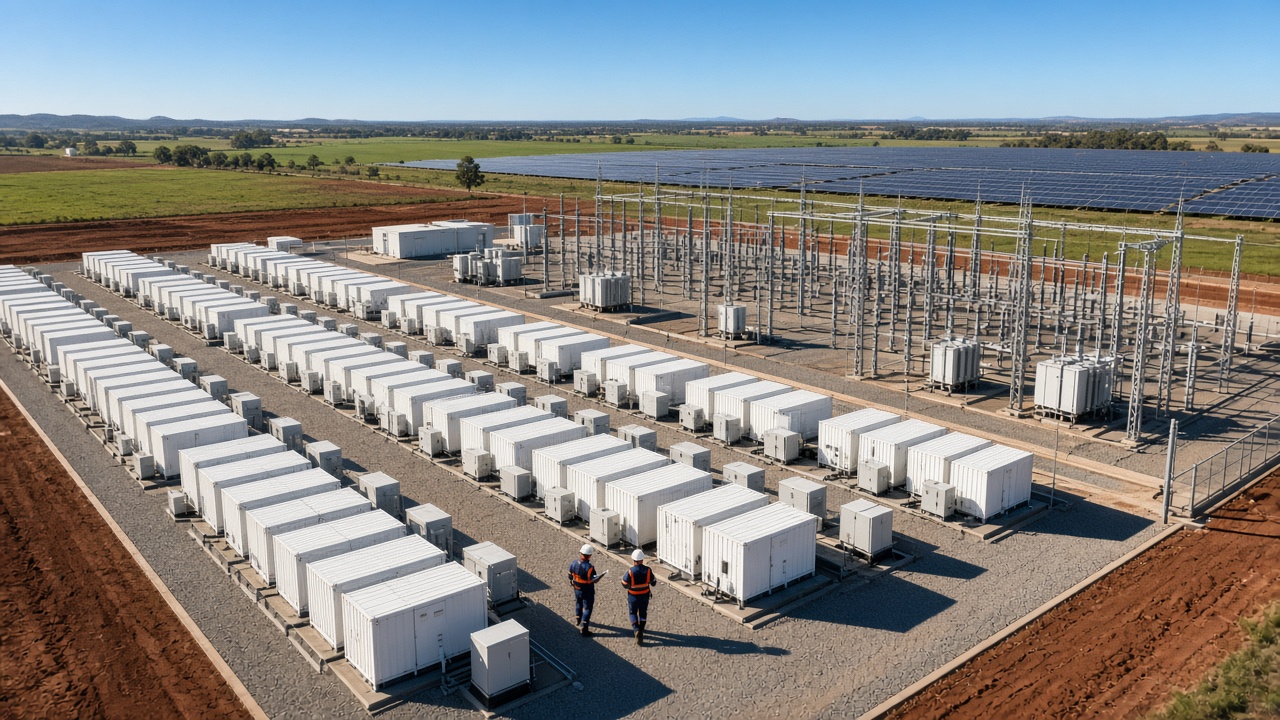
What did Samsung actually buy? Powertech works across Western Australia, Queensland, the Northern Territory and Singapore, and employs around 300 engineers and technicians. It delivers full power and electrical EPC work on utility-scale battery energy storage systems (BESS), switchyards, microgrids and standalone power systems, right through from feasibility and design to construction, commissioning and operations and maintenance.
Here is the bit I love. pv magazine describes the deal as securing 300 engineers and high-voltage technicians to de-risk Samsung's gigawatt-scale Australian battery pipeline. Read that again. A global company with deep pockets decided the safest way to make sure its batteries get built on time was to buy a team of Australian electrical people. That is the clearest signal I have seen this year that skilled HV and commissioning sparkies are the scarce ingredient in the energy transition, not the steel, not the cells, and not the capital.
Samsung C&T is not dabbling, either. It is already delivering a full-wrap EPC contract for FRV's 250 MW / 500 MWh Gnarwarre battery in Victoria, and its local developer arm is progressing the 200 MW / 800 MWh Darnum and 100 MW / 400 MWh Mangoplah batteries, plus the recently approved 80 MW / 320 MWh South Coree project. That is a lot of switchyards, cable, protection and commissioning work coming down the pipe.
Three more battery stories from the same week
The Powertech deal did not land in isolation. The same week brought a run of battery announcements that all point the same way.
Glenrowan, Victoria. State-owned energy company SEC finalised a 10-year offtake on 2 November covering the Glenrowan Solar Farm and a new 102 MW, four-hour battery in the state's north-east. The battery is expected to proceed to construction after financial close, and the owner, Pacific Partnerships, says it will be their first large-scale BESS hybridisation. Adding a battery to an operating solar farm is exactly the kind of brownfield job where experienced electricians who understand live sites, isolation and protection are worth their weight in gold.
Waroona, Western Australia. ASX-listed Frontier Energy signed a $280 million syndicated debt facility for Stage One of its Waroona project about 120 km south of Perth, pairing a 132 MW solar farm with an 81.5 MW / 562 MWh battery. Perth contractor Monford Group holds the fixed-price EPC contract, first trackers are due this month and first modules in January 2027, with first generation targeted for 2028. Frontier is planning a staged build-out to around 1 GW of solar and 660 MW of storage by 2031. For WA sparkies who would rather drive to work than fly, that is a genuinely exciting multi-year pipeline.
Hazelwood, Victoria. Energy-Storage.news reports that Sungrow will supply both the battery units and the grid-forming power conversion equipment for ENGIE's 150 MW / 300 MWh Hazelwood BESS 2, with Elecnor as balance-of-plant contractor. The job uses 66 battery units and 33 medium-voltage power conversion systems, targeting commercial operations in 2028. It sits beside the existing Hazelwood battery on the old coal station site, doubling output to 300 MW and reusing the site's transmission connection. I find it hard not to smile at that one: an old coal site in the Latrobe Valley becoming a showcase for cutting-edge grid technology, with local electrical jobs attached.
Why grid-forming matters to your career
Grid-forming is the phrase you will hear on every big battery site over the next few years, so it is worth understanding.
Most solar farms and batteries use grid-following inverters, which track the grid's voltage and frequency. Grid-forming inverters set their own reference and respond to disturbances in a way that is similar to the big spinning generators in coal and gas plants. As those plants retire, someone has to provide that stability, and increasingly it is batteries. Energy-Storage.news notes that AEMO made grid-forming BESS a priority in its engineering roadmap for 2026, and that grid-forming inverters already feature in around 74% of the 33.2 GW NEM battery pipeline.
What does that mean on the tools? More sophisticated protection settings, more power electronics, tighter testing and commissioning, and closer work with engineers, network operators and SCADA teams. The electricians who become fluent in that world are going to be in demand for a very long time. I would put "understands grid-forming commissioning" right up there with an HV ticket as a career accelerator.
The bigger picture: batteries are outpacing last year
This is not a one-week blip. The Clean Energy Council's latest bi-annual investment report, released on 26 October, found that nine utility-scale batteries worth $4.3 billion, totalling 2.3 GW / 7.1 GWh, were switched on in the first half of 2026. That is more than the 2 GW / 5.1 GWh added across the whole of 2025. The CEC also counts $32.5 billion of generation and storage projects under construction or at financial close, with Queensland leading on investment and New South Wales holding the largest battery pipeline at 4.3 GW / 11.2 GWh.
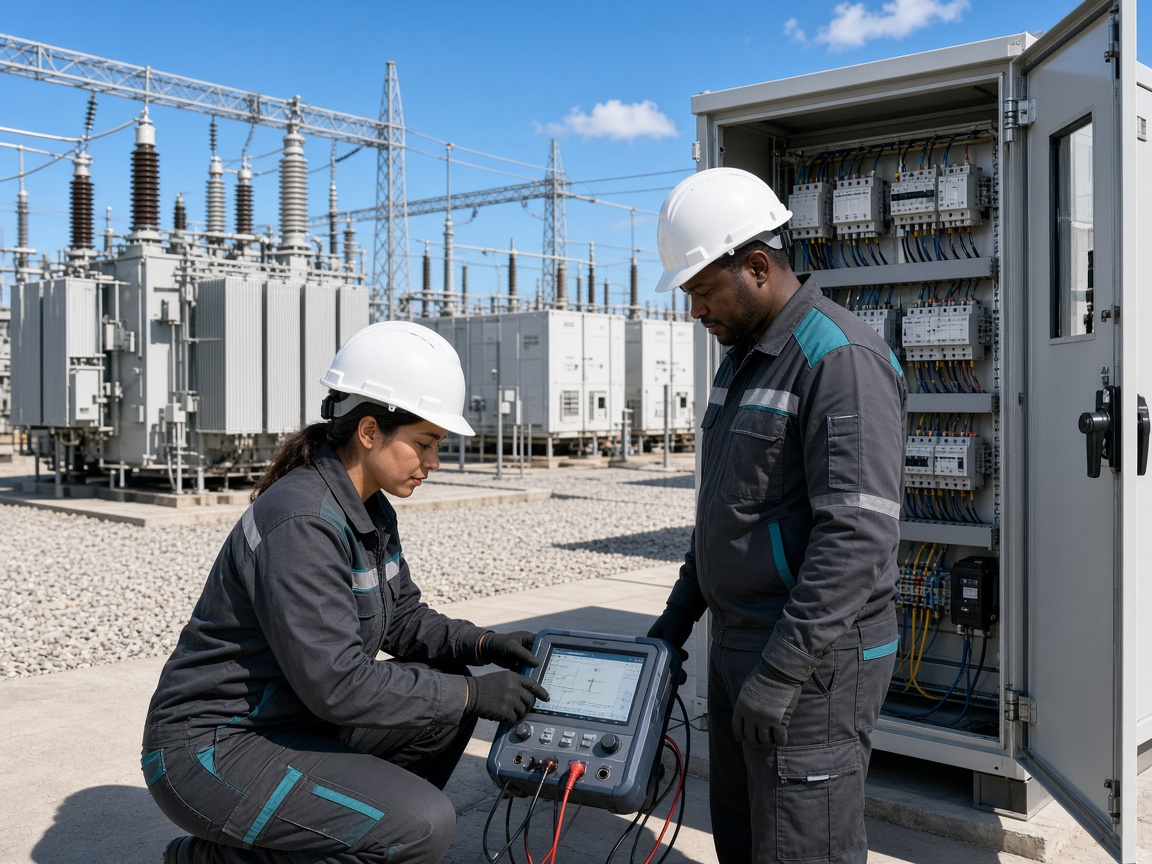
Every one of those gigawatts needs electricians at multiple stages: cable pulling and terminations during construction, HV switchyard and substation work, protection and control, pre-commissioning checks, energisation, and then years of operations and maintenance. Battery sites are also generally cleaner, more structured workplaces than a lot of heavy industry, which suits sparkies who like methodical, technical work.
Who is hiring and what they want
From what I see across job ads and project announcements, big battery employers and their contractors keep asking for the same things:
- An unrestricted electrical licence, with industrial or commercial experience preferred over purely domestic.
- HV experience and switching authorisations, or a willingness to train toward them.
- Testing and commissioning skills, including insulation resistance, protection relay testing and confident use of test sets.
- Comfort with documentation: ITPs, test sheets, isolation permits and as-built records. Battery owners and lenders want a clean paper trail.
- SCADA, PLC and communications awareness, because these sites are controlled and monitored remotely.
- Mobility. Many projects are regional, so FIFO, DIDO or relocating to a growth area can open doors faster.
The Powertech story also reminds me that the established EPC and electrical contractors are where a lot of this work flows. If you want into big batteries, look closely at the balance-of-plant contractors named in project announcements, as well as the battery makers' own service teams. Those names change project by project, so set up alerts and keep an eye on the news.
My practical playbook for sparkies
If I were an electrician wanting a bigger slice of this work in 2027, here is what I would do, starting now:
- Get your HV pathway moving. Ask your current employer about HV switching and access training, or target an employer who will put you through it.
- Volunteer for commissioning. Even on smaller commercial jobs, put your hand up for testing and commissioning. It is the skill that translates most directly to battery sites.
- Learn the language of inverters. Understand the difference between grid-following and grid-forming, what a power conversion system does, and how a battery's energy management system talks to the grid. Free manufacturer webinars and industry reports are a great place to start.
- Tidy up your CV. List voltages worked on, test equipment you know, any switchyard or substation exposure, and every relevant ticket. Hiring managers on these projects skim for specifics.
- Follow the money. When a project signs a debt facility or offtake, construction hiring usually follows within months. Waroona and Glenrowan are two to watch right now.
You can browse current roles on our electrical jobs board, and I would strongly suggest setting up a job alert for battery, BESS, commissioning and HV roles in your state.
The bottom line
I am genuinely excited by this week. When a company the size of Samsung C&T decides that the smartest move in the Australian battery market is to buy 300 skilled engineers and technicians, it tells you exactly where the value sits: with people. Add a 102 MW battery in Victoria's north-east, a 562 MWh battery south of Perth and a grid-forming expansion at Hazelwood, and the outlook for skilled sparkies has rarely looked brighter.
The grid of the late 2020s is being built right now, one battery yard at a time. If you have a licence, a good attitude and a hunger to learn HV and commissioning, there has never been a better moment to plug in.