WA Moves to Legalise Plug-In Solar: What It Means for Sparkies
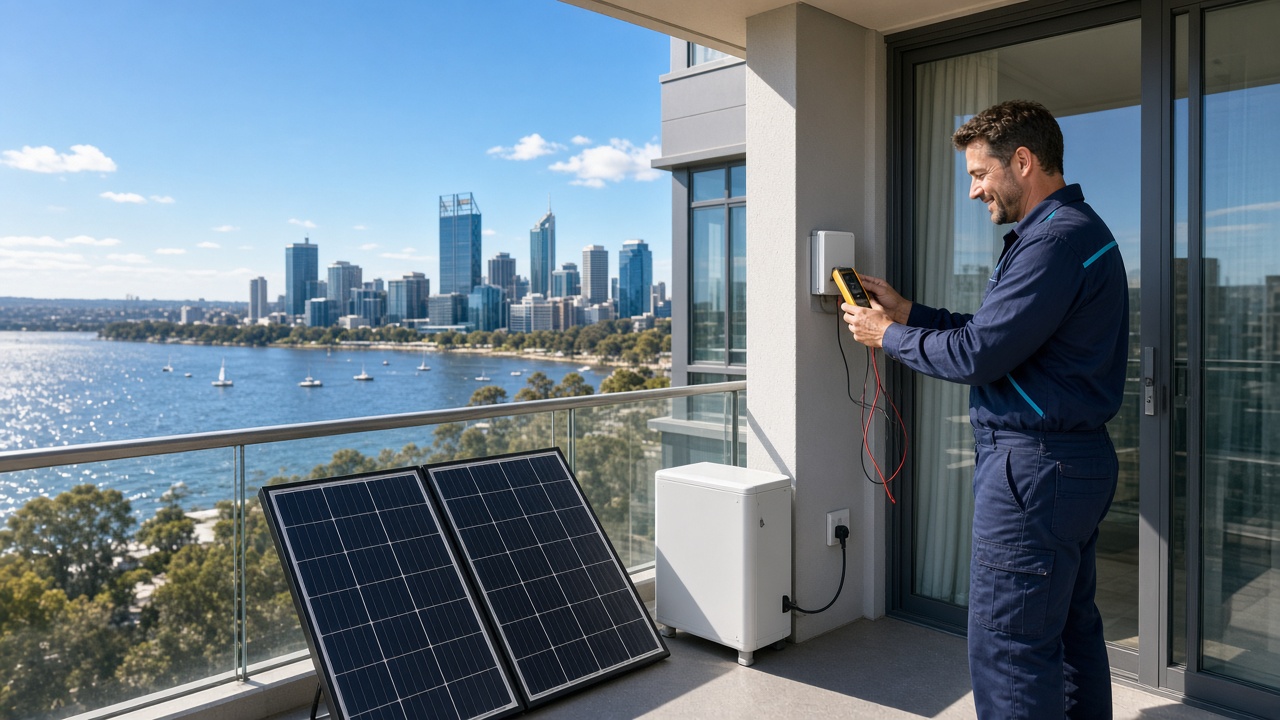
WA is set to legalise plug-in balcony solar and batteries. What the draft 800 VA standard says, the timeline, and where the work lands for AU and NZ sparkies.
Western Australia has just fired the starting gun on one of the most interesting shifts in consumer energy this country has seen since rooftop solar took off. On 28 October the WA Government announced it is moving to legalise plug-in solar panels and batteries, the "balcony solar" kits that millions of European households already use. It would make WA the first Australian state or territory to allow them, and a formal consultation on the safety standard is now open.
At first glance this looks like a story for renters, not sparkies. A system that arrives in a box and plugs into a power point doesn't sound like electrician work. But read the draft standard properly and a different picture emerges. Plug-in solar doesn't cut licensed electricians out of the energy transition. It opens a brand new customer base of people who have never been able to buy solar at all, and many of them will need a sparky before they plug in. Here's what's actually been proposed, what the timeline looks like, and where I think the work will land.
What WA has actually announced
The Department of Energy and Economic Diversification and the Building and Energy Division are consulting on a legalisation pathway and a new Technical Bridging Standard (TBS) that would class compliant plug-in systems as standard electrical appliances. The headline limits are solar panel combinations of up to 2 kW (DC) and inverters of up to 800 VA (AC). Interestingly, the draft doesn't set an upper limit on plug-in battery storage capacity.
The consultation opened on 28 October and closes on 9 December 2026, with results expected on 20 January 2027. The departments say they expect to publish a consultation summary, an updated certification route and version 2 of the TBS by February 2027, and only then prepare the regulatory changes that make the systems legal. So nobody should be selling or plugging these in tomorrow. This is a staged process, and WA ministers have been clear they want to get the safety settings right first. As Commerce Minister Tony Buti put it: "Western Australia will be the first state in the country to make this legal and we want to ensure that it's done properly."
The pitch to households is simple. The state estimates a typical plug-in system could save around $240 a year, or about $500 a year with a battery. The ABC reports that kits overseas typically cost up to $1,300 plus extra for a battery, and that industry experts put the payback at somewhere between four and ten years. Solar Citizens, which has campaigned for legalisation, has previously estimated savings of $300 to $400 a year, doubling with a plug-in battery.
The fine print every electrician should read
I went through the draft TBS so you don't have to, and a few details matter a lot for our trade.
First, the scope is tight. It covers single-phase, residential-only systems at 230/240 V and 50 Hz, with apparent power not exceeding 800 VA. Only one plug-in generator is allowed per household, and critically, a plug-in system must not be used at a site with an existing fixed installation such as traditional rooftop solar. That's an important line. Plug-in solar isn't competing with your rooftop and battery jobs. It's aimed squarely at the homes rooftop solar can't reach: apartments, rentals and people who don't control their roof.
Second, the connection rules are strict. Systems must use an AS/NZS 3112:2025 Type I plug, and extension cables, multi-way adaptors and travel adaptors are banned. Inverters need anti-islanding protection verified to AS/NZS IEC 62116, products must be type tested with evidence submitted for registration through the Electrical Equipment Safety System (EESS), and the documentation must include instructions on notifying the distribution network operator about installation and decommissioning.
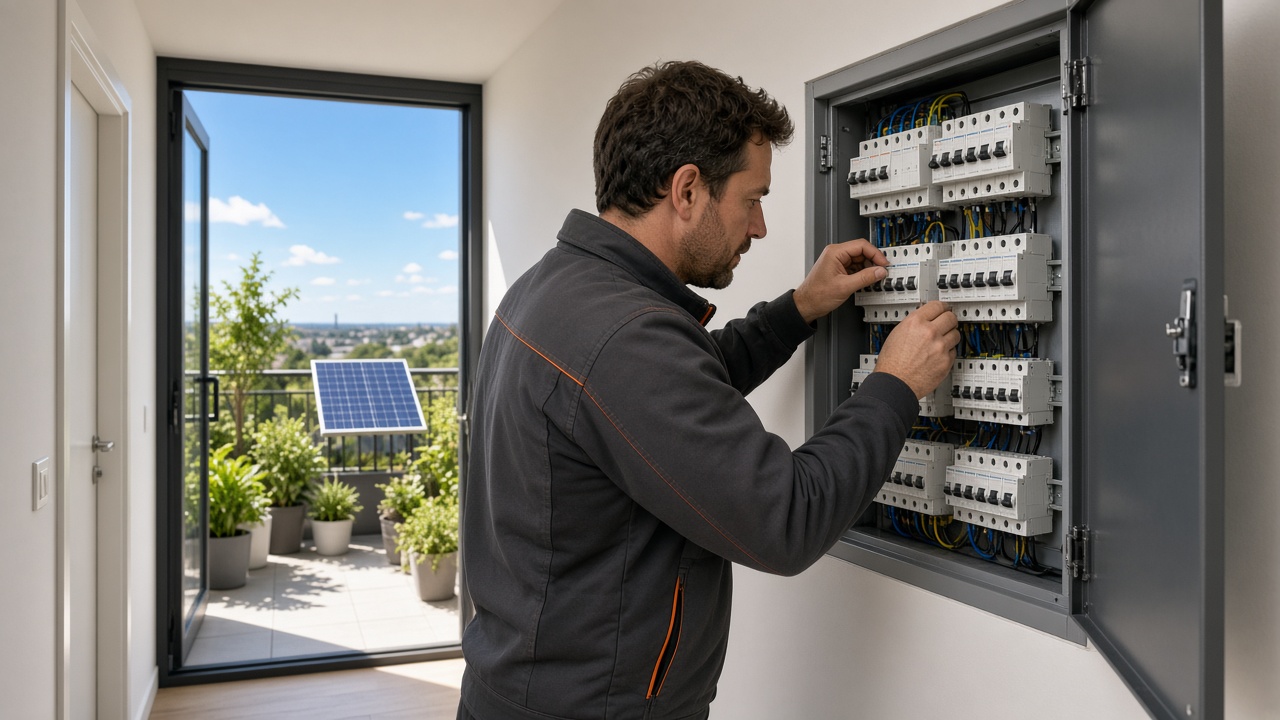
Third, and this is the bit I'd circle, the draft is explicit about where licensed work begins. Manufacturer instructions must state that any necessary testing and modification of the building's electrical installation can only be performed by licensed electricians in accordance with the Wiring Rules. Where connecting the product requires changes to the final circuit, that has to be flagged as licensed electrician work. Users must be advised to check their installation has modern residual current protection (RCDs and RCBOs) and is in good condition. And where a switchboard doesn't use modern protective devices, isn't clearly labelled or is of unknown condition, the instructions must tell users to get it inspected and assessed by a licensed electrician before installing.
Think about the housing stock we're talking about. Older walk-up apartments, ageing rentals, units with switchboards that haven't been touched in decades. A lot of those homes will fail that self-check, and the standard itself sends the customer straight to a sparky.
Where the electrical work actually lands
So, if you're an electrician or an electrical contractor in WA, what does this mean in practice? Here's how I see it playing out once the rules are final.
Switchboard inspections and upgrades. This is the big one. A household that buys a $1,000-plus plug-in kit and reads that its board needs modern RCD protection is a warm lead for a switchboard assessment and upgrade. Contractors who package a fast, fixed-price "plug-in solar readiness check" could do very well.
Outlet and final circuit work. A balcony or courtyard may not have a suitable socket-outlet where the sun is. Any new or modified outlet is licensed work under the Wiring Rules, and on balconies and outdoors you're into weatherproofing, IP ratings and cable routing that a DIYer has no business attempting.
Strata and landlord work. ABC notes the state now needs landlords and body corporates on board. Strata managers will want independent advice on building-wide impacts, and owners' corporations may commission electricians to review common switchboards and set rules for residents. That's consulting work most sparkies haven't sold before, and it pays.
Retail, testing and compliance roles. Every product sold needs type testing, registration and proper documentation. Retailers and importers entering this market will need technical people who understand AS/NZS standards, and testing labs will need electrically qualified staff. These are good off-the-tools options for experienced electricians.
Network-side jobs. Swinburne's Professor Mehdi Seyedmahmoudian told Renew Economy that as adoption grows, "network operators will also need to understand the cumulative impacts of these systems on local voltage and power quality." More small inverters on the low-voltage network means more monitoring, data and power quality work, which is exactly where the industry is heading anyway.
The national picture: a race to the top
WA isn't working in a vacuum. In September, federal and state energy ministers agreed to explore pathways for the safe deployment of plug-in consumer energy devices. Federal Energy Minister Chris Bowen warned at the time that "this is not happening overnight, we have to get it right, and the work on the standards is very important," pointing to strata and tenancy laws as some of the hardest parts to sort out. This week he told Renew Economy the Commonwealth agrees plug-in solar and batteries "have an important role to play in providing more options to renters and apartment dwellers."
Advocates want speed. Solar Citizens CEO Heidi Lee Douglas said WA's move "starts a 'race to the top'" and called for a nationally coordinated approach by July 2027. Glen Morris, a solar and battery engineer who sits on the Standards Australia committees that write the installation rules, has argued the path is "not complicated": a product standard so the inverter shuts down instantly when unplugged, a cap of around 800 watts so it can't overload a normal circuit, and simple registration with the network. WA's draft lines up closely with that blueprint, and it says the final TBS will likely be split into product and installation parts to match AS/NZS documents and support national consistency.
Overseas, the technology is well proven. The ABC notes Germany has an estimated one in ten households with a system, and the UK legalised plug-in solar earlier this year.
Across the Tasman
New Zealand is on a similar path. Plug-in solar isn't legal there yet, but the Ministry for Regulation's solar regulatory review recommended legalising it, and on 10 August 2026 Cabinet agreed to progress regulatory amendments to enable it, alongside clearer building consent exemptions, more consistent planning rules and a possible trial of a more risk-based electrical inspection model. The ABC reports NZ is looking to legalise within 12 months. For Kiwi sparkies, the same playbook applies: older housing, lots of renters, and a standard that will almost certainly lean on registered electrical workers wherever the fixed installation needs touching.
My take: welcome it, then get ahead of it
I'll be honest: some in the trade will see "no electrician required" in the headlines and feel uneasy. I think that's the wrong read. More than 40% of homes on WA's main grid already run rooftop solar, and the people left out are mostly renters and apartment dwellers who were never going to be your customers. Plug-in solar brings them into the market, gives them a reason to care about their switchboard, and creates a whole category of small, profitable, repeatable jobs. That's growth, not threat.
The risk is the cowboy end of the market: dodgy imported kits, adaptors and overloaded old circuits. That's exactly why good electricians matter here. The trade has a real chance to shape this, and the consultation is open now. If you're in WA, read the draft and put in a submission before 9 December. Then get ready: build a simple readiness-check offer, brush up on RCD and RCBO upgrade options for older boards, and talk to strata managers in your area before your competitors do.
The energy transition just found a way into millions of homes that couldn't get in before. Somebody has to make those homes safe and ready, and that somebody is a licensed sparky. If you want to be part of it, check out the latest solar, battery and electrical jobs on ElectricalRoles.