
What Does a Cable Jointer Do? Pay, Tickets and Pathways
What cable jointers do, what LV and HV jointing roles pay in today's AU and NZ ads, and how to qualify through UET30821 or NZ's Level 4 cable jointing.
Every time a new estate gets power, a solar farm connects to the network or a data centre lights up a new hall, there's a moment nobody outside the trade ever sees. Two cables meet in a pit or a trench, and someone has to join them so perfectly that they'll carry thousands of volts, safely, for decades. That someone is a cable jointer, and I reckon it's one of the most underrated, in-demand jobs in the whole electrical world right now.
This is the latest in my series on what each electrical role actually does. We've covered lineworkers, substation electricians, commissioning electricians and plenty more. Cable jointing sits right alongside them, and with the amount of underground cable going into the ground across Australia and New Zealand, it deserves its own spotlight.
So what does a cable jointer actually do?
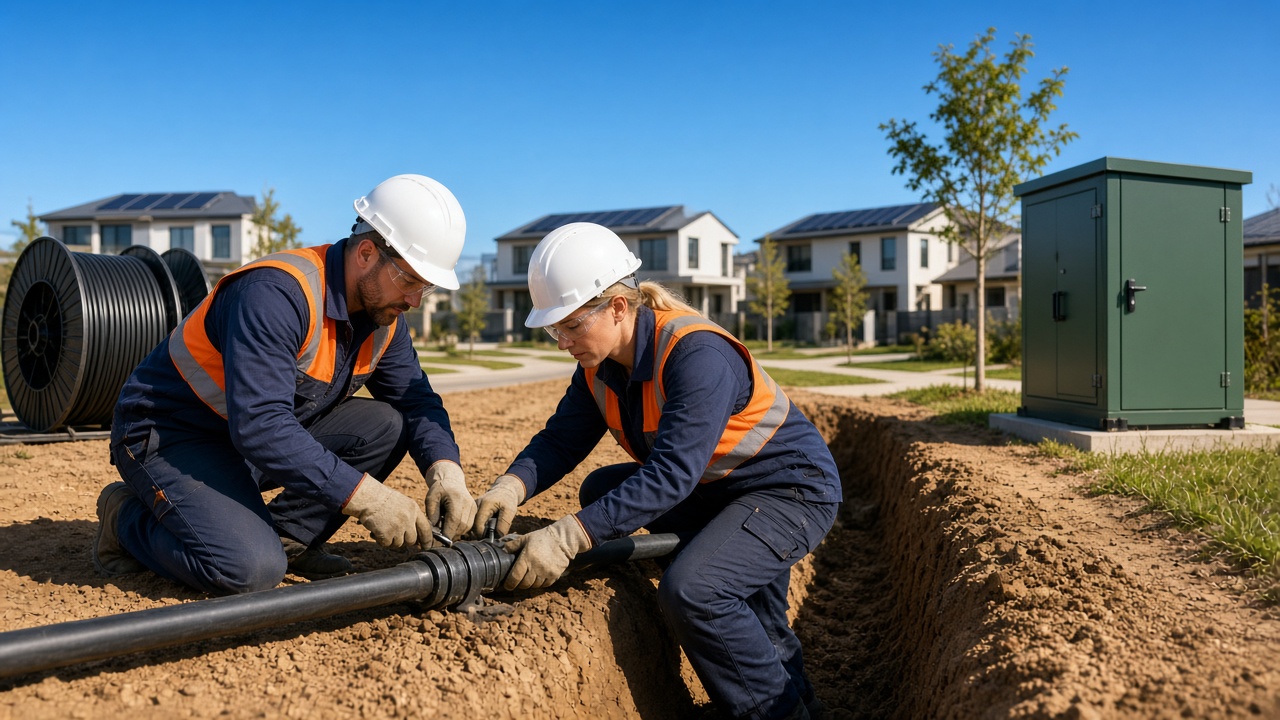
Jobs and Skills Australia's occupation profile sums it up well: technical cable jointers join insulated electric power cables installed in underground conduits and trenches, and prepare cable terminations for connection to electrical equipment and overhead lines.
In real life, a week might include:
- Jointing and terminating LV and HV cable. Stripping back the layers of a cable, preparing the insulation and screens with real precision, and building a joint or termination that matches the manufacturer's kit and the network's standards
- New connections. Underground services for new homes and subdivisions, and bigger feeders for commercial sites, solar farms and batteries
- Fault work. Finding and repairing damaged cable, often after a dig-in or an insulation failure, and getting customers back on supply
- Testing. Proving the cable and the joint are sound before anything is energised
- Installing equipment. JSA lists transformers, substation installation and maintenance, and even specialised testing and revenue meter installation among the tasks
- Working with plant. Elevated work platforms, cranes, hydraulic tools and the rest of the kit that comes with network work
The best way I can describe it: it's part electrician, part surgeon, part detective. A joint on a high-voltage cable is unforgiving. Contamination, a nick in the insulation or a rushed step can cause problems down the track. The people who do it brilliantly are calm, tidy and proud of their work.
A small, specialised workforce
Here's a stat that jumped out at me. JSA's profile, based on the 2021 Census, counted only about 580 people whose main job was technical cable jointer. Of those, 94% work full-time, the median age is 38, and only 2% are women. Around 32% were in New South Wales, 31% in Victoria, 19% in Queensland and 14% in Western Australia.
That's a tiny pool for a job this important. It's an old count now, and I'd expect plenty of people doing jointing work are counted as electricians or lineworkers, but the message is clear: this is a specialist trade, not a crowded one. If you get good at it, you're rare. And rare is valuable.
The 2% figure also tells me there's a lot of room for more women in the trade. Nothing about jointing needs anything except skill, care and a good head for safety.
What it pays: today's ads, not a promise
As always, I want to be straight with you about pay. It swings hugely by state, network, employer, enterprise agreement, overtime and whether a job is permanent or contract. So instead of quoting a magic "average", here's what was actually being advertised when I checked SEEK's cable jointer listings this week. There were 284 results in Australia (not all of them pure jointing roles):
- Sydney, NSW: a critical infrastructure contractor advertising $60 to $75 an hour plus super and overtime
- Far North Coast, NSW: an 11 kV distribution cable jointer role, working with Essential Energy on projects including solar farms, at $95,000 to $125,000 a year
- Perth, WA: a full-time HV cable jointer for installation and termination work across WA at $45 to $60 an hour
- Perth, WA: another role at $56 an hour plus overtime penalties on a consistent 10/4 roster across metro and regional WA, with relocation assistance
- Melbourne, VIC: HV cable jointer roles pitched on enterprise agreement rates under a Powerline agreement, with allowances and a nine-day fortnight
And across the ditch, SEEK New Zealand showed 209 results, including Christchurch roles at $34 to $39.50 an hour and $35.27 to $43.50 an hour plus overtime and allowances, plus Northpower cable jointer jobs in Auckland and Palmerston North working on underground networks up to 33 kV.
Those are snapshots from job ads, and they don't all count things the same way. Some include super, some don't, and overtime and allowances can make a big difference to what lands in your account. Compare like with like and always ask what's in the number.
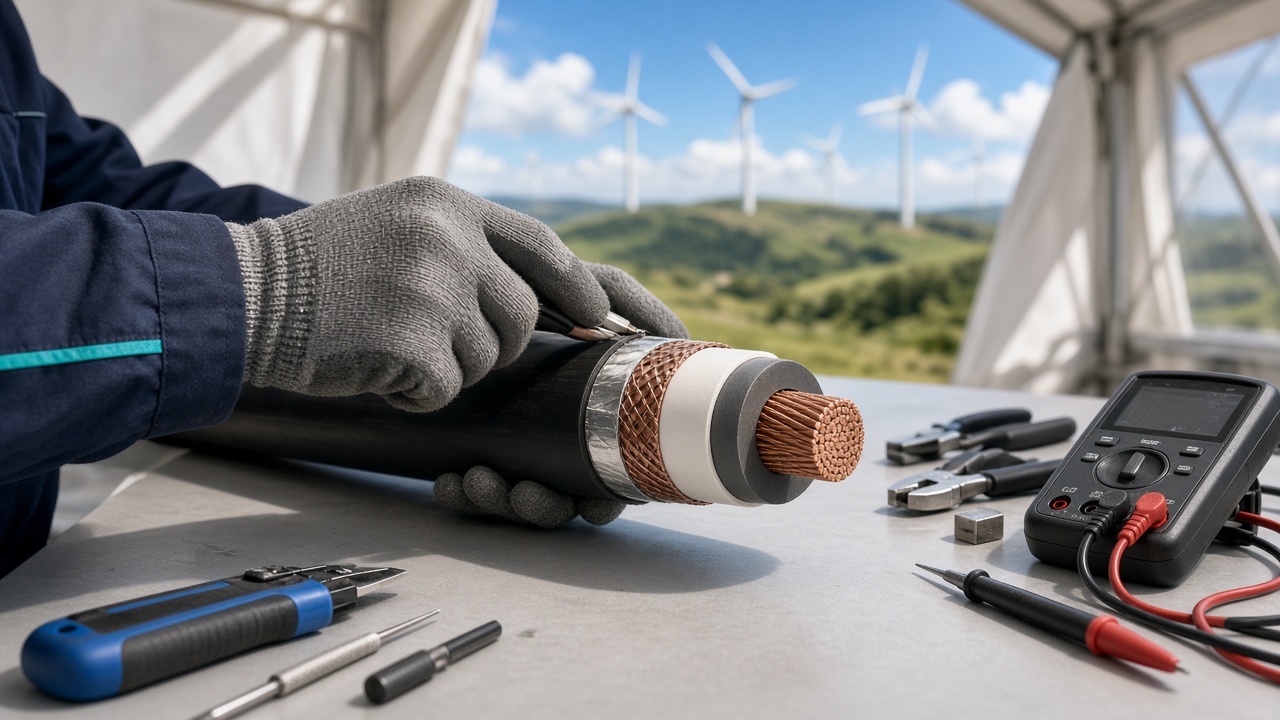
Precision is the whole job: every layer of an HV cable has to be prepared perfectly before the joint goes on.
How you become a cable jointer in Australia
The national qualification is UET30821 Certificate III in ESI – Distribution Underground, which training.gov.au describes as the skills and knowledge to work as a Distribution Underground Cable Jointer. It covers installing and maintaining LV and HV underground cables, services and electrical equipment. It replaced the older UET30819 Distribution Cable Jointing qualification.
It's 23 units: 18 core plus 5 electives. The core is a good picture of the job itself:
- Jointing, terminating and maintaining LV and HV underground polymeric cable
- Installing, testing and verifying distribution underground cable installations
- Working safely in the vicinity of live electrical apparatus
- A dogging licence and a boom-type elevating work platform licence
- Electrical theory, from single and multiple path circuits to low voltage AC
The electives are where you can specialise, including HV testing of underground cable, locating cable faults, jointing older paper-insulated cable (still very much in the ground in lots of older networks) and transition joints between paper and polymeric cable.
Most people do it as an apprenticeship or traineeship with a network or a contractor. Providers listed on the training register include TAFE NSW, Holmesglen, Ergon Energy, Endeavour Energy, Western Power (Electricity Networks Corporation) and several private RTOs. Licensing and authorisation rules differ by state and network, so check what your state regulator and your employer require before you start.
Already a licensed electrician? Plenty of the HV ads I looked at are open to sparkies moving across. Your licence, testing skills and safety habits give you a head start. Ask employers about training into HV jointing, because some networks and contractors will skill up the right person.
And in New Zealand
New Zealand has a dedicated registration class. The Electrical Workers Registration Board registers Cable Jointers. You can qualify by passing the Cable Jointer exam with two years (4,000 hours) of satisfactory cable jointing experience, or by completing an approved Level 4 cable jointer training programme.
The training route most people take is through Connexis, which lists Cable Jointing (NZQA #2227-3) at Level 4, worth 157 to 192 credits, with Electricity Supply (Introductory) at Level 3 as a common starting point. It's a proper apprenticeship, done on the job with a network or contractor.
If you're thinking of moving between Australia and New Zealand, check the registration rules on both sides before you book the flight. The skills travel well, but the paperwork needs to line up.
Why I'm so bullish on this trade
Look at what's being built. Marinus Link alone includes around 90 kilometres of underground cable in Victoria. Western Power's Northern Terminal expansion has new underground cable routes. Every new suburb, every big battery, every solar farm and every data centre needs underground connections. In New Zealand, networks like Northpower are hiring jointers for systems up to 33 kV, and Transpower is busy connecting new generation.
At the same time, more networks are putting cable underground for reliability and amenity, and old paper-insulated cable needs maintaining and replacing by people who know how to work with it. That's demand from new builds and old assets. It's hard to think of a better combination for job security.
The honest bit
It's not for everyone. You'll work in pits and trenches, in the sun and in the wet. Fault callouts don't respect weekends. The work is precise and repetitive in the best and worst ways, and you need patience. If you hate detail, you'll hate jointing.
But if you like working with your hands, take pride in a perfect finish and want a skill that's genuinely scarce, it's a fantastic career. And it opens doors to HV testing, supervision, network planning and even your own contracting business.
My practical advice
- Get the basics on paper. A dogging ticket, an EWP licence and a clean driving record make you easier to say yes to
- Volunteer for the testing. Understanding insulation resistance and HV test results makes you more than "the person who builds joints"
- Learn paper cable as well as polymeric. Older networks are full of it, and fewer people can work on it confidently
- Keep a jointing log. Voltages, cable types, joint kits and terminations you've done. It's evidence that builds trust fast
- Look at network employers and the contractors who work for them. Both hire and both train
- Set up a job alert. Jointer roles are niche and the good ones don't sit around
The energy transition gets talked about in gigawatts and big announcements. But a lot of it actually comes down to a jointer in a trench, getting every layer exactly right. That's a job I'd be proud to do, and I'd love to see more of our readers doing it.
Ready to look? Browse the latest electrical jobs on ElectricalRoles, including cable jointing and HV roles across Australia and New Zealand, and set up an alert so you hear first.