
What Does a Commissioning Electrician Do? Pay and Pathways
What commissioning electricians do, what HV and solar farm roles are advertising for pay, and the skills ladder, with Swinburne's new training.
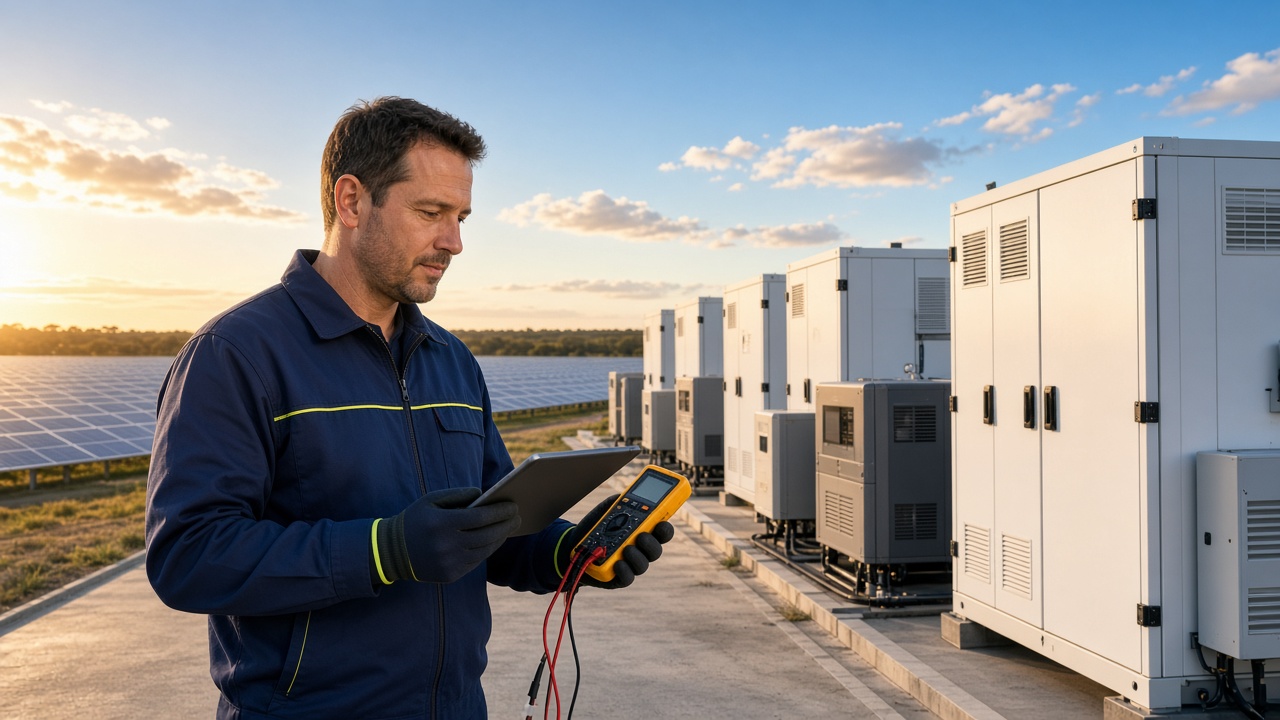
If you've ever watched a solar farm, a battery or a substation go from a pile of kit to a live, humming asset, you've seen the work of a commissioning electrician. They're the people who get to say "yes, it works, and it's safe". I reckon it's one of the most exciting jobs in the trade right now, and this week there's fresh evidence of why.
The skill gap everyone's talking about
On 6 November Swinburne University announced five new microcredentials for licensed electricians working with integrated power systems, meaning setups where solar, batteries, EV chargers, loads and the grid all interact. The industry engagement behind it found electricians need stronger skills to commission, test and fault-find these systems.
Swinburne's Senior Educator in Electrical Trades, Ash Reid, put it plainly: "Commissioning and fault-finding are where electricians told us they need more support, particularly as every system and brand behaves differently." The training was delivered under the Victorian Skills Authority's VET Certificates in Renewable Energy program, with TAFE Gippsland, South West TAFE and Federation University, and the materials will be shared with TAFEs across Victoria.
I love that, because it names the exact thing separating a good electrician from a sought-after one. Anyone can pull cable. Far fewer can walk onto a site, energise a system and work out why two bits of equipment from different manufacturers won't talk to each other.
So what does a commissioning electrician actually do?
In short: they prove that what was installed works as designed, safely, before it's handed over. Depending on the project, the day-to-day looks like this:
- Pre-energisation checks. Inspecting terminations, labelling, earthing and protection settings against the drawings and test plans
- Testing. Insulation resistance, continuity, polarity, functional tests of protection and control circuits
- Energisation and switching. Bringing equipment live in a controlled, sequenced way, often under a switching program and lock-out/tag-out (LOTO) procedures
- Integrated systems testing. Checking that inverters, batteries, SCADA and control systems behave together, not just on their own
- Fault-finding. When something doesn't behave, working through it methodically rather than guessing
- Paperwork. Test records, commissioning reports and handover documentation. It isn't glamorous, but it's the proof the asset is safe and compliant
You'll find commissioning electricians on solar farms, big batteries, wind farms, substations, data centres, mine sites and industrial plants. The tools change. The mindset doesn't: be methodical, be safe, and leave a clear record.
What it pays: a snapshot, not a promise
I want to be careful here. Pay for commissioning work varies enormously by state, project, roster, tickets and whether it's a contract or a permanent job. What I can do is show you what's being advertised right now. A quick look at SEEK's commissioning electrician listings today turned up:
- HV commissioning, FIFO from Perth on a 2:1 roster: several ads at $105 an hour plus super, typically requiring a WA electrical licence and HV switching certification on 12-month contracts
- Testing and commissioning technicians (mining), Perth and Kalgoorlie: $54 to $76 an hour, permanent full-time
- Solar farm commissioning in NSW (DIDO, 14/7 roster): an ad at $55 an hour including casual loading, plus $8 allowances and penalties/overtime, with LOTO experience preferred
- FIFO electrical projects in Perth: one agency ad at $95 to $110 an hour, with commissioning and HV experience highly regarded
Those are advertised rates, snapshots from job ads, and they don't include everything (or exclude everything) the same way. Some are casual rates, some include super, some are contract, and rosters matter. Compare like with like, and ask what's in the number before you get excited about it.
If you want a real example of how employer pay can look for network work, Endeavour Energy's Technologist ad for substation construction and maintenance lists a base salary of $83,760 to $99,540 plus 16.5% super. That's a different type of role, but it's a useful reference for the substation end of the trade.
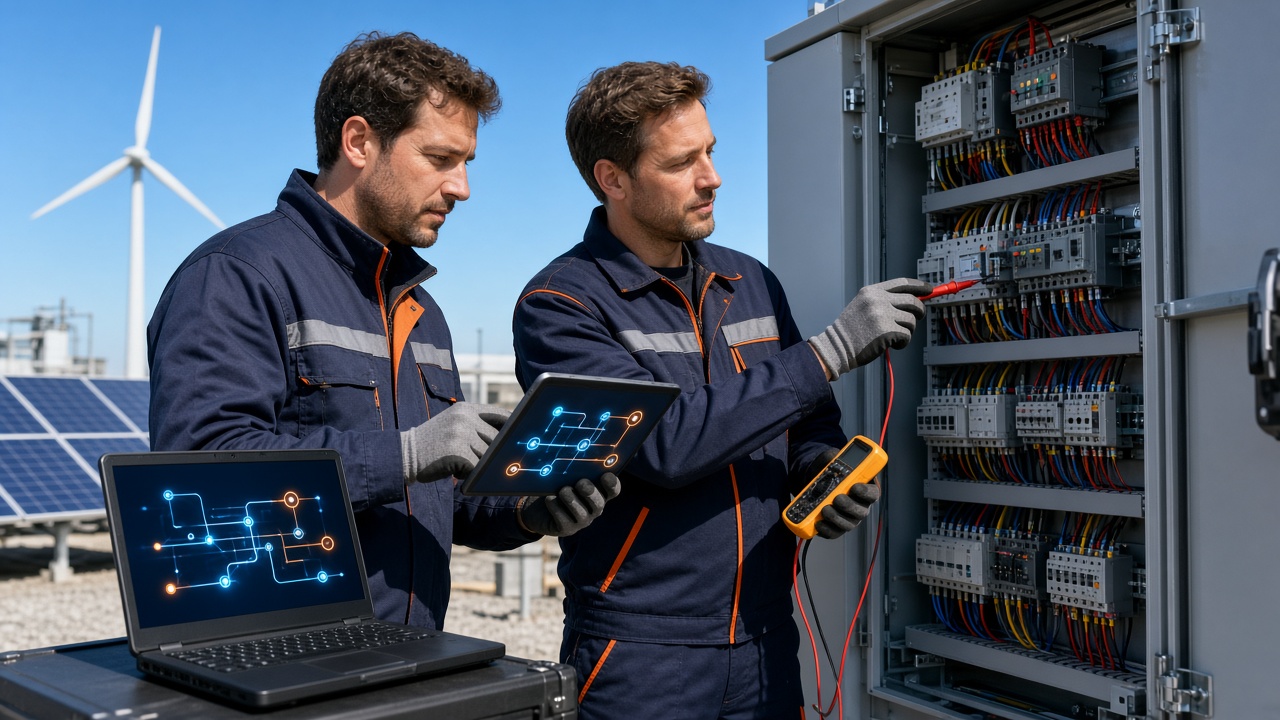 Commissioning electricians test, prove and sign off the systems that keep the lights on.
The ticket and skills ladder
Here's how I'd think about the pathway, based on what these ads ask for:
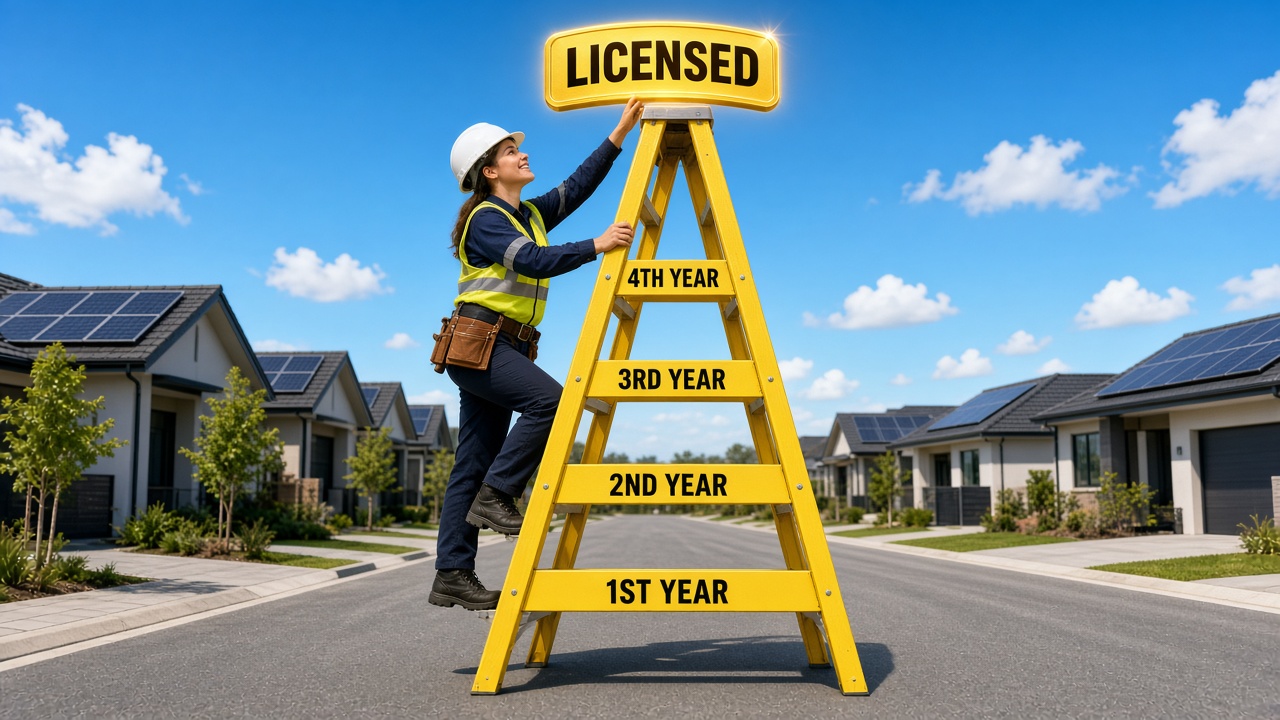
- Get your licence. A Certificate III in Electrotechnology (Electrician) and your state licence are the base. Almost every ad above asks for it
- Get comfortable with testing and fault-finding. Whatever your day job, volunteer for the testing. Learn what "normal" looks like so you can spot "abnormal"
- Add HV. HV switching operator certification shows up again and again in the best-paid ads. Check the exact requirement for your state, because it varies
- Learn integrated systems. Solar plus batteries plus EV charging plus grid is where Swinburne found the gap. Microcredentials like theirs are designed to fill it
- Move into supervision or engineering. Some of the ads I saw were for commissioning supervisors and commissioning engineers. The trade is a platform, not a ceiling
For New Zealand readers, the principles are the same: licence, testing, HV competence and integrated systems. Check the requirements with the relevant NZ regulator and your employer before you chase a role across the ditch.
The honest bit: it isn't for everyone
Commissioning suits a particular type of person. Rosters can be tough: 2:1 and 14/7 FIFO and DIDO schedules are common, and project work can start and stop. You'll often be the person who finds out what's wrong at 5pm on a Friday. And you need patience, because fault-finding is detective work.
But if you like variety, travel, being trusted and getting paid for knowledge rather than just hours, it's a brilliant corner of the trade. And with solar farms, batteries, wind, transmission and data centres all heading for the same bottleneck, I can't see the demand for people who can switch things on safely dropping any time soon.
My practical advice
- Start a personal commissioning log. Projects, equipment types, tests you've done, systems you've energised. It's a CV that writes itself
- Learn more than one brand. As Ash Reid said, every system and brand behaves differently. Breadth makes you valuable
- Treat documentation as a craft. Clean, accurate test records build trust fast
- Keep an eye on training that's coming through. Victorian TAFEs are getting the Swinburne materials. If you're in Victoria, ask your RTO what's on offer
- Set up job alerts. The good commissioning roles go quickly
The energy transition isn't just panels and policy. It's thousands of moments where someone qualified closes a switch and says it's ready. I want more of those people, and I want them to be ours.
Ready to look? Browse the latest electrician jobs on ElectricalRoles, including commissioning and HV roles, and set up a job alert so you hear first.