
What Does a Lineworker Do? Pay, Tickets and Pathways in AU and NZ
What lineworkers do, who's hiring (HumeLink, Zinfra, Western Power), real hourly rates, the Cert III and tickets you need, and how to get in across AU and NZ.
If you've ever driven past a crew working 50 metres up a steel tower in the middle of a paddock and wondered who those people are, this one's for you. Lineworkers (linespeople, linies, powerline workers, whatever your crew calls them) are the people who physically build and maintain the poles, wires and towers that carry electricity from generators to every home and business in Australia and New Zealand. And right now, they are some of the most in-demand tradies on either side of the Tasman.
I've been tracking the job ads coming through the board, and the pattern is hard to miss. Transmission builds like HumeLink are hiring crews. Distribution networks are hiring for regional depots. New Zealand is redesigning how it trains the next generation of network technicians. If you're weighing up a career in the electricity supply industry, or you're a sparky thinking about moving outdoors and up the pole, here's my honest rundown of what the job involves, what it pays, the tickets you'll need, and how to get in.
What a lineworker actually does
At its simplest, a lineworker constructs, maintains and repairs overhead electricity networks. But "overhead networks" covers two quite different worlds.
Distribution lineworkers look after the local network: the poles and wires running down your street, the pole-top transformers, the service lines into houses and the feeders that run out to farms and small towns. Typical work includes replacing poles and crossarms, stringing conductor, installing and changing transformers and switchgear, connecting new subdivisions and, crucially, responding to faults. When a storm brings a tree down across the lines at 2am, it's a distribution crew that goes out and gets the power back on.
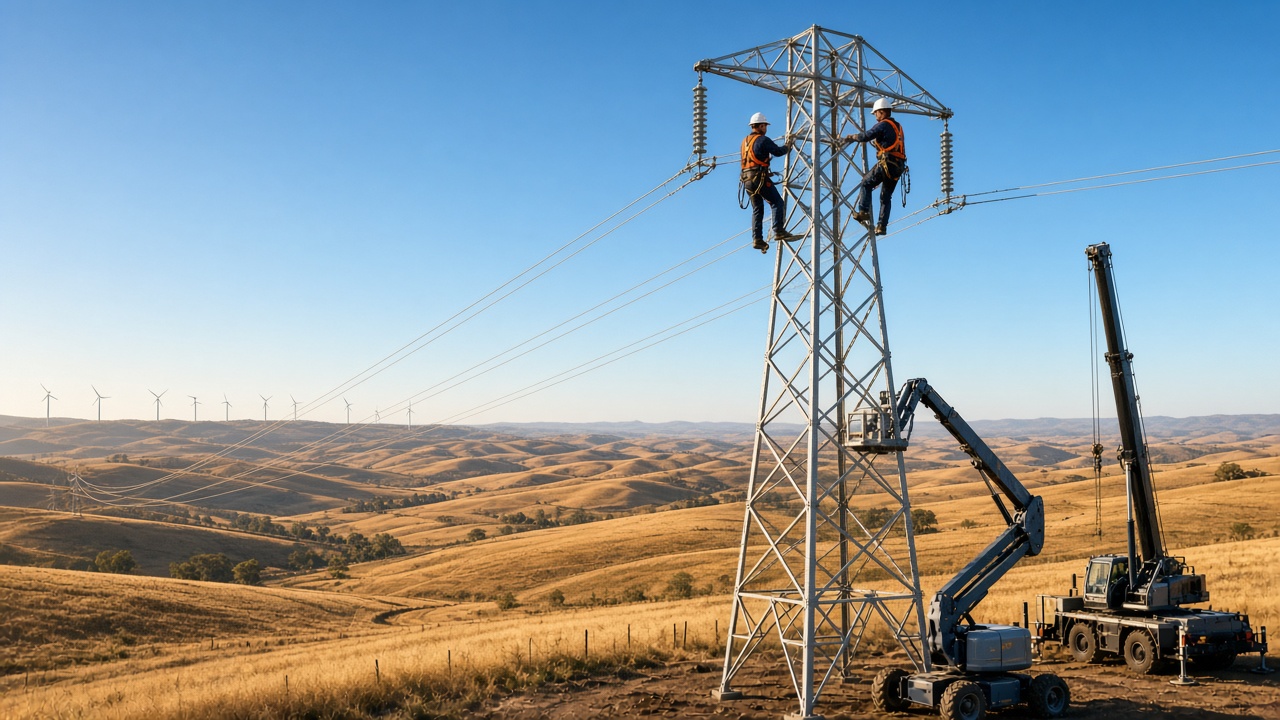
Transmission lineworkers work on the high-voltage backbone of the grid: the big lattice towers and long-span lines running at 220 kV, 330 kV and 500 kV that move bulk power across states. This is heavy construction and maintenance work, much of it on major projects in remote areas. Think tower erection, conductor stringing over long distances, insulator and hardware replacement, and climbing and working at serious height.
Western Power's current lineworker ad for its Merredin depot sums up the day-to-day well: constructing and maintaining transmission and distribution networks, preparing work parcels, attending faults promptly and isolating the network for repairs, and building network infrastructure to design specifications. In other words, part builder, part troubleshooter, part emergency responder.
What I like about this trade is that it's tangible. You can point at a line on the horizon and say, "I built that." And in 2026, with Australia and New Zealand rebuilding their grids for renewables, batteries, EVs and data centres, the lines you build are literally the infrastructure of the next economy.
Who's hiring lineworkers right now
The demand is real, and it's showing up in actual ads, not just reports.
HumeLink East, NSW. Genus Infrastructure, part of GenusPlus Group, is building a Transmission Lines team for HumeLink East. According to its October 2026 linespeople ad, Genus and Acciona are delivering 237 km of new 500 kV transmission line between Bannaby and Wondalga as part of a $1.4 billion joint venture, with completion expected between 2027 and 2028 and around 1,600 jobs created across the project. That's the kind of build that defines a career: you'll be telling apprentices about it in twenty years.
Victoria. Zinfra is recruiting experienced transmission lineworkers out of its Dandenong South depot, describing a strong pipeline of work across the state and travel to projects around Victoria.
Regional WA. Western Power is hiring a permanent lineworker for Merredin in the eastern Wheatbelt, with applications closing 9 November 2026.
New Zealand. Across the ditch, the focus is shifting to the training pipeline. On 21 October, WEL Networks and Connexis announced an Advanced Powertech Apprenticeship Pathway, responding to the Re-Energise 26 report, which identified Power Technicians as one of the electricity workforce's most critical shortage areas. The first Hamilton-based cohort is expected to start in early 2027.
You can see current network and transmission roles on our jobs page. New ads are landing every week.
What lineworkers get paid
Lineworker pay is usually set by enterprise agreements, which means rates are published, transparent and often very good. A few real examples from current ads:
- Zinfra (Victoria): $65.70 to $70.73 per hour plus applicable allowances, under its ETU Victorian Electricity Enterprise Agreement, with rates current as of September 2026 and based on qualifications, experience and classification.
- Western Power (Merredin, WA): a base rate starting from $57.96 per hour depending on qualifications and authorisations, plus a $2.50 per hour site allowance on all hours worked, plus regional living allowances totalling $300 per week.
- Genus (HumeLink East, NSW): the ad doesn't publish a rate, but lists excellent hourly rates, travel and daily camp allowances, penalty rates and income protection.
Here's the thing those base rates don't show: overtime, call-outs, travel allowances and camp allowances can make a big difference to what lands in your account. Fault response and storm work pay penalty rates, and remote transmission projects often come with camp or living-away allowances on top. If you're happy to travel and work away, the earning potential climbs quickly.
My practical advice: when you compare offers, don't just compare the hourly rate. Ask about the roster, the overtime you can realistically expect, how travel time is paid, what the allowances are and whether accommodation is covered. Two jobs at the same base rate can be thousands of dollars apart by the end of the year.
The qualifications and tickets you'll need
This is a trade with a proper apprenticeship and a stack of high-risk tickets on top. In Australia, the core qualifications are:
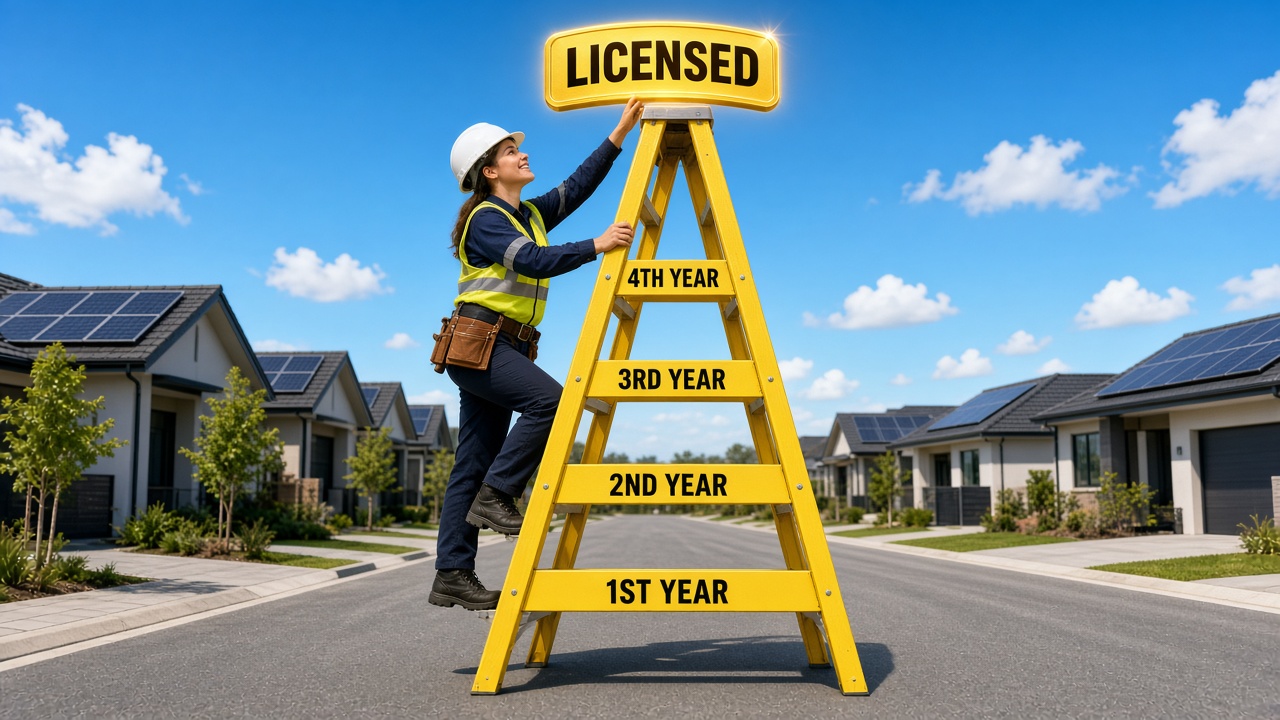
- UET30621 Certificate III in ESI – Distribution Overhead for distribution lineworkers. It's an apprenticeship qualification, typically around 48 months full-time, and you need to be employed in the electricity supply industry to do it.
- UET30521 Certificate III in ESI – Transmission Overhead for transmission lineworkers.
On top of the Cert III, current ads ask for a solid list of extras. Genus wants a High Risk Work Licence (WP), advanced and intermediate rigging, EWP and tower rescue competency, an MR licence (HR preferred), proven transmission experience, and a good understanding of PSSR and CPR-LVR. Zinfra lists a Victorian Transmission Lineworker Licence, high-risk work licences covering EWP, dogging and advanced rigging, a driver's licence and a White Card, with live line barehand qualifications highly regarded. Western Power asks for network authorisations, a White Card, Basic Emergency Life Support and at least an MR licence.
Expect a pre-employment medical, drug and alcohol screening and a national police check. Most ads mention them, and given the work, that makes sense.
One important point for my Kiwi readers: Western Power's ad explicitly accepts New Zealand Electricity Supply (Distribution) at minimum Level 4 as an alternative to the Australian Cert III. If you're a qualified NZ network worker eyeing higher Australian rates, that's a door that's already open. Check the specific network's requirements and the relevant state's authorisation rules before you book flights, but trans-Tasman moves in this trade are very doable.
How to become a lineworker in Australia or New Zealand
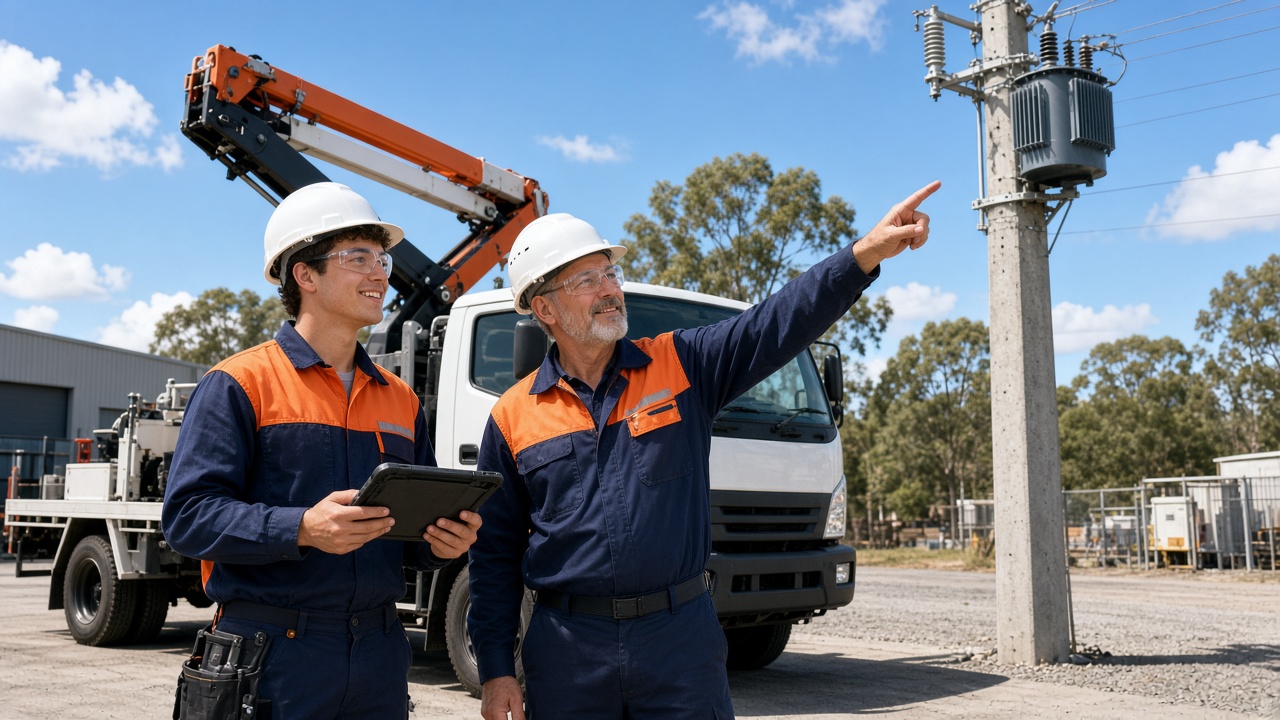
Path 1: Apprenticeship with a network or contractor. The classic route is an ESI apprenticeship with a distribution network (the Ausgrids, Energex and Western Powers of the world) or a big network services contractor. Intakes are competitive and usually open once or twice a year, so get on the careers pages and job alerts early. Being physically fit, comfortable at height and holding a manual driver's licence all help.
Path 2: Sparky to lineworker. Plenty of licensed electricians cross over. You already understand electrical theory and safety, and some employers will consider you for conversion programs or trainee roles. You'll still need the ESI competencies and high-risk tickets, but you'll be starting with a big head start.
Path 3: Start as a ground hand or trades assistant. Getting a foot in the door on a construction crew lets you learn the work, pick up tickets like rigging and EWP, and prove yourself before an apprenticeship spot comes up.
In New Zealand, the network side of the industry trains largely through work-based programmes, with Connexis as a key provider. Connexis is moving into an industry-owned private training establishment from 1 November 2026, and the new WEL Networks pathway combines the Level 4 Electrical Trade apprenticeship with Level 5 Powertech training to shorten the route to becoming a qualified Power Technician. If you're an NZ employer, Connexis is seeking expressions of interest now.
Is it the right career for you?
I'll be straight. This isn't for everyone. You'll work outdoors in heat, wind and rain. Fault call-outs don't respect weekends. Transmission work often means time away from home. And the safety culture is intense, because the consequences of getting it wrong are severe.
But if you like physical work, enjoy being part of a tight crew and want a career that's genuinely future-proof, I think it's one of the best trades going. The grid build-out across Australia and New Zealand isn't a one- or two-year spike. Transmission lines, network upgrades, renewable connections, storm resilience and electrification will keep crews busy for decades. Skills like live line work, rigging and tower rescue are specialised and portable, and the pay structures reward people who keep adding tickets.
My tip if you're serious: start building your ticket collection now (White Card, first aid, MR licence, EWP), set up job alerts for network apprenticeships, and talk to lineworkers in your area. Most are happy to tell you what the job is really like.
If you're ready to look, browse current lineworker, transmission and network roles on ElectricalRoles.com.au. The grid is being rebuilt, and someone has to climb up there and do it. It might as well be you.