What Does a Wind Turbine Technician Do? Pay, GWO and Pathways
What wind turbine technicians do in Australia and NZ, real pay rates from live ads, GWO training costs, rosters and how licensed sparkies get in.
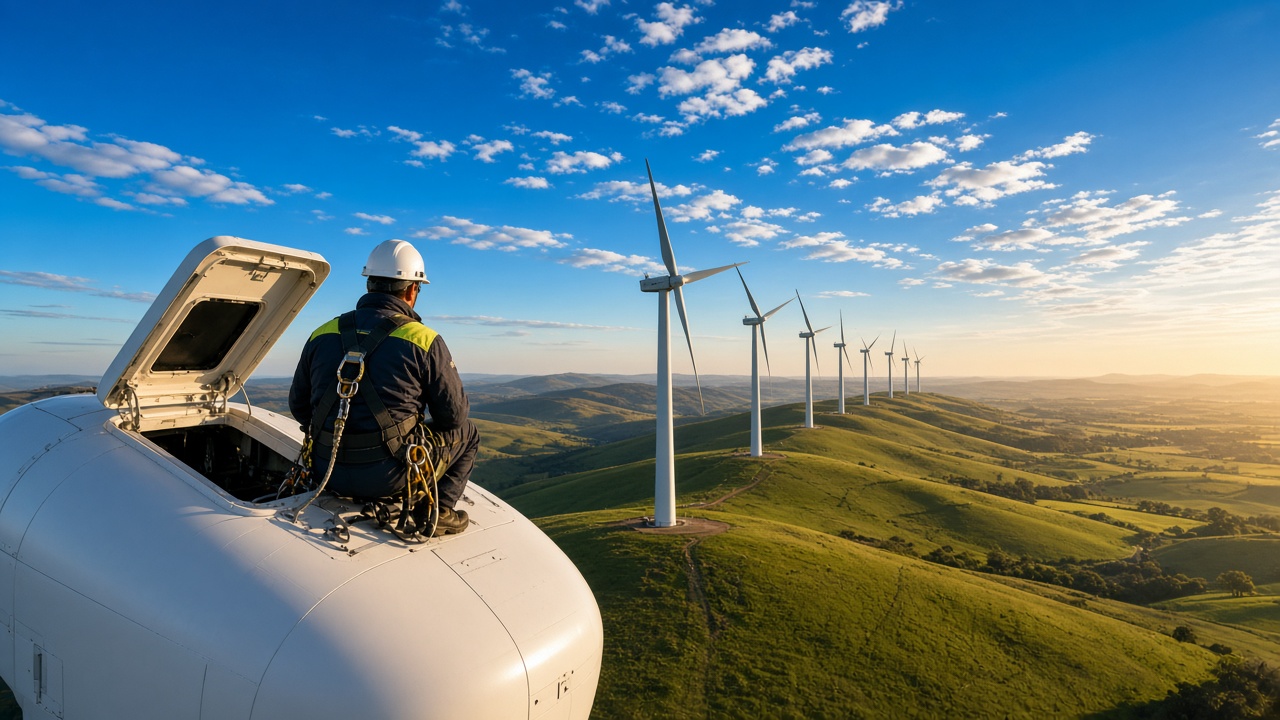
Picture your workday starting with a 100-metre climb or lift ride, then fault-finding a converter cabinet inside a nacelle with the whole of regional Victoria or Queensland laid out below you. That is a normal Tuesday for a wind turbine technician, and right now it is one of the most interesting doors a licensed sparky can walk through in Australia and New Zealand.
This is the latest in our series on what each electrical role actually involves. We have already covered solar and battery electricians, instrumentation, lineworkers, substations, data centres and FIFO mining. Today it is the people who keep the turbines turning: what they do, what they earn, the tickets you need, and how to make the jump from the tools you are on now.
Why wind, and why now
Wind is having a big moment on both sides of the Tasman. The Clean Energy Council's latest bi-annual investment report notes that the 756 MW first stage of Victoria's Golden Plains Wind Farm was commissioned in the first half of 2026, enough to power more than 400,000 homes. The project's own employment page talks about more than 700 direct and indirect jobs during construction and more than 70 direct operational jobs once it is running. That second number is the one I want you to notice. Wind farms are not just construction blitzes; they create long-term, local, skilled maintenance jobs that last for decades.
New Zealand is building, too. Mercury's Kaiwera Downs Wind Farm near Gore now has all 46 turbines standing across its two stages, making it the South Island's largest wind farm, with full generation expected this month. Stage 2 alone involved about 150 km of 33 kV cable running from the turbines to the site substation. Up north, Mercury's 12-turbine Kaiwaikawe Wind Farm near Dargaville, built with Vestas, is targeting full generation by the end of this year.
Every one of those turbines needs servicing, fault-finding and upgrading for its whole operating life. That is where you come in.
What a wind turbine technician actually does
Job titles vary: wind turbine technician, service technician, field service technician, electrical service technician. The core work is similar. Based on current ads from the major turbine makers and service providers, the day-to-day includes:
- Scheduled servicing. Planned maintenance on each turbine to a service agreement, covering electrical, mechanical and hydraulic systems.
- Fault-finding and reactive repairs. When a turbine trips, you diagnose it, often using SCADA data, electrical schematics and the turbine's own controller, then fix it safely.
- HV and LV operations. Vestas' Dulacca role in Queensland, for example, lists operating HV and LV within your training and authorisation as part of the job.
- Commissioning and inspections. Nordex's MacIntyre role includes commissioning, inspections, safety analyses and documentation such as LOTO and JSEAs.
- Main component exchanges. Working with lead techs and crane crews to swap out big parts like gearboxes, generators or converters.
- On-call work. Most service roles include a rostered call-out, because a turbine that is not turning is not earning.
There are also specialist branches: blade repair technicians, main component upgrade (MCU) crews, travelling technicians who troubleshoot across a national fleet, and commissioning electricians on new builds.
Do you need to be an electrician?
Not always, but it helps a lot. Most service teams take both electrical and mechanical tradespeople. Nordex's MacIntyre ad asks for trade qualifications in electrical or mechanical disciplines, while Vestas' Dulacca ad specifically lists an Australian electrical licence. Some roles, like GE Vernova's field service position at Bango Wind Farm near Yass, are advertised as open to qualified electricians only.
My take: if you already hold an unrestricted licence, you are one of the most sought-after profiles in the industry. Turbines are packed with power electronics, converters, transformers, control systems and HV switchgear, so electrical skills are central, not optional. Several ads I looked at this week state outright that no wind experience is required and that turbine training is provided for qualified electricians. That is a huge opportunity for industrial and commercial sparkies wanting a change.
What the job pays
I am going to stick to real numbers from ads currently live, because "average salary" sites can be all over the place. A snapshot from SEEK's wind turbine technician listings this week, which showed 69 jobs across Australia:
- Vestas, Dulacca (QLD): entry-level rate of $53.60 an hour plus allowance, super and bonus, Monday to Friday with occasional overtime.
- Worley, Ararat area (VIC): $60 an hour, full time.
- Professional Wind Services, Murray Bridge (SA): $42 to $54 an hour, advertising over $3,400 gross on a typical 60-hour week, with flights, accommodation and training provided and no wind experience required.
- Davidson, Perth (WA): $55 to $70 an hour plus benefits, FIFO 7:7 or 14:14, with turbine training provided and industrial electricians welcome.
- Olan Services, Central West NSW: $60 to $80 an hour for electricians and wind technicians.
- Morson Edge, Yorke Peninsula (SA): $100 an hour flat-rate casual on a 2/2 roster, but you must hold current GWO.
That last one tells a great story. The same skills are worth noticeably more once you hold your GWO training and have some turbine time behind you. Overtime, call-outs, site allowances and travel can lift take-home pay well beyond the base rate.
For New Zealand, rates vary by employer and region, so I would check live listings and talk to the service teams at the big operators directly.
The tickets: GWO and beyond
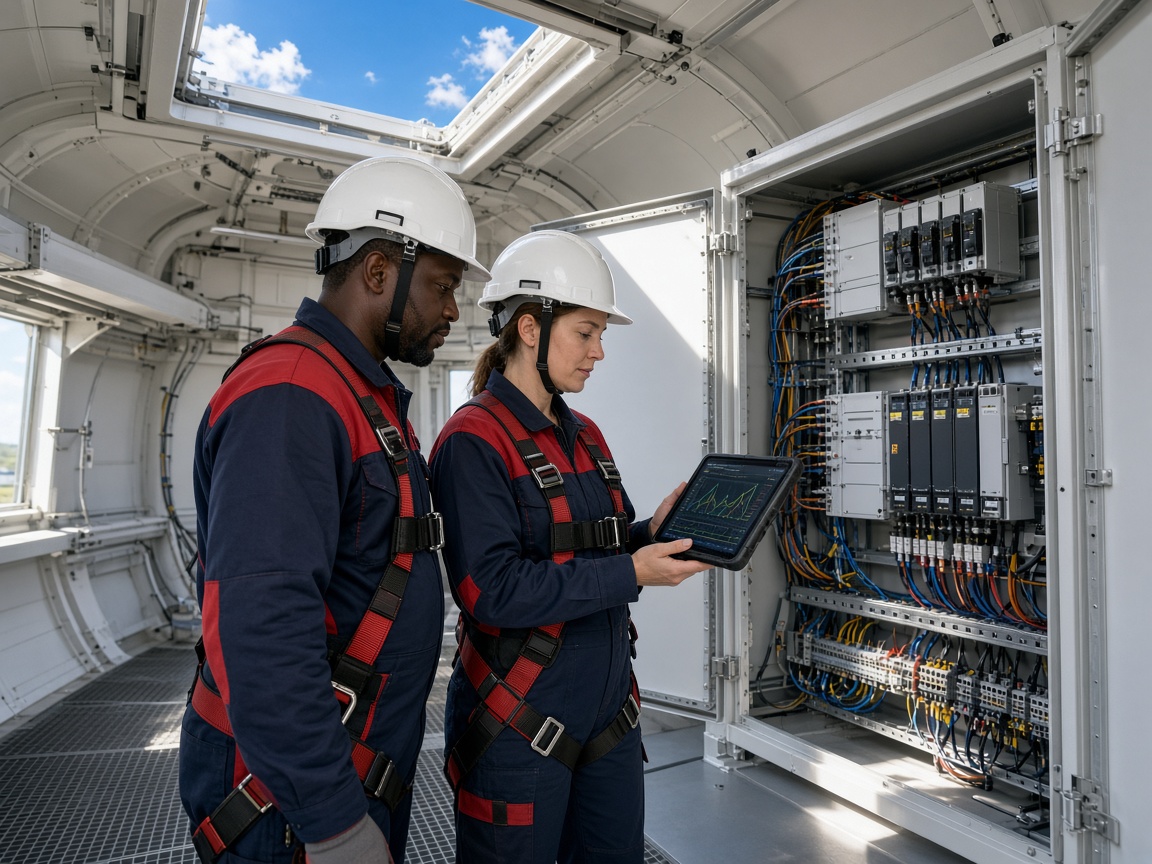
The non-negotiable for working in a turbine is Global Wind Organisation (GWO) Basic Safety Training, usually shortened to BST. It is a four-day course covering four modules: working at heights, first aid, manual handling and fire awareness. Your results are recorded on WINDA, the global GWO database, so your certification travels with you around the world.
Pricing in Australia sits around the $2,000 mark. RelyOn Australia, for example, lists its four-day BST at $2,145 including GST, and also awards a set of nationally accredited units including working safely at heights, first aid and rescue from a live LV panel. You need a medical declaration first, because the height work is physically demanding.
Many employers pay for GWO once you are hired; the Vestas ad promises all training, PPE, tools, laptop and phone. Paying for it yourself, though, can get you over the line for contract roles that demand current GWO from day one. Beyond BST, useful additions include advanced rescue training, HV switching authorisations, and any PLC or SCADA experience you can point to.
What makes a great wind tech
From the ads and from conversations I have had with people in renewables, the stand-out traits are pretty consistent:
- Comfort at height and in tight spaces. Nordex says it plainly: you must be medically fit and able to climb turbine towers.
- Strong fault-finding. Reading electrical and hydraulic schematics and working logically through a problem is the heart of the job.
- Safety discipline. Isolations, permits and rescue plans are taken very seriously.
- Teamwork. You usually work in pairs or small crews, often in remote places.
- A learner's mindset. Turbines keep getting bigger and smarter. The techs who keep learning keep moving up.
Rosters and lifestyle
Wind is not one lifestyle; it is several. Some roles are firmly residential. Vestas notes that its Dulacca job is not FIFO or DIDO, so you must live locally, and the Boco Rock role in the Snowy Mountains region is also residential. ACCIONA advertises a family-friendly Monday to Friday roster near Colac. Others are deliberately mobile, from 3:1 travelling roles along the east coast to 8/6 rosters in WA and FIFO swings from Perth.
That flexibility is a big plus. If you want to move to the country, wind can give you a stable career in a regional town. If you want to rack up hours and see the country, travelling and FIFO roles do exactly that.
Your pathway into wind
Here is how I would approach it:
- Finish your trade and get licensed. An electrical apprenticeship and unrestricted licence is the strongest starting point.
- Build industrial experience. Motors, drives, PLCs, HV exposure and fault-finding all translate directly to turbines.
- Get GWO BST. Either through an employer or off your own bat if you are targeting contract roles.
- Apply where you want to live. Search for wind farms near the region you want, then look at the service teams for the turbine makers and independent service providers.
- Grow into a lead tech, HV specialist or commissioning role. From there, pathways open into supervision, site management, reliability engineering and international work.
You can find current roles on our electrical jobs board, and I would set up an alert for wind, renewables and service technician roles.
The bottom line
Wind turbine technicians get to work at the very front of the energy transition, often with the best view in the state, and the pay rates in live ads show employers are keen to attract licensed electricians. If you are a sparky who loves fault-finding, does not mind heights and wants a career that will still be growing in 20 years, wind is well worth a serious look. The turbines are going up. Somebody has to keep them spinning, and it might as well be you.