
What Does an EV Charging Electrician Do? Pay, Training & Pathways
EV charging electricians assess supply, install chargers and commission systems. Pay, training and pathways across Australia and New Zealand.
Every week more Aussies and Kiwis plug in overnight instead of filling up at the bowser. That shift does not install itself. Behind every wallbox, every apartment carpark charger and every DC fast-charge bay is a licensed sparky who understands load, protection and paperwork as well as cable.
If you are wondering whether EV charging is a real career path — or just a side hustle bolted onto domestic work — this guide walks through what the job actually involves, what it pays, how you get trained, and where the work is heading across Australia and New Zealand.
What the job really involves
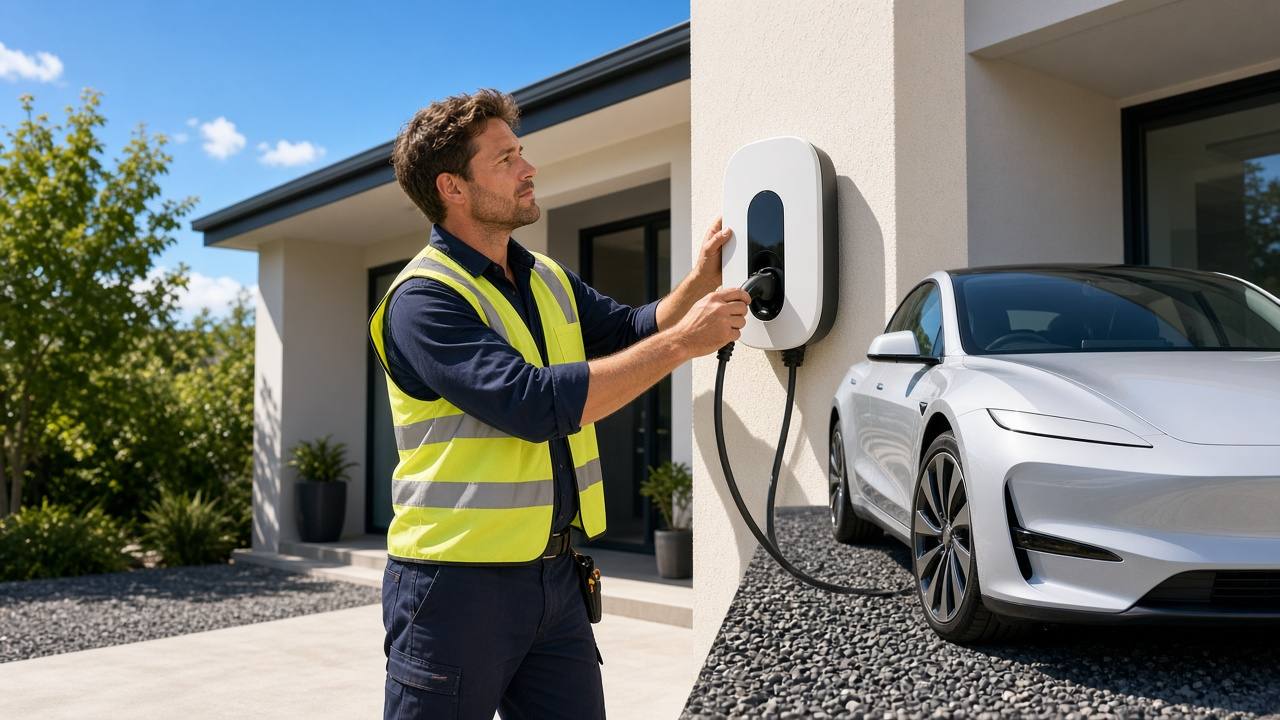
An EV charging electrician is still an electrician first. There is no separate national "EV licence" in Australia. What sets the role apart is the end-to-end focus on charging infrastructure: assessing whether the supply and switchboard can handle the load, selecting the right charger, cable, breaker and protection, installing and commissioning the unit, then issuing the compliance documentation that keeps the customer, the network and the insurer happy.
On a typical domestic job that might mean:
- Checking the main switchboard capacity and existing circuits
- Advising whether a 7 kW single-phase wallbox is enough, or whether three-phase makes sense
- Running cable, fitting isolation and RCD protection to the relevant standards
- Commissioning the charger, walking the customer through the app or load-management settings
- Completing certificates of compliance and any network notifications required in that state or territory
Commercial and multi-dwelling work scales that up. Apartment buildings, workplaces and retail sites often need load management so a bank of chargers does not trip the whole supply. DC fast charging for public and fleet sites is a different beast again — higher power, more protection design, often closer collaboration with the DNSP and the charger manufacturer.
The best EV sparkies treat every job as a small power-system design, not just a fancy powerpoint on the wall.
Domestic vs commercial vs DC fast charging
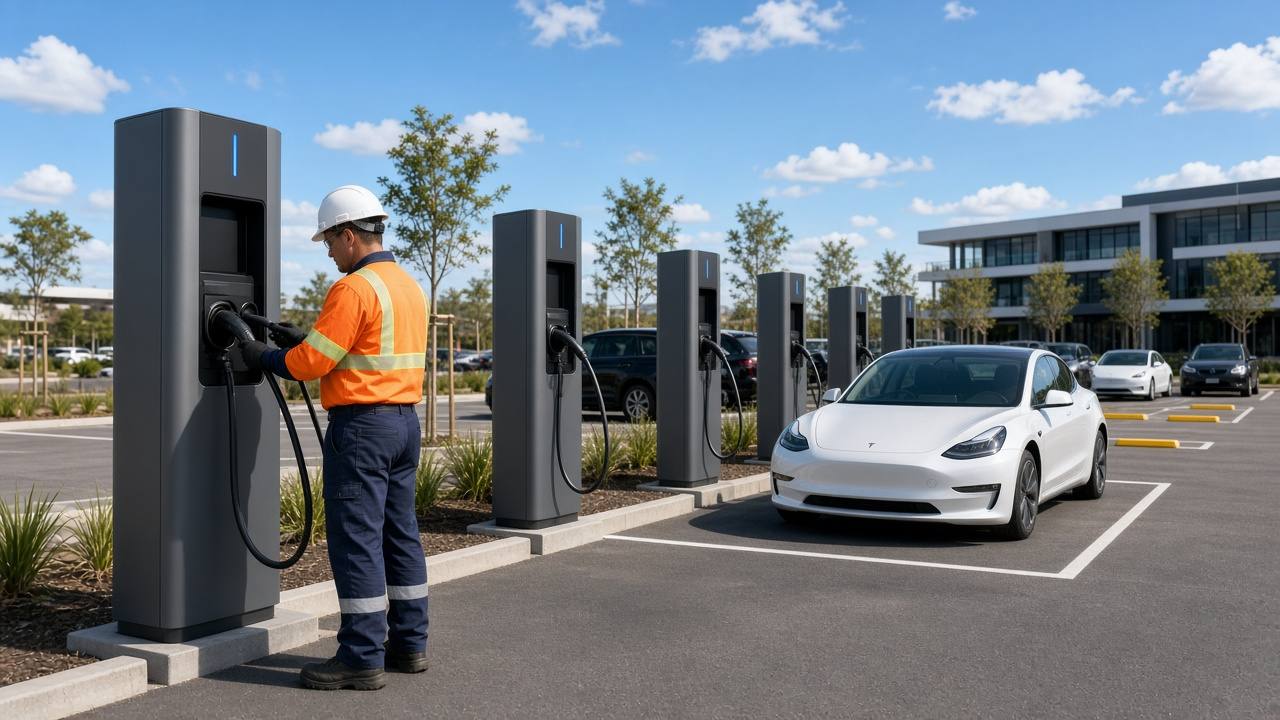
Domestic AC charging (usually up to about 7–22 kW) is where most sparkies start. The work is familiar if you already do switchboard upgrades and solar: cable routes, protection, customer communication, clean finishes. Volume is high because home charging is still the cheapest and most convenient place to refill an EV.
Commercial and multi-unit AC adds complexity. Shared carparks need fair load management, metering and sometimes billing integration. Body corporates and facilities managers care about uptime and liability as much as the install itself. Sparkies who can talk sensibly about load diversity and future expansion win more of this work.
DC fast charging (public highway sites, fleet depots, shopping centres) is higher stakes. You are dealing with much larger supplies, dedicated transformers in some cases, and manufacturer commissioning processes that expect you to know their kit. Many contractors pair experienced HV or commercial sparkies with manufacturer-authorised technicians for these projects.
If you already hold solar and battery skills, you are ahead of the pack. Pairing rooftop PV, a home battery and an EV charger is becoming a single conversation with customers who want one contractor, one switchboard plan and one set of compliance docs. That bundling is where a lot of the better-paid work lives.
Pay: what EV-focused sparkies are earning
Pay varies with location, employment type and whether you also cover solar and batteries — but EV work sits at the stronger end of the electrical trade.
In Australia, EV-focused electrician rates are often cited around A$50–$80 per hour. Annual roles commonly land in the A$100,000–$160,000 band depending on city, experience and whether the role bundles solar, battery and commercial charging. Contract and subcontract rates can sit higher when you bring your own tools, insurance and accreditation; employed roles may trade some rate for stability and a vehicle.
In New Zealand, SEEK samples of solar and EV electrician ads in late 2026 often sit roughly in the NZ$35–$55 per hour range, with EWRB-licensed tradies who can do both solar and charging infrastructure in demand as EV uptake grows.
As always, treat advertised bands as a guide and check current jobs for live rates in your city. Regional and FIFO renewable construction can pay differently again — more on that in a moment.
Training and accreditation in Australia
You need a current state or territory electrical licence. That is the non-negotiable. There is no separate national EV licence layered on top.
What does improve employability — and often warranty compliance — is EV-specific training, manufacturer authorisation and Clean Energy Council (CEC) accreditation where the work overlaps with solar and batteries.
A practical example is the 22609VIC Course in Electric Vehicle Charging Infrastructure up to 22kW offered through TAFE (for example TAFE Gippsland). It is aimed at licensed electricians and covers site assessment, equipment selection, testing, commissioning and documentation for AC charging up to 22 kW. Similar short courses are rolling out through other TAFEs and registered training organisations as demand grows.
Manufacturer training matters too. Wallbox, ChargePoint, Tritium, ABB and others run authorisation pathways so you can commission their gear and keep warranties intact. If you want commercial and DC work, those tickets are not optional nice-to-haves — they are how you get on the preferred-installer lists.
CEC accreditation remains the passport for a lot of solar and battery work that sits beside EV installs. Customers who want one contractor for the whole electrified home usually look for that badge.
Pathways in New Zealand
Across the Tasman the foundation is an EWRB practising licence. EV charging installation sits under the Wiring Rules framework rather than a separate EV ticket, and the Electrical Workers Registration Board has published guidance on charging installations for licensed workers.
Solar and EV work is growing together in NZ. Many job ads now ask for sparkies who can cover both rooftop PV and charging, especially in Auckland, Wellington, Christchurch and the tourism regions where fleet and accommodation charging is expanding. If you already hold your practising licence, short manufacturer courses and solar upskilling are the fastest way to make yourself the person customers call first.
How to get started (practical steps)
- Hold a current licence — Australian state/territory electrical licence, or NZ EWRB practising licence. Without it, stop and finish that pathway first.
- Do a dedicated EV course — something like the TAFE Course in Electric Vehicle Charging Infrastructure up to 22 kW, or an equivalent RTO program, so you can talk confidently about modes, connectors, protection and commissioning.
- Add manufacturer authorisations — pick two or three common domestic brands first, then expand into commercial/DC brands as work comes.
- Bundle solar and battery skills — CEC pathways (Australia) or equivalent solar training (NZ) turn one-off charger jobs into whole-home electrification packages.
- Build a simple portfolio — photos, load calculations and before/after switchboard shots win the next commercial or body-corporate quote.
- Watch the jobs board — EV, solar and battery roles are advertising steadily; browse live electrical jobs and set alerts so you see regional and metro openings early.
Where the work is heading
Home charging will keep growing as EV sales climb. The bigger story for sparkies who want variety is the stack: domestic wallboxes, apartment banks, workplace AC, public DC fast charging, and depot charging for vans and trucks — often paired with solar and batteries on the same site.
That stack rewards electricians who can design for load, talk to customers without jargon, and finish the compliance paperwork cleanly. It is practical, technical and optimistic work: you are literally wiring the next decade of transport.
If that sounds like your kind of trade, get the licence sorted, book the EV course, and start scanning ElectricalRoles.com.au jobs for roles that already list EV charging, solar and battery experience. The chargers are going in either way — better that it is you commissioning them.