What does the work involve?
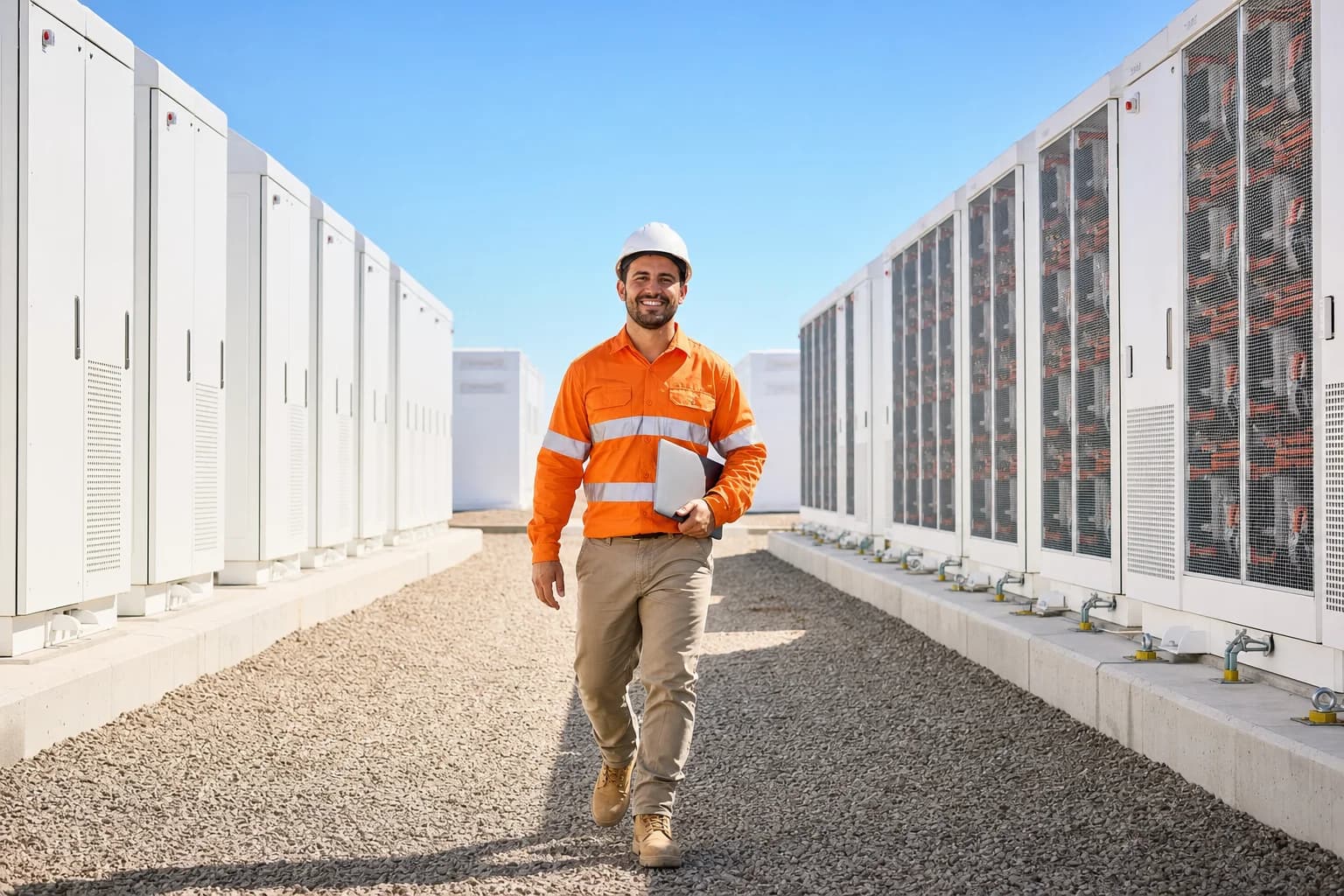
The work splits three ways. Home batteries usually sit next to a rooftop solar system, often in a garage, and store roughly 10 to 15 kWh. Community batteries are larger units of about 200 to 500 kWh, put in by network businesses in parks and open space. Utility-scale batteries are rows of shipping-container-sized units, and more than 20 of them on Australian grids store at least 100 MWh each.
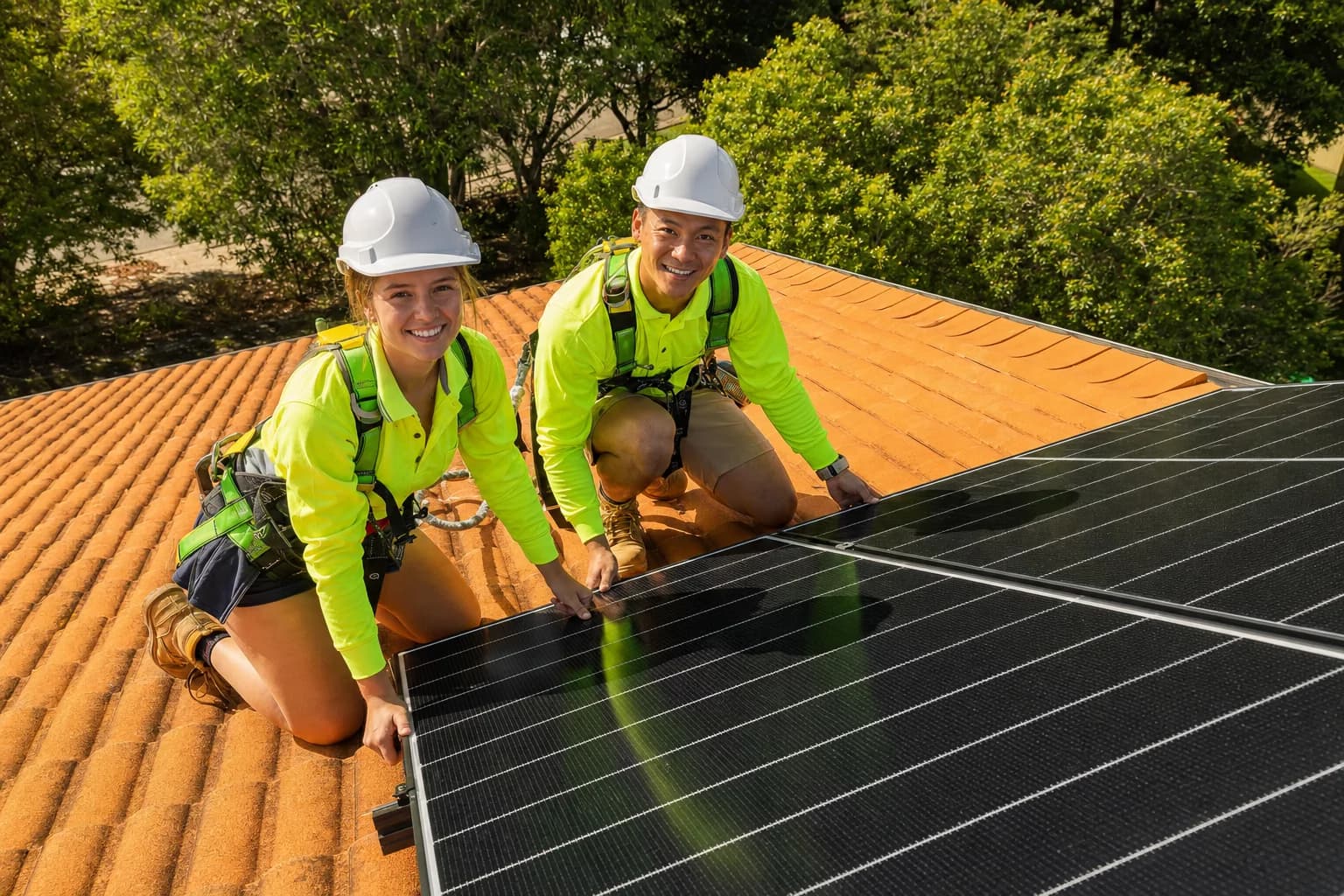
Day to day you might survey a site, size a system to the customer's load, mount and wire the battery and inverter, set the protection, then test and commission. A home install usually takes one or two days. Most of the people who fit rooftop solar also fit home batteries, so the two jobs often go together.
Accreditation and the home battery rules
Since solar batteries became eligible for small-scale technology certificates on 1 July 2025, the Clean Energy Regulator has required installers and designers to be accredited by Solar Accreditation Australia. The battery must be installed by an accredited battery installer, or under their supervision on site, and the products must be on the Clean Energy Council's approved list.
There is plenty of paperwork. You take geotagged, time-stamped photos at setup, mid-install and at testing and commissioning, plus photos of battery and inverter serial numbers. Each installer can claim no more than two installations a day. The installer and designer each sign a written compliance statement, and a false statement can cost you your electrical licence.
Safety and big battery projects
A battery holds energy even when it's isolated. WA's electrical safety guidance lists shock, fire, flash burns, explosion and exposure to hazardous chemicals and gases as risks from a poor install. AS/NZS 5139:2019 is the Australian standard that covers battery systems connected to power conversion equipment. Contractors also have to make sure their electricians are trained on the specific product they're installing.
Grid-scale batteries tend to sit near retiring coal stations or large solar farms, where transmission lines already exist. Engineers design them, and teams of electrical and maintenance trades install them, often with the manufacturer's own training. Approvals can take two to four years. After commissioning, electricians stay on for monitoring and fault-finding. HVAC trades keep the cooling systems running.
How electricians move into battery work
Start with the Certificate III in Electrotechnology Electrician (UEE30820) and get your licence. After that, add a battery skill set. The usual ones are the Grid-connected Battery Storage Systems Installer Skill Set (UEESS00192) and the Designer-Installer Skill Set (UEESS00191). Once you have them, you can apply to SAA for accreditation.
If you want to go further, look at the Certificate IV in Electrical - Renewable Energy (UEE43322) and units such as UEERE0060, which covers designing grid-connected battery storage. TAFEs also run short grid-scale battery courses. For utility projects, experience in high voltage, cable jointing or rigging gets you noticed.
Pay
AUD a year, before tax. Refer to the Renewables & Solar salary guide for figures from live adverts.
What you need
- Electrical licenceHome battery installs must be done by licensed electricians. The usual pathway is the UEE30820 Certificate III apprenticeship.
- SAA accreditationRequired to install or design batteries that claim certificates under the Small-scale Renewable Energy Scheme. Another accredited installer can supervise you on site until you hold it.
- Battery skill setAccreditation needs the designated VET units on battery design and installation, such as UEESS00192 (installer) or UEESS00191 (designer-installer).
- AS/NZS 5139:2019This is the standard for battery systems used with power conversion equipment. Your installation has to meet it.
- Approved productsFor certificate claims, the battery and inverter must be on the Clean Energy Council's approved product list.
- Manufacturer trainingOften needed for community and grid-scale batteries. Contractors must also make sure staff are trained on the specific system they install.
State by state
| Western Australia | A licensed electrical contractor must install a battery system if it forms part of an electrical installation or operates at 120 V DC or above. Grid-connected systems also need the network operator's approval before connection. |
|---|---|
| All states and territories | Home batteries claiming federal certificates need an SAA-accredited installer and must comply with that state's electrical safety laws. The electrical certificate of compliance sets the test date. |
How to get there
- Years 1-4Electrical apprenticeshipComplete the UEE30820 Certificate III in Electrotechnology Electrician with an employer.
- Year 4Get licensedGet your electrician's licence from your state or territory regulator.
- Year 5Battery skill setComplete UEESS00192 or UEESS00191 through a registered training provider.
- Year 5SAA accreditationApply to Solar Accreditation Australia to install, or design and install, grid-connected batteries.
- Years 5-7Build field experienceDo home and commercial installs, and learn commissioning, compliance photos and fault-finding.
- Year 6 onMove to large-scale storageJoin community or grid-scale battery projects, adding manufacturer training and possibly UEE43322.
Open now on ElectricalRoles.com.au


Questions people ask
Do you need to be an electrician to install batteries?
Yes. Home battery installs must be done by licensed electricians. For a job to claim federal certificates, the installer also needs Solar Accreditation Australia accreditation, or must be supervised on site by someone who has it.
Who accredits battery installers now?
Solar Accreditation Australia. The Clean Energy Regulator requires SAA accreditation for designers and installers whose battery jobs claim small-scale technology certificates. The Clean Energy Council still runs the approved product list.
How many battery installs can you do a day?
For certificate claims, one installer can sign off no more than two installations a day. That can be two batteries, two solar systems, or one of each.
What happens at commissioning on a home battery?
You test and commission the system, then take geotagged, time-stamped photos of the testing stage and a final completion photo. The completion photo must match the test date on the electrical certificate of compliance. You can't come back later to take missing photos.
Who builds grid-scale batteries?
Developers such as Neoen and Akaysha Energy, working with manufacturers like Tesla or CATL and local utilities. Engineers design the systems, and teams of electrical and maintenance trades install them. Electricians stay on after commissioning for monitoring and fault-finding.
What does a battery storage technician earn?
Modelled ABS figures put electricians in this field at about $117,700 a year nationally, and about $128,800 in WA. The award minimum for an electrical worker grade 5 is $58,193 a year, effective 1 July 2026.