What does a restricted electrical licence cover?
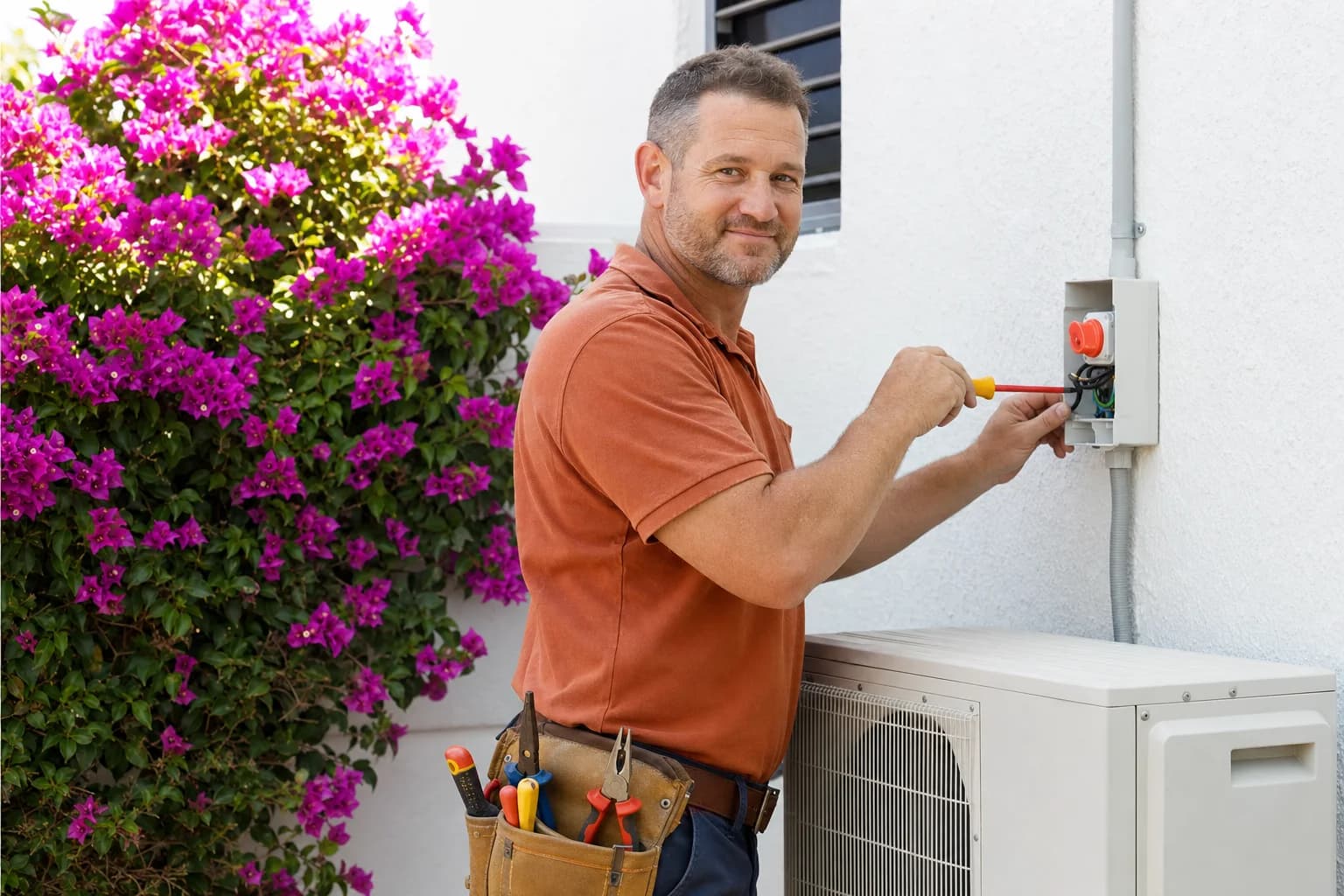
It covers a narrow slice of electrical work that comes with another trade. A plumber swapping a hard-wired hot water unit, a fridgie replacing a compressor, or a fitter changing out a motor has to isolate and disconnect the supply first. Without a licence, they would need to call in an electrician for a ten-minute job. The restricted licence lets them do that part themselves, provided the replacement is the same kind of equipment in the same spot, on the existing cables.
In Victoria, Energy Safe Victoria limits the licence to low voltage disconnect and reconnect of like-for-like equipment for repair, replacement or maintenance. Queensland's Electrical Safety Office says plainly that the licence does not permit electrical installation work. So you cannot run a new circuit, add a power point or move a unit to a new location. If the equipment plugs into a socket, Victoria says you need no restricted licence at all.
Who needs one?
Queensland lists the typical holders: refrigeration and air conditioning technicians, instrumentation and process control technicians, plumbers working on hot water systems, gas fitters on gas appliances, electronics technicians and mechanical fitters working on electric motors. Victoria names plumbers, mechanical fitters and refrigeration and air conditioning mechanics. Western Australia issues restricted licences for domestic electrical appliances, refrigeration and air conditioning, instrument and process control work, and general disconnect-reconnect. That domestic appliance class is the one appliance repairers need.
Every state wants the electrical work to be secondary to your main trade. You will normally have to show a real need for the licence, usually through a letter from your employer that describes the equipment and tasks. If you are self-employed, Queensland and Tasmania accept a statutory declaration instead.
What training do you need?
First you need a trade. Victoria expects refrigeration, air conditioning, plumbing and gas fitting applicants to hold at least a Certificate III plus their trade registration or a refrigerant handling licence. South Australia also wants a Certificate III or trade certificate in a related trade. On top of that, you complete a short disconnect-reconnect unit at a registered training organisation. The current unit is UEERL0004, which Victoria also accepts as part of skill set UEESS00133 or as MEM18049.
Victoria adds a second layer. You must pass an independent practical assessment at an assessment centre approved by Energy Safe, and it must be within the last five years. A Class 1 licence, which adds fault finding, needs UEERL0005 or MEM18046. Queensland asks for CPR training in the last 12 months. Tasmania may want refresher training if your licence expired more than three years ago, or if you finished your course more than three years ago and have not held a licence since.
How does it differ between states?
The idea is the same everywhere, but the names and paperwork change. NSW does not call it a restricted licence. Fair Trading issues a qualified supervisor certificate for disconnection and reconnection of fixed electrical equipment, endorsed for appliances, motors or hot water heaters. Victoria calls it a Restricted Electrical Worker's licence, once known as the D licence. South Australia registers you under supervision first, then lifts the condition once you finish the unit.
If you move states, restricted licences can travel. Energy Safe Victoria says automatic mutual recognition for restricted licence holders working in NSW runs under federal law, and you must notify the regulator first. Tasmania accepts mutual recognition for interstate applicants with a current restricted licence.
Pay
AUD a year, before tax. Modelled from Australian Bureau of Statistics Employee Earnings and Hours, May 2025, for electrical testing, inspection and compliance work, moved to 2026 with a wage index. State figures are modelled. Most restricted licence holders are paid for their main trade, so plumbing, refrigeration or fitting rates matter more than the licence itself. Refer to the Testing, Inspection & Compliance salary guide for figures from live adverts.
What you need
- Trade qualificationUsually a Certificate III or trade certificate in the trade the electrical work supports, such as plumbing, refrigeration or mechanical fitting.
- Disconnect-reconnect unitComplete UEERL0004 or an accepted equivalent at a registered training organisation. In Victoria, fault finding (Class 1) also needs UEERL0005 or MEM18046.
- Demonstrated needAn employer letter describing the equipment, tasks and voltage. Self-employed applicants write their own letter or a statutory declaration.
- Practical assessment (Vic)Pass an independent practical assessment at an Energy Safe approved centre within the last five years.
- CPR (Qld)Queensland applicants must confirm CPR training within the last 12 months.
- Police check (NSW, WA)NSW wants a National Police Check no older than four months. WA lists a National Police Certificate as a prerequisite.
State by state
| New South Wales | NSW Fair Trading issues a qualified supervisor certificate for disconnection and reconnection of fixed electrical equipment, endorsed for appliances, motors or hot water heaters, for 1, 3 or 5 years. Plumbers holding an individual contractor licence can add hot water heater work to that licence instead. |
|---|---|
| Victoria | Energy Safe Victoria issues a Restricted Electrical Worker's licence as Class 1 (disconnect-reconnect plus fault finding) or Class 2 (disconnect-reconnect only). You need an approved unit, an independent practical assessment, and you must issue a Certificate of Electrical Safety for the work. |
| Queensland | The Electrical Safety Office issues a restricted electrical work licence for work incidental to a trade, with conditions printed on the licence. Some applicants get a 12-month electrical work training permit while they finish extra training. |
| Western Australia | Building and Energy issues restricted electrical licences for disconnect-reconnect, refrigeration and air conditioning, domestic electrical appliances, and instrument and process control work. Licences run for 1 or 5 years. |
| South Australia | Consumer and Business Services first registers you as a restricted electrical worker under supervision, based on a related trade qualification. Completing a disconnect-reconnect unit such as UEERL0004 removes the supervision condition. |
| Tasmania | CBOS issues a restricted electrical licence in classes including refrigeration and air conditioning, water heaters, motors, gas appliances and composite equipment. You need no contracting licence, and the 2026-27 application fee is $294. |
How to get there
- Year 1-4Finish your main tradeComplete the apprenticeship or Certificate III for your trade, such as plumbing, refrigeration and air conditioning, or mechanical fitting.
- Before trainingConfirm the class you needWork out with your employer which equipment you will disconnect and reconnect, and get a support letter. In Victoria, run the ESVConnect eligibility check first to get a course acceptance letter.
- A short courseComplete the restricted unitDo UEERL0004 or the equivalent at a registered training organisation. Add UEERL0005 if you need fault finding in Victoria.
- Before applyingPass any extra checksVictoria needs an independent practical assessment. Queensland needs current CPR. NSW and WA need a police check.
- After trainingApply to your regulatorLodge your qualifications, unit results and employer letter with the state regulator and pay the fee.
- OngoingKeep it currentRenew on time. Victoria cancels licences not renewed by the due date, and Tasmania asks you to confirm continuing professional development.
Questions people ask
Can I install a new air conditioner with a restricted licence?
No, not the electrical side. A restricted licence covers disconnecting and reconnecting equipment like for like on existing wiring. Running a new circuit or new supply to a new unit is installation work, and that needs a licensed electrician.
Do plumbers need a restricted licence to replace a hot water system?
If the heater is hard-wired, yes. In NSW the certificate is endorsed for hot water heaters, and plumbers holding an individual contractor licence can add the work to it. In Queensland, plumbers working on hot water systems are one of the listed groups for a restricted electrical work licence.
Can I get a restricted licence while I'm an apprentice?
Generally no. Victoria says you must be employed and not currently an apprentice or trainee. In Queensland, if you finished a relevant apprenticeship in the last three years, you apply as a completing apprentice.
What is the difference between Class 1 and Class 2 in Victoria?
Class 2 covers disconnecting, reconnecting and testing low voltage fixed equipment. Class 1 adds fault finding when the equipment is still connected to supply. You need an extra unit, UEERL0005 or MEM18046, for Class 1.
Does a restricted licence let me do electrical work for anything other than my trade?
No. Every state ties the licence to your main trade, and the work must be incidental to it. Queensland prints the conditions on the licence, and working outside them counts as unlicensed electrical work.
What happens if I do disconnect-reconnect work without a licence in NSW?
Fair Trading treats it as a breach of the Home Building Act 1989. The fines can reach $22,000 for an individual and $110,000 for a company.
Sources
- Energy Safe Victoria: Restricted Electrical Worker's licence (REL)
- WorkSafe Queensland: Restricted electrical work licences/permits
- NSW Fair Trading: Disconnection and reconnection of fixed electrical equipment
- WA Building and Energy: Restricted electrical licence
- ABLIS: Restricted Electrical Licence or Permit, WA
- Consumer and Business Services SA: National restricted electrical licence guidelines
- CBOS Tasmania: Electrical licence, restricted
- ABLIS: Restricted Electrical Licence, Tasmania
- Energy Safe Victoria: Interstate electrical workers