
What does a wind turbine technician do?
Once a wind farm is built, a small crew runs it. That crew does routine, preventative, corrective and reactive maintenance on the turbines, and it splits into electrical and mechanical technicians. The Clean Energy Council puts wind farm technician alongside blade technician, HV operator, cable jointer, linesperson and control room operator as the main trade roles on an operating farm. Electrical techs fault-find on generators, control systems and SCADA. Mechanical techs look after hydraulics, gearboxes, brakes and other rotating gear.
Before that comes construction. Building a farm usually takes about 18 months and needs hundreds of civil, mechanical and electrical tradespeople, plus crane and machine crews. A lot of technicians get their start during construction and commissioning, then move into operations and maintenance roles once the turbines are handed over. An EnergyAustralia transition guide published by the Victorian Government says offshore wind technicians could work on one offshore wind farm for 25 to 30 years.
The electrician and fitter routes in
You need a trade, either electrical or mechanical. The Clean Energy Council says a person with solid hands-on experience with machinery and fault-finding may be able to show competency without one, but a trade is the normal ticket. If you are starting from scratch, do an electrical apprenticeship (Certificate III in Electrotechnology Electrician, UEE30820) or a mechanical fitting apprenticeship. Coming over from mining, oil and gas, construction, heavy industry or automotive work helps, because the skills carry across.
Once you have the trade there is a wind-specific qualification, the Certificate IV in Wind Power Generation (UEP40622). It covers wind farm maintenance and turbine repair. If you want to take its electrical units, such as fault-finding turbine electrical systems or testing and commissioning turbines, you first need an unrestricted electrical licence or an electrical fitter licence from an Australian state or territory. That gives licensed electricians a clear advantage for the electrical side of the job.
GWO training and working at heights
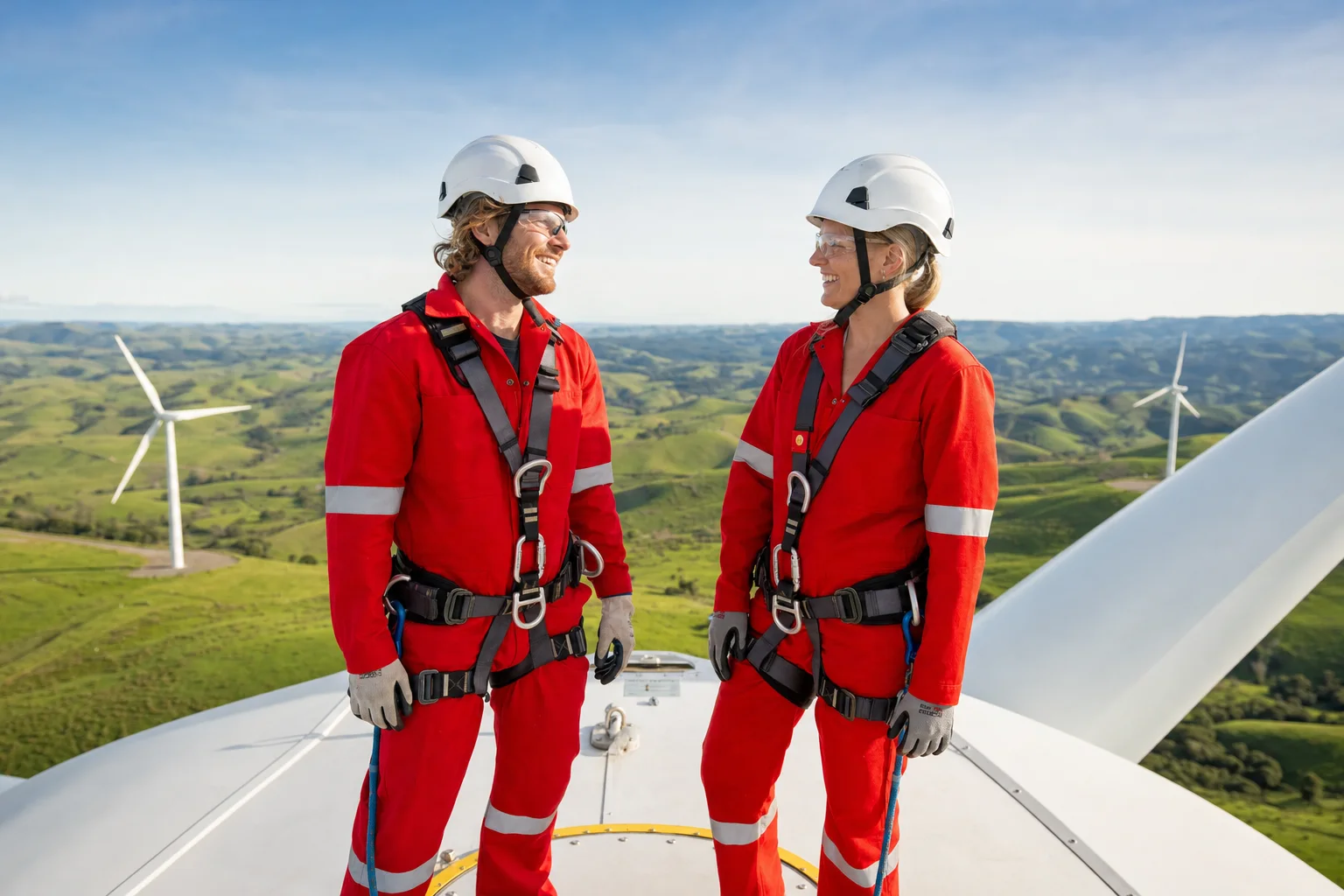
The Global Wind Organisation sets the safety training standard the wind industry recognises. Most Australian wind developers and operators are GWO members, and they accept a GWO certificate from a certified provider. Basic Safety Training is the core course. Its modules are first aid, manual handling, fire awareness and working at height. A sea survival module is added for offshore work. The working at height module teaches you to use your harness and PPE, work safely up the tower and carry out a basic rescue from height in a remote turbine.
Once your initial certificate runs out, GWO has a separate refresher standard to keep it current. GWO also offers Basic Technical Training, and Federation TAFE in Victoria delivers it along with BST and the refresher. Some techs need industrial rope access on top of that, usually IRATA, which has three levels and on-rope hour requirements at each one. Expect to be asked for a construction white card, and for site work possibly a high risk work licence such as dogging. If a tall ladder makes you uneasy, this job will not suit you.
Where the farms are, rosters and pay
The farms are regional, mostly on ridgelines and open plains. In 2024 New South Wales led the states for new wind capacity, with Victoria second, according to the Clean Energy Council. Recent projects include Rye Park, Flyers Creek and Bango in NSW, Mortlake South in Victoria and World's End Gorge near Burra in South Australia. In Western Australia there are Flat Rocks and remote mine-site farms in the Goldfields. Queensland's farms sit in the Darling Downs, South West, North and Far North Queensland.
You need to be willing to live regionally or commute, travel between sites at short notice and work shifts. Offshore techs, a role Victoria is preparing for, work rotational rosters that cover the project 24/7, with days of up to 12 hours. On pay, modelled ABS figures put renewables trade roles at around $117,700 a year nationally. Western Australia and the ACT come in higher. Allowances, overtime and remote rosters push the take-home figure up.
Pay
AUD a year, before tax. Market figures are modelled from ABS Employee Earnings and Hours (May 2025) and indexed to 2026. State figures are modelled estimates, and none are wind-specific. The award row is the official minimum under the Electrical, Electronic and Communications Contracting Award 2020 from 1 July 2026, and overtime, shift and remote allowances push real earnings well above it. Refer to the Renewables & Solar salary guide for figures from live adverts.
What you need
- Trade qualificationAn electrical or mechanical trade, such as a licensed electrician or a mechanical fitter. Strong machinery experience can sometimes stand in for this.
- Electrical licence for electrical unitsTo take the electrical units of the Certificate IV in Wind Power Generation (UEP40622), you need an unrestricted electrical licence or an electrical fitter licence from an Australian state or territory.
- GWO Basic Safety TrainingFirst aid, manual handling, fire awareness and working at height modules. Offshore roles also need sea survival.
- Construction white cardYou need it for construction sites, and wind employers commonly ask for it.
- High risk work licenceSome roles ask for a high risk work licence, such as dogging.
- Rope accessSome technician roles, blade work in particular, need IRATA industrial rope access certification.
- Fitness for the conditionsYou need to be comfortable at heights, willing to live or work regionally, and able to travel and work shifts.
How to get there
- Year 1-4Pick a trade and start an apprenticeshipChoose an electrical apprenticeship (UEE30820) or a mechanical fitting apprenticeship. In 2026 first-year electrical apprentices earn an award minimum of $559.55 a week.
- End of apprenticeshipGet qualified and licensedFinish your trade. Electricians get an unrestricted licence from their state regulator, which opens up the electrical side of turbine work.
- WeeksPick up site ticketsGet a construction white card. Add a high risk work licence such as dogging if the roles you are targeting ask for one.
- Short coursesComplete GWO trainingDo Basic Safety Training through a GWO-certified provider. Add Basic Technical Training, and sea survival if you want offshore work.
- First wind jobGet on a wind projectConstruction and commissioning crews are a common way in. From there, move into operations and maintenance roles, which take on turbine-maker training and ongoing GWO refreshers.
- OngoingSpecialiseOptions include the Certificate IV in Wind Power Generation (UEP40622), IRATA rope access, HV switching, SCADA or a supervisor role.
Questions people ask
Do I need to be an electrician to work on wind turbines?
No. Mechanical fitters work on turbines too, mainly on hydraulics, gearboxes and other mechanical systems. Electrical fault-finding, testing and commissioning do need an unrestricted electrical licence or an electrical fitter licence.
What is GWO Basic Safety Training?
It is the Global Wind Organisation's core safety course for wind workers. It covers first aid, manual handling, fire awareness and working at height, plus sea survival for offshore work. Most Australian wind developers and operators are GWO members and accept the certificate.
Is there a wind turbine qualification in Australia?
Yes. The Certificate IV in Wind Power Generation (UEP40622) covers wind farm and turbine maintenance and repair. Its electrical units are only open to people who already hold an unrestricted electrical licence or an electrical fitter licence.
How much does a wind turbine technician earn?
Modelled ABS data puts renewables trade roles at about $117,700 a year nationally in 2026, ranging from about $104,000 in Tasmania to $128,800 in Western Australia. These figures are not wind-specific, and allowances and rosters change what you actually take home.
Where are the wind farm jobs?
Mostly in regional New South Wales, Victoria, South Australia, Western Australia and Queensland. New South Wales led the states for new wind capacity in 2024, with Victoria second. Expect to live regionally or travel between sites.
Do wind technicians work rosters?
Many do. Onshore work often involves shifts and travel to different sites. Offshore technicians work rotational rosters that cover the project 24/7, with days of up to 12 hours.
Sources
- Clean Energy Council: Wind careers
- training.gov.au: UEP40622 Certificate IV in Wind Power Generation
- Global Wind Organisation: Basic Safety Training Standard
- Global Wind Organisation: Basic Safety Training Refresher Standard
- EnergyAustralia, published by the Victorian Government: Transition opportunities, coal to offshore wind
- Victorian Government: Federation TAFE clean economy training
- Queensland Government Energy Jobs: Wind
- Clean Energy Council: Clean Energy Australia Report 2025