Data Centres Need Wires: AirTrunk, SA's $5b Grid and Sparky Jobs
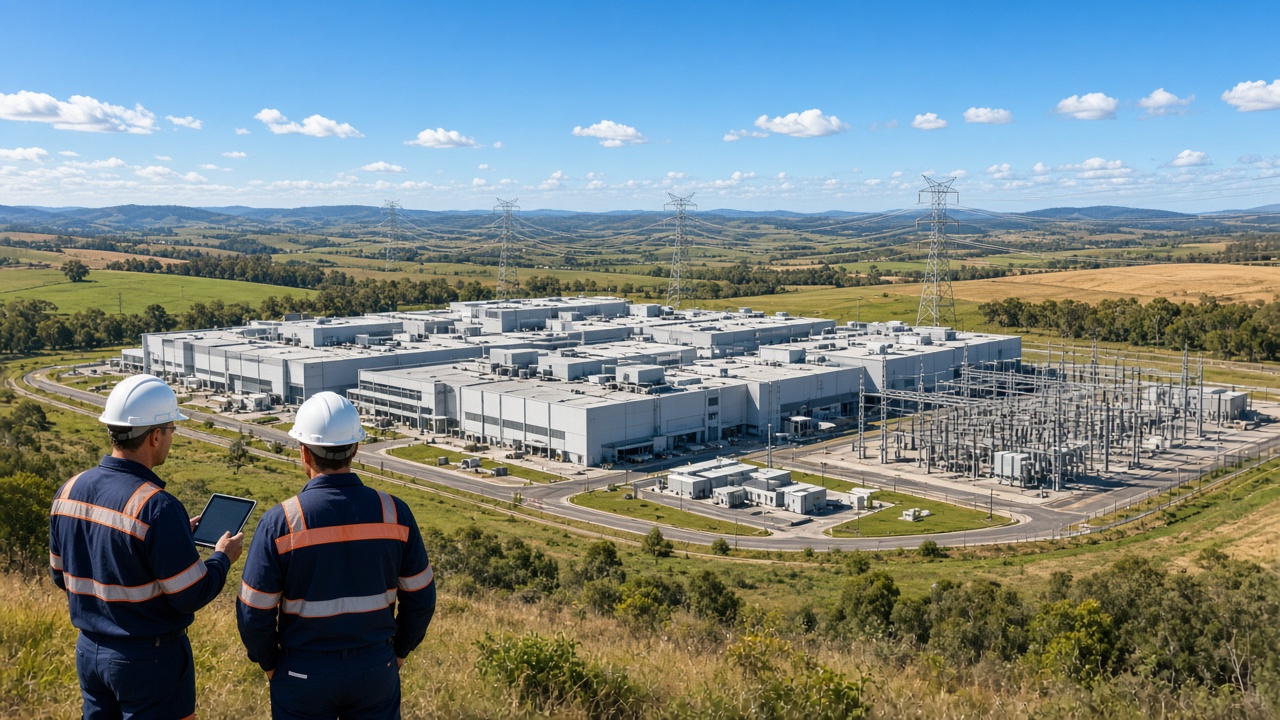
AirTrunk's Mickleham plan and a proposed $5b SA grid upgrade show where data centre demand lands: HV, substation and commissioning work for sparkies.
Two stories landed this week that look unrelated and aren't. In Melbourne's north, AirTrunk has put forward a proposed new data centre campus at Mickleham. In South Australia, the transmission owner says a proposed $5 billion grid upgrade is what almost 30 data centre proposals are waiting on. One is a campus. The other is the wires that make a campus possible. Between them sits a whole lot of work for sparkies.
I love this stuff, because it shows where the real constraint in the AI boom sits. It isn't chips. It's electrons, and the people who can connect them safely.
What AirTrunk has actually proposed
On 9 November AirTrunk announced it was advancing plans for a proposed data centre campus at 45 Donnybrook Road, Mickleham. It's a proposal, and it's subject to planning and environmental approvals, so let's keep our feet on the ground. But the details are worth reading closely:
- The company says it expects the campus to support more than 1,000 ongoing local jobs, plus further opportunities for workers, suppliers and businesses during construction
- It proposes a $26.5 million package for local community infrastructure, skills and education, subject to approvals
- Within that, $6.5 million would go to a Victorian Skills Partnership to support "the electrical and technical workforce needed for data centres, energy infrastructure and broader electrification"
- AirTrunk says it will fund the infrastructure needed to connect the campus to the Victorian transmission network
- The design uses air-based cooling and, in normal operations, wouldn't use community water for cooling
That skills line is the one I'd underline. A data centre developer is saying out loud that the limiting factor is electrical people, and it's putting money behind training them. Whether or not Mickleham gets the green light, that's a signal about where the industry's head is at.
The South Australian side: wires first, servers second
Now zoom west. The Australian Financial Review reported on 8 November that a proposed $5 billion upgrade of South Australia's transmission capacity would only be finished by 2032, which casts doubt on the prospects of almost 30 early-stage data centre proposals in the state. Energy News Bulletin carried the same story, saying ElectraNet's upgrade, if it moves forward, wouldn't be finished until 2032. The AFR describes the upgrade as about 500 kilometres of high-voltage lines and substations, and notes the proposals are concentrated in remote locations.
I'll be straight about what that means: some of those 30 proposals won't happen, or won't happen on the timeline their promoters would like. Early-stage is early-stage. But the grid upgrade isn't a one-off headline. ElectraNet's 2026 Transmission Annual Planning Report, as covered by pv magazine in March, forecast South Australia's peak demand doubling over 15 years, from 3.3 GW to more than 6.5 GW. It outlined a pipeline of about $3.94 billion of priority projects, including:
- The Eyre Peninsula Upgrade, expected by 2027/28, with a new 275/132 kV Yadnarie North substation and the Cultana to Yadnarie lines lifted from 132 kV to 275 kV (estimated at $350 million)
- A South East network augmentation, stringing a second 275 kV circuit between Tailem Bend and Tungkillo (early estimates of $80 to $90 million)
- The early-stage Northern Transmission Project (estimated at $3.5 billion)
Notice the mix: substations, high-voltage lines, protection, system strength. That's not a "install more panels" story. It's heavy, skilled, well-paid infrastructure work, and it runs for years.
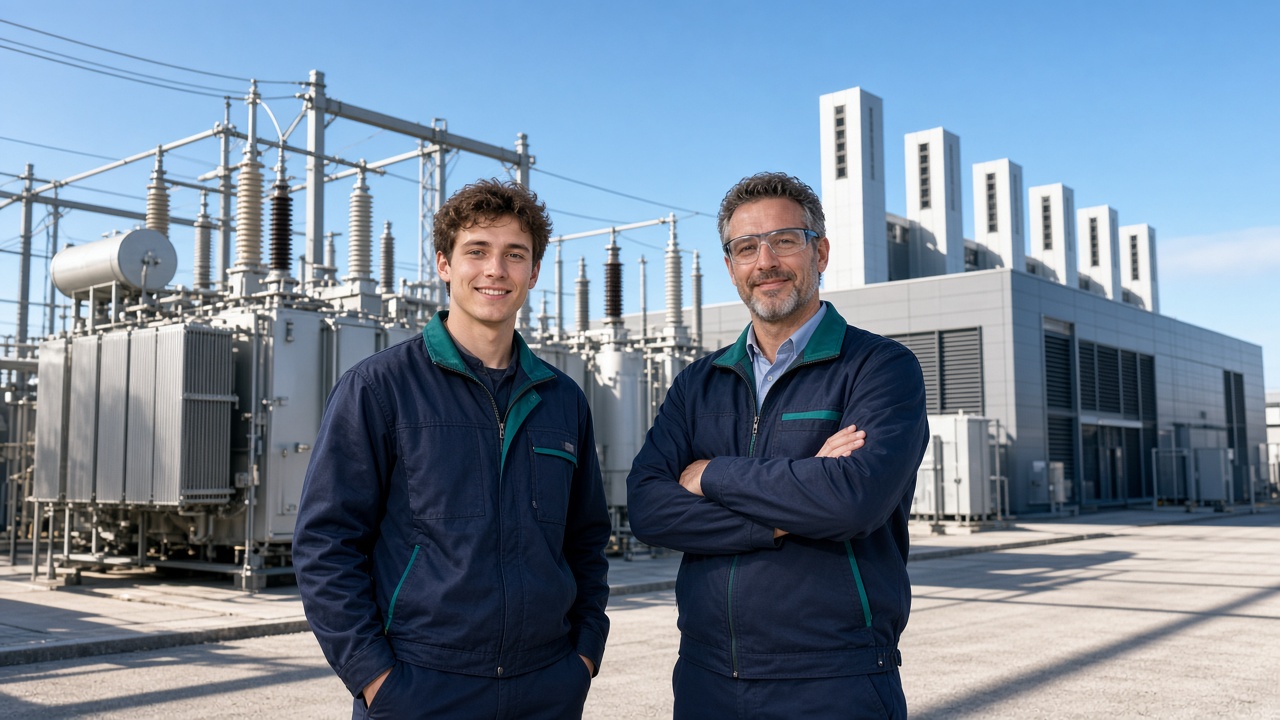 Substation and HV skills sit right behind every data centre.
Why this matters for sparkies
Here's my take. The data centre wave is going to be lumpy. Some campuses will be approved, some knocked back, some delayed by community concerns and grid timing. If you're betting your whole career on one site, that's risky. But if you build the skills that every one of these projects needs, you're covered whichever way the planning decisions fall.
Those skills are:
- High-voltage switching and substation work. Every one of these connections ends at a substation. If you hold HV switching tickets, you're already ahead.
- Testing and commissioning. Powering up something this complex is a discipline in itself. I cover it in What Does a Commissioning Electrician Do?, published today.
- Critical power in live environments. Data centres don't have a "we'll fix it Monday" mode.
And the jobs are visible right now if you look. Endeavour Energy's Narellan Field Service Centre has advertised a Technologist role on construction, refurbishment and maintenance of zone and transmission substations. It asks for a Certificate III in Electrotechnology (Electrician) and lists a base salary of $83,760 to $99,540 plus 16.5% super and allowances, with the ad estimating total typical earnings of $108,874 to $159,217. That estimate is the employer's own, not a guarantee, but it shows what network work can look like. In Melbourne, Micron21 advertised a Tier IV Data Centre Electrician role covering LV distribution, containment, cabling, power distribution, commissioning and testing in a live environment.
The bottleneck nobody can wish away
There's a catch, and I'd rather name it than pretend it isn't there. The Powering Skills Organisation's latest research, reported by News24, found that 72% of surveyed electrotechnology training providers are operating at or above capacity, and only about one-third of Australia's roughly 48,000 electrical contracting businesses employ an apprentice. The headline figure is a projected shortfall of 42,000 skilled workers by 2030.
I read that as an opportunity wrapped in a challenge. The challenge: demand is rising into a system that's already full. The opportunity: if you're qualified, or willing to take on an apprentice, you're sitting on something very scarce. I wrote earlier about who's hiring apprentices, and the data keeps backing it up.
Practical advice for the next 12 months
- Get your HV tickets sorted. HV switching, live-line awareness and substation induction aren't glamorous, but they open doors on data centres, transmission and renewables simultaneously.
- Think regionally. The SA story shows these projects often sit in remote areas. FIFO, DIDO and relocation packages are part of the deal. If you're flexible, you'll have more choices.
- Build a reputation for documentation. Commissioning records, test sheets, as-builts. Every energisation relies on them, and the people who do them well get asked back.
- Watch the approvals, not just the announcements. A proposal isn't a project. Follow planning decisions and network connection milestones so you know when the work becomes real.
- If you run a business, consider an apprentice. Only a third of contractors do. That's an edge waiting to be taken.
My view
I'm optimistic about this one. Yes, there'll be delays, and yes, some proposals will fall over. But the direction is clear: more electricity use, more transmission, more substations, more data, more need for electricians who can do serious work safely. Australia and New Zealand have the sun, the wind and the talent. What we need is more people stepping into the trade, and more employers backing them.
If that's you, take a look at the latest electrician jobs on ElectricalRoles and set up an alert. The wires are going in. Let's make sure it's our people doing the work.