
National Electrical Licence: What It Means for Sparkies
A national electrical licence goes to treasurers in December. How it differs from AMR, the NZ angle, SEC Academy, record apprentices and what to do now.
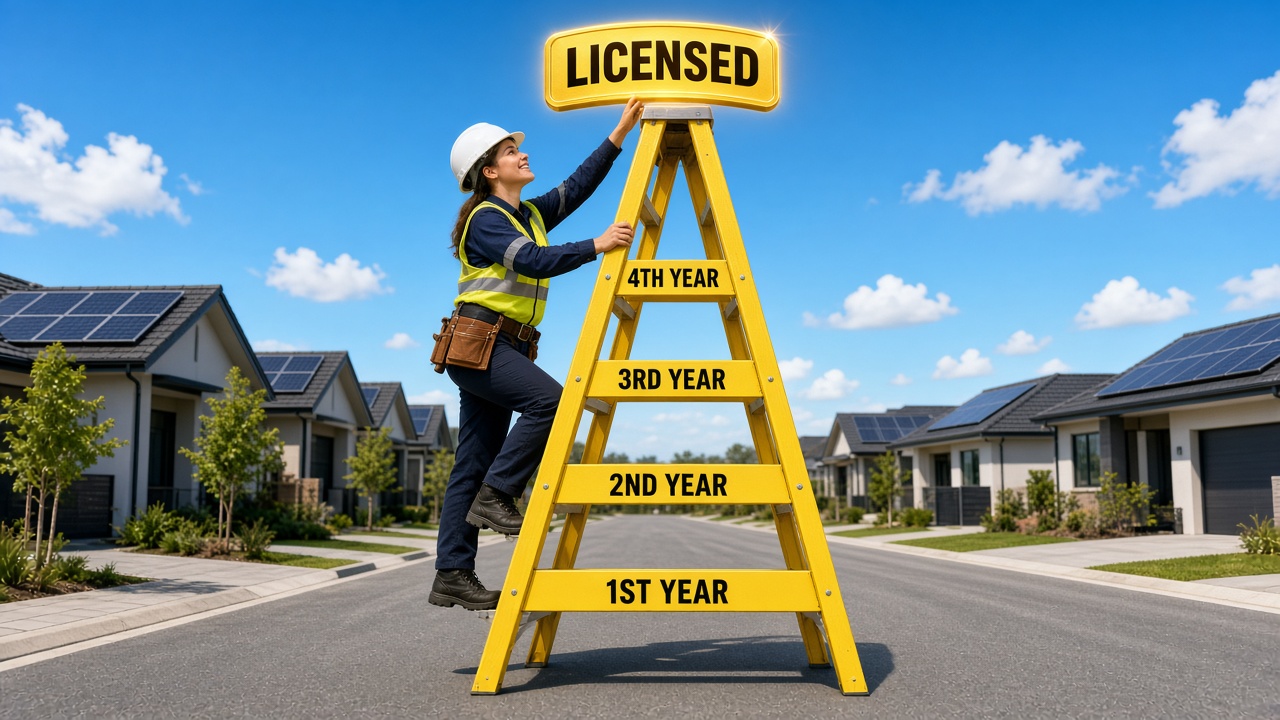
Imagine one electrical licence that works whether you're wiring a house in Hobart, a data centre in western Sydney or a mine site in the Pilbara. No notifying a second regulator, no remembering which state wants what, no re-lodging paperwork every time your home licence renews. For a lot of sparkies that sounds like common sense. For more than a century, it's been a campaign.
This week it moved a real step closer. On 30 October the Electrical Trades Union published a national licensing update confirming it's now at the table with regulators and industry bodies, working on a model that will go to state and territory treasurers in December. I want to walk through what's actually on the table, how it differs from the Automatic Mutual Recognition (AMR) system we use today, and what I'd do right now if I were a sparky who wants to work across borders.
If you're still at the start of your journey and want the nuts and bolts of getting licensed in the first place, read our guide on how to get your electrical licence in Australia and work in NZ. This post is about where the system is heading.
What the ETU says is on the table
According to the ETU, state and territory treasurers agreed in 2025 to progress a new national electrical licence. In the last month the union has joined a strategy group on occupational licensing and a working group on national licensing, and that working group is deciding what goes into the model sent to treasurers in December.
The ETU lists the big questions being worked through: which qualifications the licence includes, what scope of work it covers, what additional skill checks might be required (it specifically mentions something like Victoria's Licensed Electrician's Assessment, the LEA), and implementation decisions such as grandfathering existing licences. If treasurers approve the proposal in December, the ETU says it will spend the first half of next year working on a more detailed implementation plan.
That's an important reality check. December is a decision point on a model, not a switch-on date. Even in the best case, there's design and implementation work to do through 2027 before anyone's carrying a new national card.
The ETU also points out that earlier attempts, including one in 2008, stalled over disagreements about regulatory oversight and the scope of electrical work. Its position is a model that keeps strong state-based regulators in charge of oversight while ensuring registrations are recognised nationally, with a consistent framework that doesn't weaken existing protections.
The bigger policy push behind it
This isn't only a union campaign. Construction Australia's write-up of the Powering Skills Organisation's 2026 workforce update adds some useful context. PSO's mapping counted more than 110 electrical licences across Australia. The Productivity Commission has estimated the benefit of national licensing for the electrical trades at $51 million to $62 million a year in economic output. In November 2025, all state and territory treasurers agreed to progress a "Single National Market for workers" under National Competition Policy, explicitly prioritising electrical and engineering occupations, and the National Competition Council's review of mutual recognition noted very strong support for national licensing from both employer groups and unions in the electrical sector.
PSO supports the reform but has cautioned against a scheme that harmonises to the lowest standard. I agree with that completely. A national licence is only worth having if it's a badge of quality, and Australian sparkies have every right to be proud of the standards they work to.
How is this different from AMR today?
Here's the bit a lot of people get confused about. We already have a form of portability. As Energy Safe Victoria explains, AMR started in Victoria on 1 July 2021, and every state and territory except Queensland now participates for electrical licences. Under AMR you can carry out the work you're licensed for in another participating state, but in most cases you must notify that state's regulator first.
AMR works, but it has edges you only find when you hit them. Using Victoria as the example:
- Your Victorian AMR number expires with your interstate licence, so you need to lodge a new notification each time you renew your home licence to keep access to Certificates of Electrical Safety.
- AMR is built around your home state. If you move to Victoria permanently, you must apply for a Victorian licence under Mutual Recognition, unless your principal place of work is still in your home state.
- For contractors, AMR registration is only available to sole traders. Companies and partnerships go through the normal registration process.
- Queensland isn't in AMR. Queensland electricians with an A-grade equivalent licence can work in Victoria under exemption provisions after notifying Energy Safe, but other Queensland licence holders need to apply under Mutual Recognition.
- Work carried out without a licence or AMR notification is treated as unlicensed work, no matter what licence you hold elsewhere.
The ETU's critique of AMR is different again: it says the system raises concerns about inconsistent safety and training requirements between jurisdictions. In other words, AMR recognises each state's licence as it is, whereas a national licence would aim to set one consistent standard. That's the real shift. AMR is about recognition; a national licence is about a common bar.

What about New Zealand?
The Kiwi connection runs on a separate track: the Trans-Tasman Mutual Recognition Act. New Zealand's Electrical Workers Registration Board converts a current, equivalent Australian licence into an NZ registration and practising licence, and its table maps licences from every state and territory to NZ classes; for example, a Queensland or NT electrical mechanic and a NSW electrical licence map to the NZ Electrician class. The key detail is that the EWRB recognises Australian licences, not qualifications.
Coming the other way, Energy Safe Victoria says NZ electrical workers who want to work in Victoria must apply for an equivalent Victorian licence under Mutual Recognition, because AMR doesn't currently apply to them.
What a national Australian licence would mean for trans-Tasman recognition hasn't been spelled out in anything I've read, so I won't guess. My hope is obvious: one Australian licence would be simpler for the EWRB to map than the current state-by-state patchwork, and simpler for Kiwi sparkies to aim for. But until the detail lands, assume TTMRA stays exactly as it is.
Meanwhile, the apprentice pipeline is lifting
All of this matters more because the trade is growing. NCVER's March quarter 2026 data, released in September, showed electrician apprentice commencements up 19 per cent on a year earlier, and Construction Australia reports the figure as 6,870, which NCVER describes as record-high quarterly commencements. The federal government's release on the same data confirms the 19 per cent jump in electrical commencements.
The catch is placements. PSO's survey found 28 per cent of apprentices report being unable to find an employer. Interest isn't the problem; creating apprentice positions is.
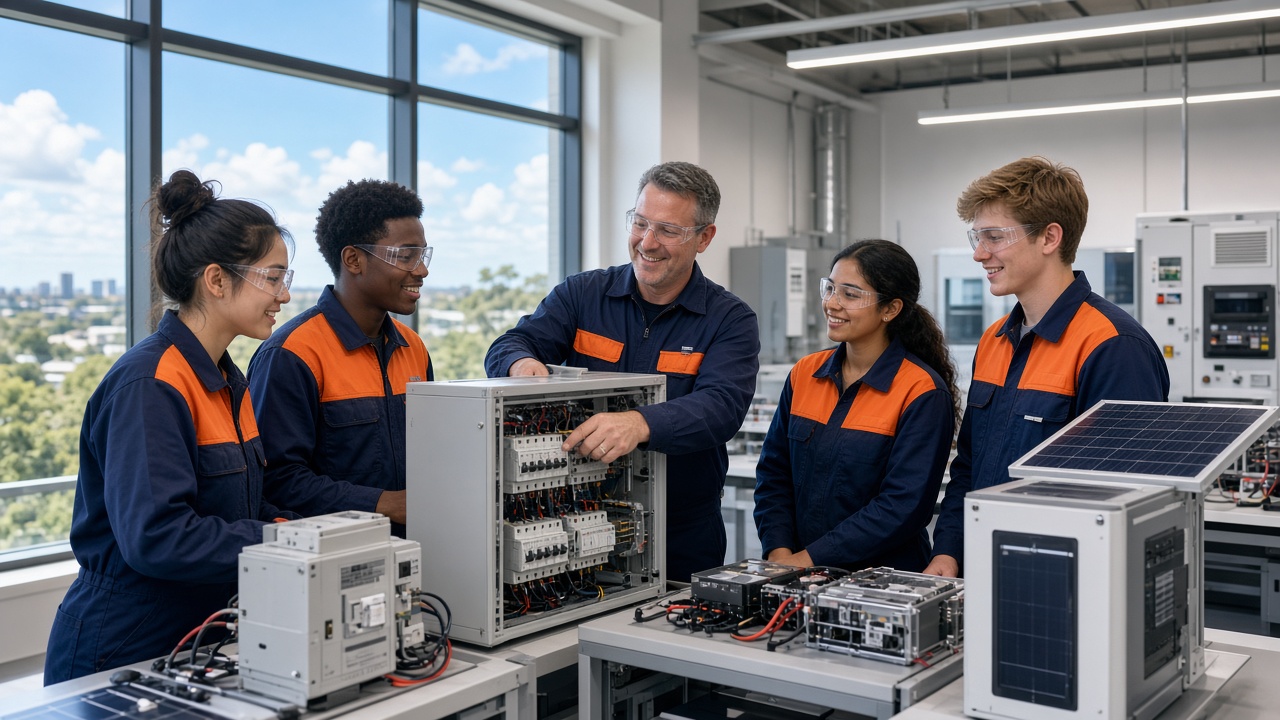
That's why I love what Victoria is doing. The SEC Apprenticeship Academy, delivered with NECA Education & Careers and the ETU, aims to support 2,000 electrical apprentices over four years, which the Victorian Government says will make it the state's largest electrical apprenticeship training program. A 40-apprentice pilot is up first, with expressions of interest opening in the coming weeks, apprentices starting early next year and the Academy launching in the first quarter of 2027. When the program was first announced in May, the government said every one of those apprentices would be employed by the SEC and placed across a wide range of energy projects, with training facilities in Melbourne and regional Victoria. ECD's coverage also notes projections that the number of electricians in Victoria's energy sector will grow by more than 90 per cent from 2026 to around 8,500 by 2040.
That's exactly the kind of model that tackles the placement problem head-on: a big employer taking responsibility for training, rather than leaving apprentices to find their own way from site to site.
My practical advice right now
National licensing is coming in fits and starts, and I'm optimistic this attempt has more momentum than any before it. But you can't work on a December announcement. Here's what I'd do today:
- Get fully licensed, and keep it current. Grandfathering existing licences is one of the implementation questions being worked through, but nothing is decided yet. Being current and in good standing is the best position to be in whatever the final model looks like.
- Do your AMR notification before you travel. Check the regulator's site in the state you're heading to, notify if required, and diarise a re-notification every time your home licence renews.
- Keep evidence of your skills. If additional skill checks like the LEA become part of the model, a clean record of your training, experience and CPD will help. Keep logbooks, certificates and references organised.
- Think about where you live versus where you work. AMR is tied to your home state. If you're relocating permanently, budget for applying for a local licence.
- Heading to NZ? Apply through the EWRB with your licence, not your Cert III. Sort certified copies and your Section 19 declaration early.
- Apprentices in Victoria, watch the SEC Academy EOIs. A pilot with 40 places will be competitive, so be ready to move.
- Have a say. If you've got a view on scope, skill checks or grandfathering, talk to your union, your industry association or your regulator. This model is being designed now.
I genuinely think a well-designed national licence would be one of the best things to happen to the trade in decades. It would make it easier to chase the big projects wherever they are, from data centres to transmission to renewables, while lifting the bar on quality. Let's hope December delivers.
In the meantime, there's no shortage of work. Browse the latest electrical jobs and apprenticeships across Australia and New Zealand on ElectricalRoles.