
70,000+ Energy Tradies Needed: Small Contractors Hold the Key
PSO's 2026 update adds data centres and housing to the energy trades shortage. Why 48,000 small contractors, new trainers and the SEC Academy matter now.
Earlier this week we wrote about Australia needing 42,000 more energy tradies. That number just got a lot bigger. And the most important finding in the new report isn't the headline figure at all. It's who actually holds the key to fixing the shortage.
Powering Skills Organisation (PSO), the Jobs and Skills Council for energy, gas and renewables, has published its 2026 Targeted Workforce Update, a progress check on its 2025 plan High Load, Short Supply. Here's what's in it, what's happening around it, and what I think it means for sparkies, apprentices and electrical contractors.
The new numbers
The original 42,000 additional energy trades workers by 2030 still stands. What's changed is everything stacked on top:
- around 17,000 more for the National Housing Accord (drawing on HIA estimates)
- around 13,000 more for data centre construction and operations
That's more than 30,000 on top of the original figure. As Construction Australia's write-up notes, adding them together takes the combined requirement past 70,000, though the figures cover slightly different periods and PSO says fresh modelling is under way.
PSO calls it an energy "supercycle". Not a five-year bump, but a decades-long stretch where housing, data centres, transmission, batteries, defence and the Brisbane 2032 build all compete for the same pool of licensed trades.
Data centres stand out. PSO estimates the sector used more than 15,000 energy trades workers in 2024 and will need about 28,000 by 2030, with almost all of the growth in construction. Industry figures cited in the report put electrical systems at around 44 per cent of average data centre construction costs. AEMO counts more than 160 data centres operating in Australia, with 24 under construction as of July 2026 and 19 more approved. If you've been wondering whether our data centre electrician explainer was a passing fad, it isn't.
Interest isn't the problem
Here's the part I love. Young Australians want to be sparkies. According to PSO, electrician is the most preferred trade pathway among high school students and the highest-ranked vocational career overall. More than half of energy employers advertising an apprenticeship get over 20 applicants per vacancy. Completion rates for electrician apprentices sit at 70 per cent, well above the VET average of 56 per cent.
And the pipeline is moving. NCVER's March quarter 2026 data showed electrician apprenticeship commencements up 19 per cent on a year earlier, to a record 6,870 for the quarter.
So why the shortage? PSO's answer is blunt: 28 per cent of apprentices surveyed say they couldn't find an employer. The constraint isn't attracting candidates. It's creating apprenticeship positions.
The real bottleneck: 48,000 contracting businesses
This is the finding that reframes the whole conversation.
An electrical apprentice can only be employed by a business that already employs a licensed electrician, or placed through a group training organisation with a host that does. And the bulk of Australia's electrical workforce sits in small business:
- about 56 per cent of licensed electricians work in electrical contracting businesses
- 96 per cent of electrical contracting businesses are small or medium-sized
- electrical contractors employ 71 per cent of all electrician apprentices
- there are roughly 48,000 electrical contracting businesses in Australia, and only about one-third currently employ an apprentice
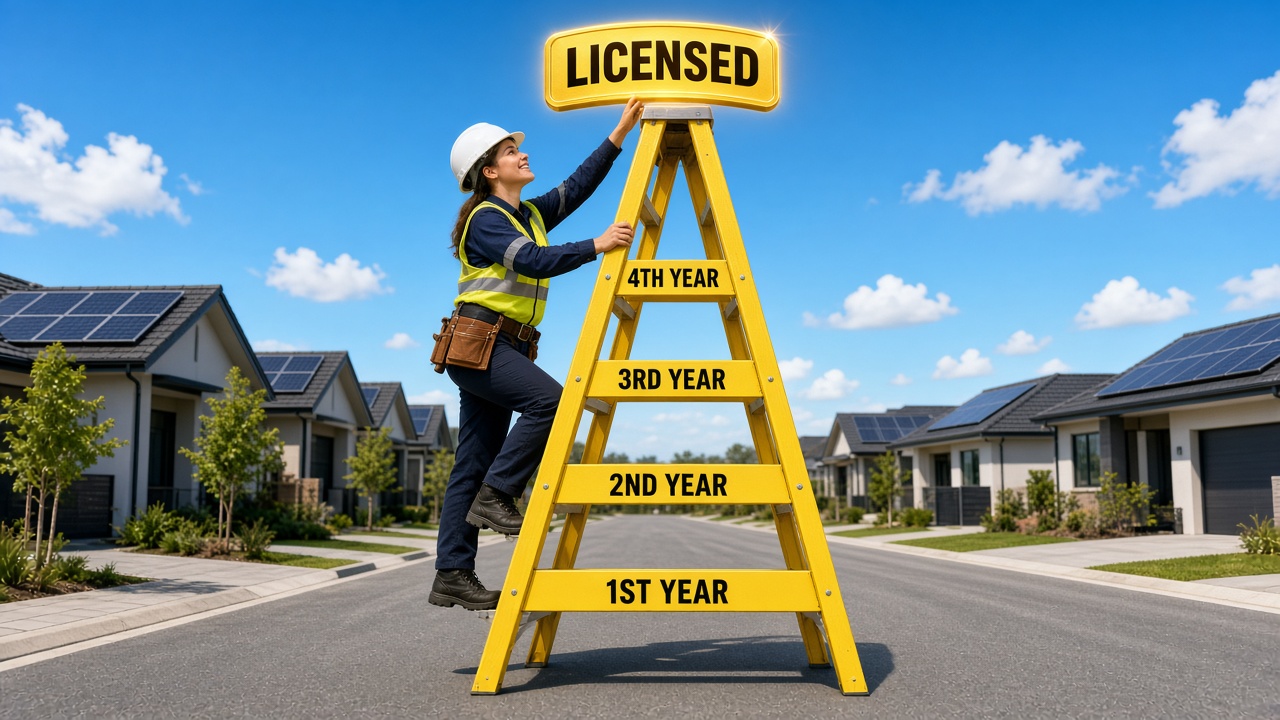
PSO's sharpest line sums it up: the supercycle changes who benefits from apprenticeship training without fundamentally changing who pays for it. Apprentice costs are front-loaded, supervision is heaviest when productivity is lowest, and there's a real risk your fully trained fourth-year gets poached by a data centre builder the week they're licensed.
PSO's call to action is that larger employers, naming utilities, mining companies and industrial manufacturers, need to carry more of the load. It also points out that renewable developers and data centre operators are consumers of this workforce rather than producers of it. I think that's fair, and I'd go further: the big builders who benefit most should be funding, hosting and mentoring far more apprentices than they do today.
What employers told PSO
PSO's 2026 survey (around 210 respondents, which PSO itself flags as a small first-year sample) paints a picture of strong demand and nervous investment:
- 66 per cent recruited in the past 12 months
- 55 per cent still carry vacancies, and 52 per cent have roles unfilled for over six months
- 62 per cent expect tradesperson numbers flat or falling, and 67 per cent expect apprentice numbers flat or falling
- 72 per cent of training providers are at or above capacity for electrotechnology
That gap between demand and willingness to invest is partly about confidence. PSO reports fuel and materials costs biting small operators this year, and around 200 electrical apprentices reportedly stood down in Queensland. It also flags a strong link between the unemployment rate and apprentice commencements, so a softer economy is a genuine risk to the pipeline.
The good news: things are moving
I'm optimistic, because the response is starting to match the problem.
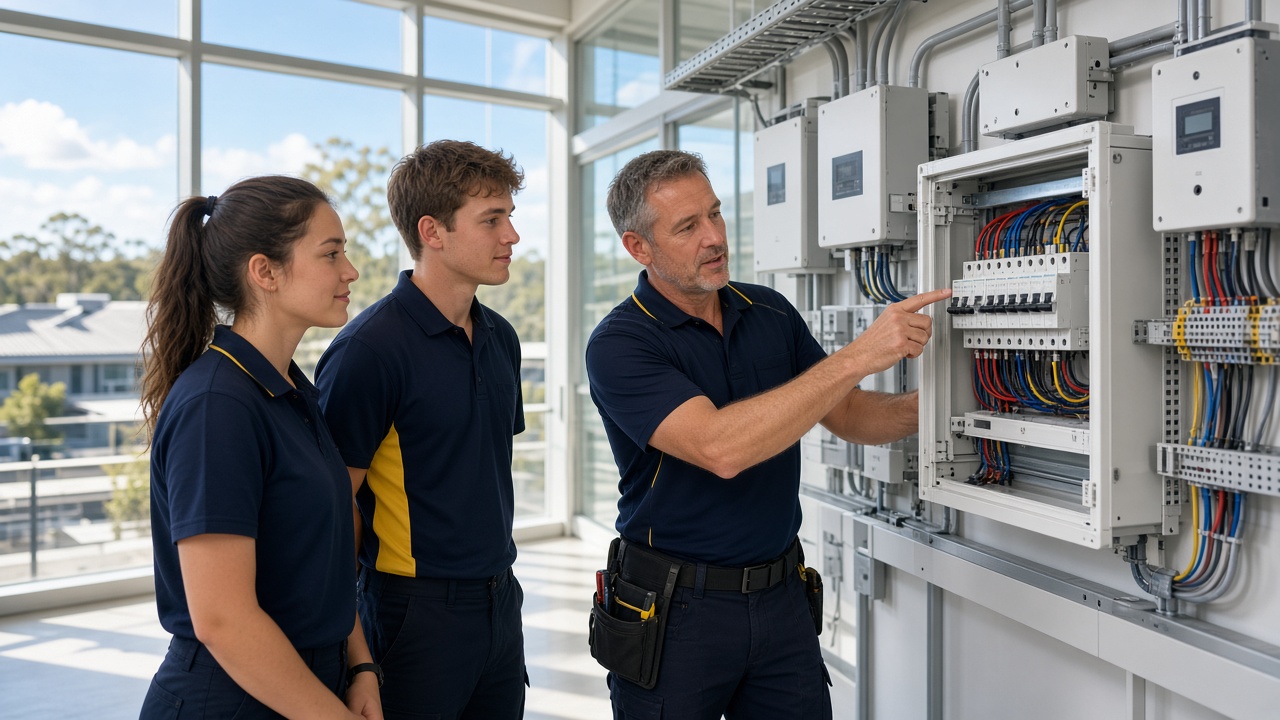
More trainers. On 9 October the federal government announced $5 million for pilot projects to turn experienced tradies into VET teachers, with a free Certificate IV in Training and Assessment plus mentoring and induction through participating TAFEs and RTOs. PSO leads the electrical stream. With 72 per cent of providers at capacity, this targets a real choke point.
A big new academy in Victoria. On 22 October the Victorian Government announced that the SEC Apprenticeship Academy, run with NECA Education & Careers and the Electrical Trades Union, will start with a 40-apprentice pilot, with expressions of interest opening in the coming weeks and first apprentices starting early next year. The academy is slated to support 2,000 apprentices over four years. The government projects electricians in Victoria's energy sector to grow more than 90 per cent from 2026 to around 8,500 by 2040.
National licensing. PSO counted more than 110 different electrical licences across Australia. The Productivity Commission puts the benefit of national licensing for electrical trades at $51 million to $62 million a year, and treasurers agreed in November 2025 to progress a single national market for workers with electrical occupations a priority. For anyone working across borders, including FIFO sparkies, that would be a genuine day-to-day improvement. PSO rightly warns against harmonising to the lowest standard.
A practical warning for future apprentices (and parents)
One finding deserves far more airtime. PSO found 59 per cent of electrotechnology apprenticeship cancellations happen in the first year and 26 per cent in the second, right when the maths gets harder. The Certificate III needs solid numeracy, including algebra and trigonometry. Completion rates climb from 54.9 per cent for Year 10 finishers to 74.4 per cent for Year 12.
If you're in Year 9 or 10 and want to be a sparky, pick the maths that sets you up. If you're a parent, this is the conversation to have now, years before anyone signs a training contract.
What this means for you
If you're a licensed sparky: your bargaining power is strong and getting stronger, especially if you add HV, instrumentation, hazardous areas or data centre experience. And if you've got 15-plus years on the tools, take a serious look at the trainer pilot. Teaching the next generation is one of the highest-leverage things you can do for the industry, and it's a sustainable second act for your career.
If you're an apprentice hunting for a host: don't rely only on the big names. Approach small and medium contractors directly, talk to group training organisations, and watch for the SEC Academy EOIs if you're in Victoria. Show up with strong maths, a clean resume and a genuine interest in where the industry is heading.
If you run a contracting business: I know the cost and supervision load are real. But the 48,000 businesses PSO is talking about are you. Group training organisations can shoulder some of the admin and risk, incentives change often so check what's currently available, and a well-trained apprentice who stays is the best hedge against a labour market that's only going to get tighter.
The bottom line
The demand side of this story is locked in. Housing, data centres and the energy transition all need the same people, and they need them this decade. The supply side won't be fixed by more school leavers wanting in, because they already do. It'll be fixed by more businesses, big and small, saying yes to an apprentice, and by more experienced sparkies stepping up to train them.
That's a solvable problem. I reckon we'll solve it.
Hiring or looking? Browse the latest electrician and apprentice jobs on ElectricalRoles.com.au.
Sources: Construction Australia, PSO 2026 Targeted Workforce Update (figures are PSO's unless attributed); Minister for Skills and Training, $5 million trainer pilots; Premier of Victoria, SEC Apprenticeship Academy.