What Does a Substation Electrician Do? Pay, Skills and Pathways
What substation electricians do, real pay from current ads, and how to get into HV substation work in Australia and NZ as batteries and interconnectors boom.
Every big energy announcement you read about, every grid-scale battery, every interconnector, every new data centre, has one thing in common. Somewhere along the line it plugs into a substation. And somebody has to build, test, switch and maintain that substation. That somebody is the substation electrician, and right now it's one of the most in-demand, best-supported and genuinely future-proof roles in the Australian and New Zealand electrical trade.
This is the next entry in our "what does this electrical role do" series. I'll walk through what the job actually involves day to day, what it pays based on real ads, how you get into it from an apprenticeship or as an already-licensed sparky, and why the next five years look so strong for anyone with high voltage experience.
What a substation electrician actually does
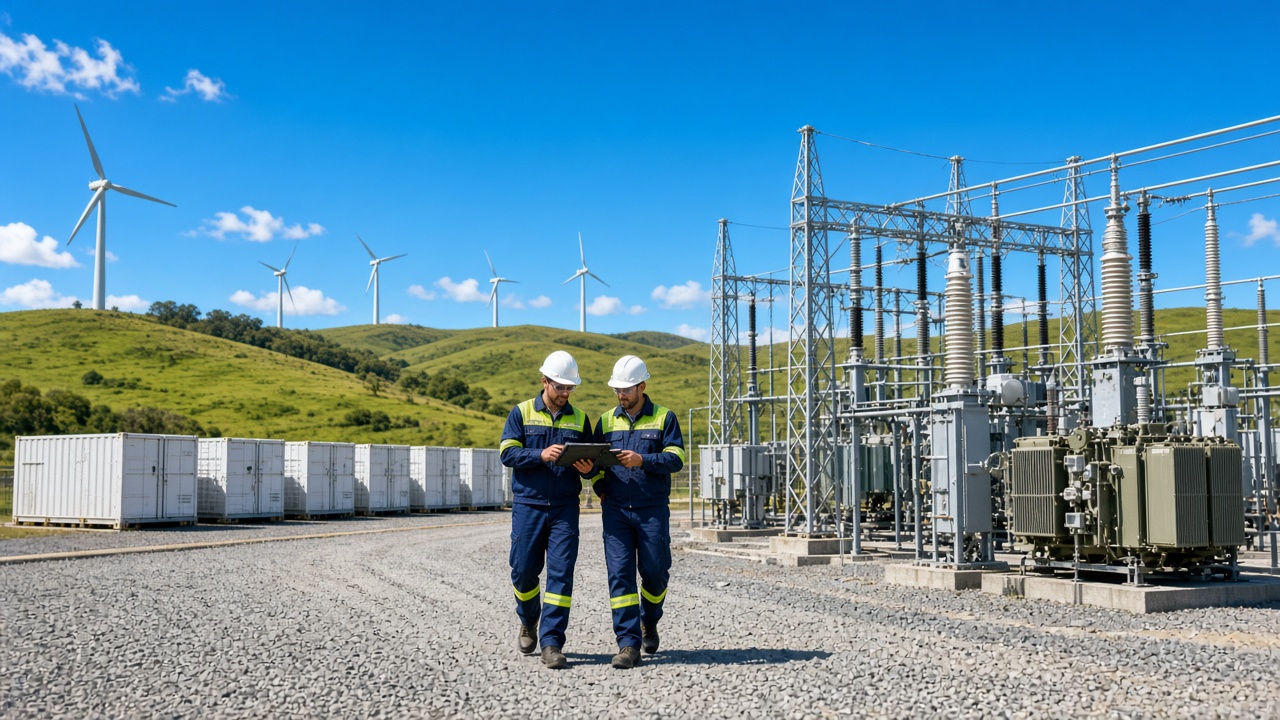
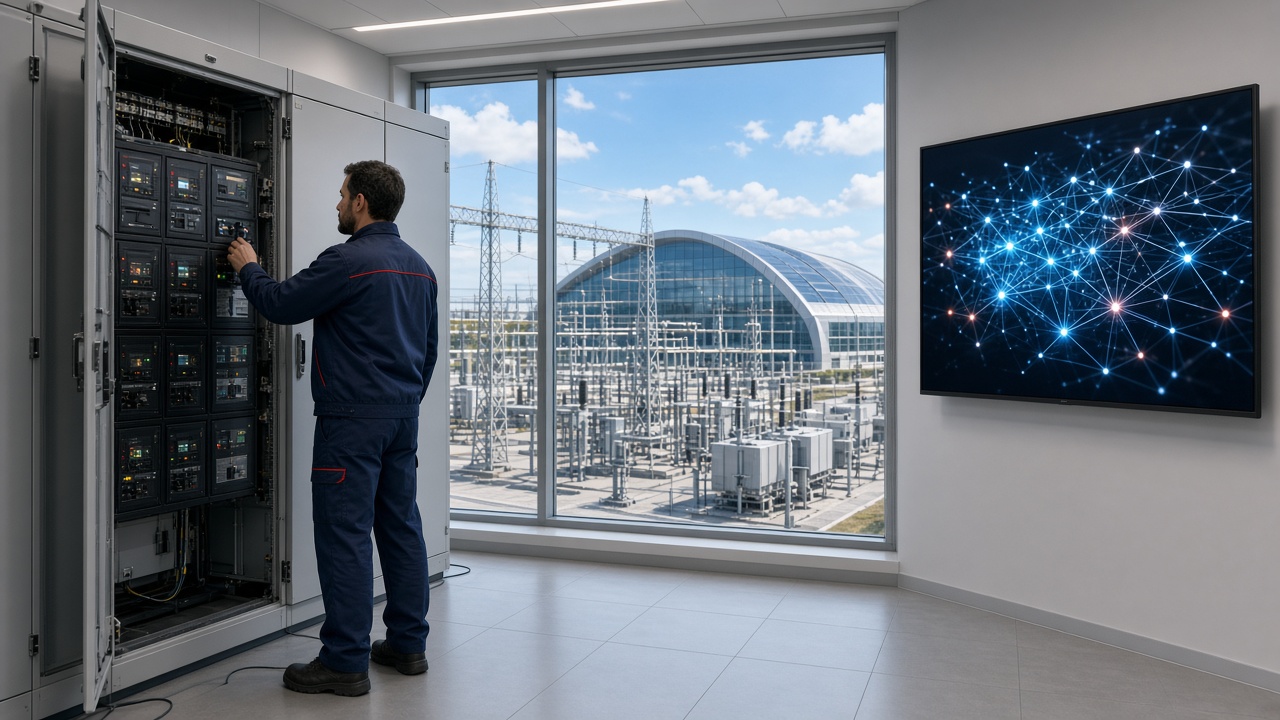
A substation is where voltage gets stepped up or down and where the network is protected, switched and controlled. Transmission substations handle the big stuff at voltages like 275 kV or 330 kV, while zone substations step power down for local distribution networks. Substation electricians work on both the "primary" side, meaning the heavy high voltage plant, and the "secondary" side, meaning the protection, control and metering systems that keep that plant safe.
The best way to understand the role is to read what employers are asking for right now. Downer is currently advertising for an HV Substation Electrician in Dandenong, Victoria to work on primary and secondary construction of zone substations, terminal substations and utility-owned data centre stations. The work includes HV switchyard construction with circuit breakers, current and voltage transformers, disconnecting switches, solid and flexible bus installation and earthing of all switchyard equipment, plus installing secondary protection and control panels and terminating control cables. The role runs on a nine-day fortnight.
On the network operator side, Transgrid's recent Substation Electrician ads described work across the full asset lifecycle: installing, maintaining, fault-finding and commissioning substation assets, performing high voltage switching, responding to system incidents and helping develop apprentices. Transgrid operates more than 13,000 km of high voltage transmission lines and 128 substations across NSW, Victoria and the ACT, so the variety is enormous.
Ausgrid's current Substation Technician role frames it as inspecting, installing and maintaining network infrastructure and electrical equipment, preparing worksites near live apparatus, interpreting technical documentation and contributing to emergency restoration work.
Across the Tasman, the job looks very similar. Ventia is hiring electricians and electrical fitters in Wellington and Christchurch to support Transpower's national grid, installing, maintaining and commissioning transformers, switchgear, protection relays and VT/CTs, and doing LV electrical work inside substations.
In short, it's a role for people who like big plant, precise procedure and seeing exactly how the grid works. You're not chasing a dozen small domestic call-outs a day. You're part of a crew, working to switching programs and permits, on assets that power entire regions.
What it pays
Let's talk money, using real advertised numbers rather than guesswork. Ausgrid is advertising its Substation Technician role at $94,000 to $113,000 base plus 16.5% super, permanent full time, with a fortnightly rostered day off, across Sydney, the Central Coast, Newcastle and the Upper Hunter. Once you add that super, the package sits comfortably in six figures before any overtime or call-out.
That's the starting picture for a permanent network role. On-call allowances, travel and away-from-home allowances, overtime during outages and emergency restoration all lift take-home pay, and Transgrid, for example, lists allowances for travel and time spent away from home. Construction contractors on major projects and mining operations can pay more again, especially for people who hold HV switching authorisations and protection testing experience. Newmont, for example, is currently hiring a High Voltage Electrical Fitter at Boddington in WA on a 7/7 roster to maintain the electric loading fleet, including electric rope shovels.
The other thing I'd point out is the lifestyle. Nine-day fortnights keep coming up in these ads, from Downer to Powerlink, and the big network businesses offer serious benefits. Transgrid advertises 20 weeks of paid primary carer's leave, and Ausgrid offers EV salary sacrifice and study assistance. For a trade career, that's a very good deal.
Why demand is about to explode
Here's the bit that gets me excited. The pipeline of work that runs through substations is enormous and it's already under construction.
AEMO's latest Connections Scorecard, released on 21 October, shows 80.9 GW of generation and storage projects moving through the connection process, overtaking the NEM's current capacity of 77 GW for the first time. Grid-scale batteries make up 55% of that pipeline. Every one of those projects needs a connection, and most need a substation.
Look at a real example. Enerven has been appointed to deliver the 400 MW / 1,600 MWh Teebar battery about 60 km west of Maryborough in Queensland. Its scope includes BESS integration, a 275 kV substation and around 300 metres of 275 kV overhead transmission line, with construction getting underway this month and commercial operation targeted for late 2028.
Then there's Marinus Link, the interconnector between Tasmania and Victoria. Its Hazelwood North converter station in the Latrobe Valley will house four transformers weighing 330 tonnes each and 24 HVDC valve structures standing 11 metres tall, with earthworks planned before the end of the year. It will be the first deployment of grid-forming technology at both ends of an Australian interconnector. That's cutting-edge kit, and people who get exposure to HVDC and grid-forming systems early will be in demand for decades.
And don't forget data centres. Downer's ad specifically mentions utility-owned data centre stations, which tells you where a lot of new substation work is heading as hyperscale campuses keep arriving in Sydney and Melbourne.
New Zealand is busy too. Transpower's October update notes more than 1,000 MW of renewable generation started commissioning in the past year and that its Central North Island capacity upgrade has moved into its next phase. Transpower says on its careers page that power technicians, protection technicians, electricians, electrical fitters, line mechanics and HV switchers are all highly sought after by its service delivery teams.
How to get into substation work
There are two main doors in, and both are open right now.
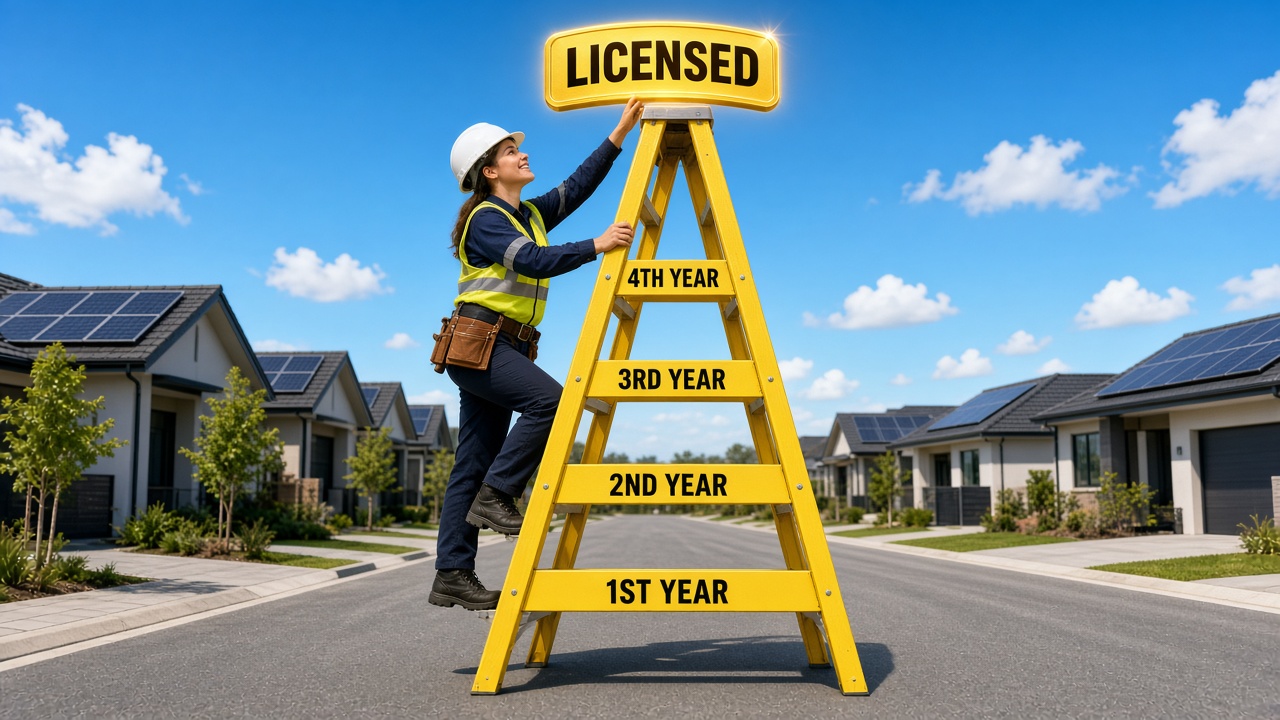
Door one: an apprenticeship with a network business. Powerlink, Queensland's transmission operator, runs a dedicated Substations Electrical Trade apprenticeship. You complete the UEE30820 Certificate III in Electrotechnology Electrician and qualify for your licence, but you learn it inside substations, working on specialist equipment you won't find in houses. You also come out with high risk work licences (EWP, rigging, dogging and forklift) and a heavy rigid truck licence, on a nine-day fortnight with 14.75% super. Powerlink lists pathways from there to Substation Trade Technician, Live HV Technician, Site Supervisor and Team Leader. Its Secondary Systems stream goes deeper into protection, control and HV testing, with funded study towards an Advanced Diploma or Associate Degree in Electrical Engineering. Be ready for travel, working at heights up to 15 metres and strict safety procedures.
Victoria is building capacity too. The SEC is launching its Apprenticeship Academy with NECA Education & Careers and the ETU, starting with a 40-apprentice pilot and scaling to 2,000 electrical apprentices over four years. The state projects the number of electricians in Victoria's energy sector will grow by more than 90% from 2026 to around 8,500 by 2040.
Door two: cross over as a licensed electrician. If you've already got your licence from commercial, industrial or mining work, you can absolutely move across. Transgrid's ads asked for a Certificate III in Electrotechnology or equivalent, familiarity with the Wiring Rules and willingness to learn substation secondary systems, and promised structured training covering HV switching, high risk work licences, diagnostics and commissioning. Ausgrid wants a qualified electrician with distribution or substation experience, network Electrical Safety Rules accreditation and asbestos awareness. Downer wants a current Victorian licence, HV primary and secondary experience and current first aid, CPR and LVR (low voltage rescue) tickets.
In New Zealand, the baseline is EWRB registration plus a current practising licence, and Ventia's ad also asks for a full Class 1 driver licence, with Class 2 a bonus. If you're an Aussie sparky thinking about a stint across the ditch, check our earlier guide on getting licensed in Australia and working in NZ.
My practical advice
If you want to move into substation work, here's what I'd do this month. Get your LVR and CPR current, because it's the first thing every HV employer checks. Pick up an EWP ticket if you don't have one. Read up on HV switching and permit-to-work systems so you can talk confidently in an interview. And on your resume, spell out any work you've done on switchboards, protection relays, control wiring, testing or commissioning. Hiring managers in this space are looking for discipline and attention to detail as much as raw experience.
If you're still at school or thinking about a career change, network operators' apprentice intakes open well ahead of time, so get on their talent lists now for the next round.
The grid we're building over the next decade is the biggest electrical construction program in this region's history. Batteries, interconnectors, renewable zones and data centres all meet at the substation. It's skilled, well paid, secure and right at the cutting edge, and there's never been a better time to get in. Browse the latest substation, HV and electrical jobs on ElectricalRoles and take the first step.