What Does an Electrical Inspector Do? Pay, Licences and Pathways
Electrical inspectors sign off the work that keeps homes, solar and batteries safe. What the job involves, licences in AU and NZ, real pay and how to get in.
Every sparky knows the feeling. You've finished the job, tested everything, filled in the paperwork, and then someone else turns up to look over your work. That someone is the electrical inspector, and it's one of the most respected, best-balanced career moves available to an experienced electrician in Australia and New Zealand.
I'm a big fan of this role, for a reason that might surprise you. We talk a lot on this blog about the boom in solar, batteries, EV chargers and electrification. Every one of those installations needs to be done properly, and a lot of them need a qualified second set of eyes. With more than 600,000 home batteries installed under the Cheaper Home Batteries program since July 2025, according to Federal Energy Minister Chris Bowen, the amount of work flowing past inspectors is only heading one way.
So here's my rundown of what an electrical inspector actually does, the licences you need on both sides of the Tasman, what the jobs pay right now, and how to get there.
What an electrical inspector actually does
At its core, an electrical inspector checks that electrical installation work is safe and meets the rules: the Wiring Rules (AS/NZS 3000), the relevant standards for that type of installation, and the electrical safety laws in that state or country.
Day to day, that usually means:
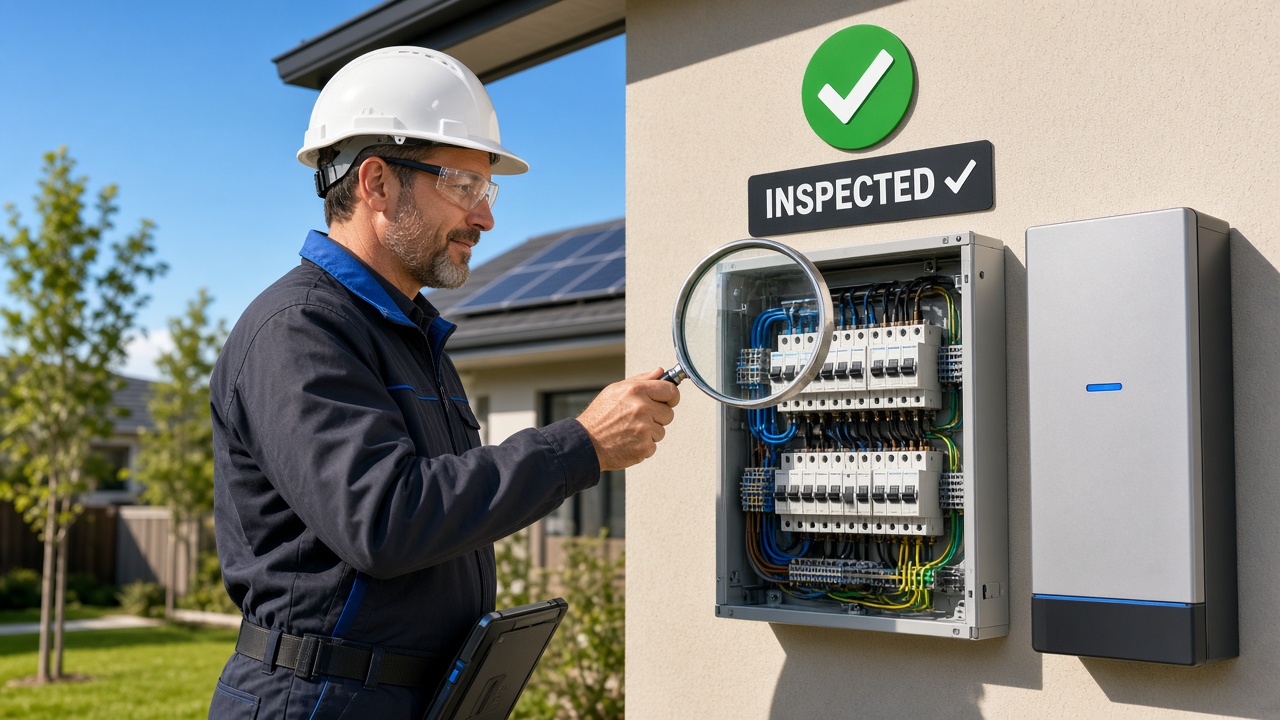
- Visual inspection of switchboards, cabling, earthing, protection devices, isolation and labelling.
- Testing: insulation resistance, continuity, polarity, earth fault loop impedance and RCD operation, using the same kinds of instruments you used as an electrician, but with a sharper eye.
- Reviewing the paperwork: certificates of compliance or safety, test results, design information and the scope of the work.
- Identifying defects and explaining clearly what needs fixing before the work can be signed off.
- Signing off: certifying that the work meets the requirements, which is a legal responsibility, not a formality.
The variety is wider than most people expect. Depending on the employer and your licence classes, you could be inspecting new homes, commercial fit-outs, construction site supplies, solar and battery systems, hazardous areas, high voltage installations or hospital patient areas.
There's also a people side to it. The best inspectors I know aren't the ones who catch the most mistakes. They're the ones electricians actually like seeing on site, because they explain things clearly, they're consistent, and they help good sparkies get even better.
Victoria: the Licensed Electrical Inspector (LEI)
Victoria has the most clearly defined inspector licensing in Australia, through Energy Safe Victoria. The Licensed Electrical Inspector (LEI) licence comes in classes:
- Class G: inspections of any low voltage installation, except the specialist areas below. Energy Safe says it expects applicants to have held an electrician's licence for at least five years.
- Class RE (renewable energy): a newer class that came into effect on 5 April 2024. It covers electricity generation systems and battery systems, including their wiring, switchgear and controlgear. You need to hold, or be eligible to hold, Class G.
- Class H: hazardous areas.
- Class V: high voltage installations.
- Class M: fixed electrical equipment in hospital and medical patient areas.
For Class G, you sit three assessments with Future Energy Skills, and the Energy Safe assessment page sets out the detail:
- G Class Theory: a 3.5-hour written exam on a broad range of electrical knowledge.
- Safe Approach: inspecting and testing electricity supply for construction purposes (1 hour 20 minutes, plus reading time).
- G Class Practical: inspecting and testing domestic, commercial and industrial installations (2.5 hours, plus reading time).
The pass mark for each is 75%. A nice old-school detail: you supply your own insulation resistance and continuity tester for the assessments, and it has to be an analogue, true moving-coil meter with no pass/fail indication. In other words, they want to see that you genuinely understand what you're measuring.
The RE Class adds a 3-hour theory assessment covering standards like AS/NZS 4777.1 (inverter grid connection), AS/NZS 5033 (PV arrays) and AS/NZS 5139 (battery systems). Classes H, V and M don't have a formal exam. Instead you need on-the-job training with a current inspector of that class, including at least 10 example inspections, plus a reference from that inspector.
One rule sums up the role nicely: a Victorian LEI must not inspect work they were involved in installing or designing, or work where they're the registered electrical contractor engaged to do it. The inspector signs the Certificate of Inspection within the Certificate of Electrical Safety, confirming the work meets the requirements. Independence is the whole point.
New Zealand: the EWRB Electrical Inspector
In New Zealand, Electrical Inspector is a registration class with the Electrical Workers Registration Board (EWRB). The broad requirements, as set out by training providers like Skills Trades Training, are:
- a current practising licence as an electrician;
- registration as an electrician for at least three years;
- at least three years' practical experience in prescribed electrical work that's satisfactory to the Board;
- passing the Board-approved examination and practical assessment.
Skills Trades Training runs an eight-day block course for $1,805 including GST, covering inspector responsibilities, inspecting prescribed electrical work, legislation, the MEN system, protective devices and wiring systems, plus the practical assessment. The exam is then booked through ASPEQ. Its next listed intakes are 22 February 2027 in Dunedin and 24 February 2027 at Highbrook in Auckland.
Why does New Zealand need inspectors? Under the Electricity (Safety) Regulations 2010, high-risk prescribed electrical work must be inspected by an authorised inspector who didn't carry out, supervise or certify that work. High-risk work includes work on photovoltaic and mains parallel generation systems, and installations in hazardous areas and medical locations. With New Zealand's solar build taking off, that's a growing slice of work.
If you're a Kiwi sparky, also remember that the updated Wiring Rules (AS/NZS 3000:2018 with Amendments 1 to 3) now apply to new work. We covered that change here. Inspectors are the people who have to know these changes inside out.
Other states: different systems, same skills
Outside Victoria, the way inspection works varies by state and territory. In many places, inspectors work for the electrical safety regulator, for distribution networks, or for contractors and auditing businesses engaged by them. The core skill set is the same everywhere: deep knowledge of the Wiring Rules, rock-solid testing and a calm, clear way of communicating. If you're outside Victoria, check your state regulator's website and talk to your local network about how inspections are arranged.
Who's hiring right now, and what it pays
I went through the current ads to give you real numbers, not guesses. These were all live on SEEK in mid-November 2026:
- Queensland's Electrical Safety Office (Office of Industrial Relations) is advertising Principal Inspector (Electrical Safety Compliance) roles at $125,489 to $134,020 a year, permanent, across Brisbane, Ipswich, the Gold Coast, the Sunshine Coast and Toowoomba.
- South Australia's Department for Energy and Mining is advertising a Team Leader, Electrical Inspectors in Adelaide at $130,046 to $134,956 plus super.
- Service Stream, through its TechSafe Australia team, is hiring Electrical Inspectors in Launceston, Hobart and Melbourne. The Launceston ad lists $106K base plus vehicle, super and on-call/overtime, and invites A Grade electricians who want to make the move into inspecting. You'll find the Melbourne and Hobart roles on our board too.
- Horizon Power in Western Australia is advertising an Electrical Compliance Inspector based in Bentley, Perth, with 13.5% super and allowances.
- Plan B Group in Mount Waverley, Melbourne, is looking for a Senior Licensed Electrical Inspector to mentor and lead its LEI team, with full-time, part-time or contractor options.
For a broader benchmark, SEEK's salary estimate for an electrical inspector in the electricity, gas and water services industry is $115K to $140K a year (refreshed 2 November 2026). On the same page, its estimate for an electrician in that industry is $100K to $120K. That's a decent step up, often with a vehicle included and far less physical strain.
There's also a whole adjacent world of inspection work: E&I QA/QC inspectors on major resources projects in WA, powerline asset inspectors, and contract roles doing safety checks on rental properties. Different jobs, but the same appetite for licensed people who know what good work looks like.
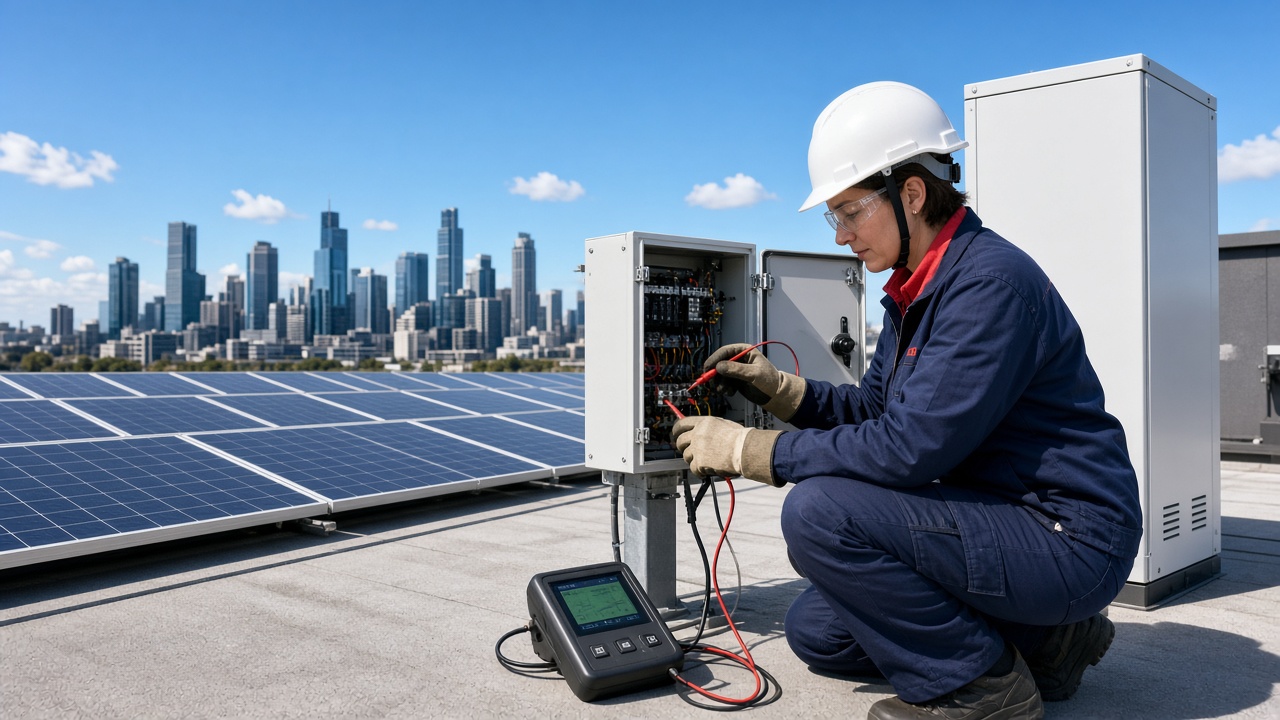
Rooftop solar and batteries keep inspectors busy, with plenty of testing done in the sunshine.
What it's really like
Here's the honest picture.
The good bits. Better work–life balance, a work vehicle in many roles, steady hours, and less wear and tear on your knees and back. You see an incredible variety of installations. You're respected. And as one Service Stream ad puts it, there are "lower physical demands", which matters a lot when you're 20 years into the trade.
The challenging bits. You're the person who sometimes has to say "not yet". That takes confidence and tact. The responsibility is real, because your signature means something. And you need to stay right on top of standards and regulations, which keep changing as solar, batteries and EV charging evolve.
If you love the technical side of the trade, enjoy explaining things and take pride in doing work properly, this role tends to feel like a natural fit.
How to get there: my practical roadmap
- Build broad experience first. Inspectors need to have seen a lot. Domestic, commercial, industrial, solar, batteries, construction supplies. The broader your background, the easier the exams and the job.
- Get obsessive about testing. Practise your test sequence until it's second nature, and make sure you truly understand what each result means. Victoria's analogue-meter requirement tells you how much they value this.
- Know the Wiring Rules properly. Not just where to find things, but why the rules say what they say.
- Add renewables. Solar and battery accreditation, and in Victoria the RE Class, put you right where the volume of work is going.
- Talk to inspectors. Ask the ones who visit your jobs how they got started and who's hiring. Most are happy to help.
- Look at a stepping-stone role. Some employers, like the TechSafe roles above, actively recruit A Grade electricians to train into inspection.
My take
I think the electrical inspector is one of the most underrated roles in the industry. It's a career move that rewards everything you've learned on the tools, pays well, gives your body a break and puts you right at the heart of the energy transition. As Australia and New Zealand install record numbers of solar systems, batteries and chargers, the people who confirm that work is done right become more valuable every year.
If you've got five-plus years under your belt and you're wondering what's next, this could be it. Browse inspector, compliance and testing roles on ElectricalRoles.com.au, and set up a job alert so you're first to hear when the next one opens.