
Big Batteries Switch On: Williamsdale, Huntly and EnergyConnect
Canberra's biggest battery is live, Huntly's first BESS is open, EnergyConnect is energised and more are coming. What the switch-on season means for sparkies.
For years, a lot of our industry news has been about plans. Approvals, funding rounds, connection queues, artist's impressions. This month feels different. Across Australia and New Zealand, big batteries and big transmission are actually switching on, one after another, and I love it.
When a battery or an interconnector goes live, it's the end of a long chain of work that runs straight through our trade: cable pulls, terminations, transformers, protection settings, testing, commissioning and handover. Here's my round-up of what's just been energised, what's in commissioning, what's just broken ground, and what I think it means for your next career move.
Canberra's biggest battery is live
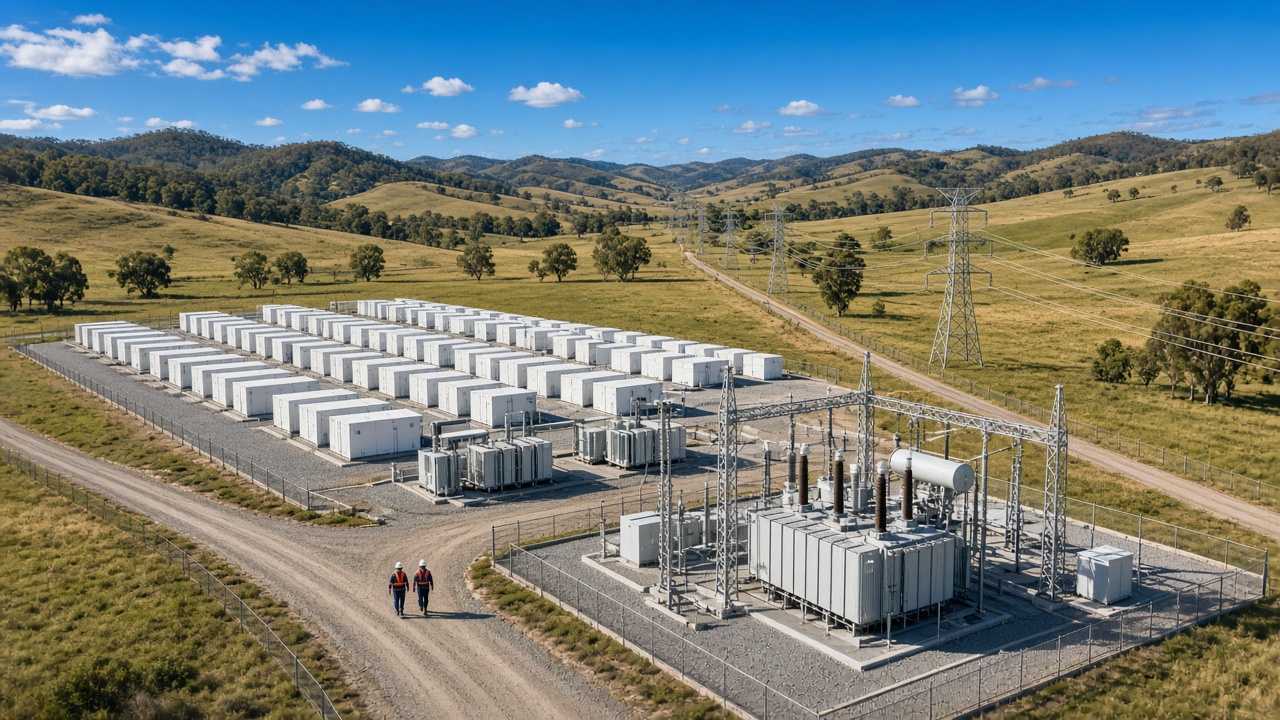
The headline act is in the ACT. The ACT Government announced on 4 November that the Williamsdale Battery Energy Storage System has been switched on. It's the centrepiece of the Big Canberra Battery program and delivers 250 MW / 500 MWh, which the government says is enough to power a third of Canberra for two hours at peak demand.
Renew Economy's write-up has the details electricians will appreciate. Developer Eku Energy says the project is fully commissioned and operating commercially, delivered "on time and on budget". Inside the fence there are 136 Tesla Megapack 2 XL units arranged in 12 collector grids, each with 12 step-up transformers, all feeding a main transformer that weighs more than 180 tonnes. Consolidated Power Projects was the contractor, with Evoenergy as the network provider.
Read that again with a sparky's eye. Twelve collector grids. A forest of step-up transformers. A 180-tonne main transformer. That's a huge amount of LV and HV cabling, terminations, earthing, protection and SCADA work, and the ACT says the project supported 150 jobs at peak construction. Construction started in November 2024, so that's roughly two years from first sod to commercial operation.
Chief Minister Andrew Barr summed up why it matters: "As more Canberrans switch to electric vehicles and electric appliances in their homes and businesses, we need to make sure our energy system is ready to meet that growing demand." That's the bit I keep coming back to. Big batteries and household electrification feed each other. Every battery like Williamsdale makes it easier to connect more EV chargers, heat pumps and rooftop solar at the other end of the network.
EnergyConnect is energised
The other big switch-on is transmission. On 1 November, AEMO finished the market system changes for Project EnergyConnect, and AEMO says that paved the way for energising the new line between Bundey in South Australia and Wagga Wagga in NSW, lifting transfer capacity from 150 MW to 350 MW as part of a commissioning and testing phase.
On 4 November, an AEMO market notice reported by WattClarity confirmed the 330 kV Bundey–Buronga and Buronga–Dinawan lines were commissioned, marking the start of the SA-to-NSW interconnector testing program. Built by ElectraNet and Transgrid, EnergyConnect runs around 900 km, and Transgrid called its integration into the market "a defining moment in the delivery of Australia's clean energy future".
For workers, the message is simple. A 900 km interconnector doesn't just get built once and forgotten. It brings substations, protection systems, communications and maintenance work that lasts for decades, and it makes it easier for more solar, wind and storage to connect along the way.
South Australia: commissioning, cranes and a busy pipeline
South Australia keeps punching above its weight. In mid-October, Renew Economy reported that commissioning had started on the Summerfield BESS, a 240 MW / 960 MWh four-hour battery about 55 km east of Adelaide, built from more than 200 e-Storage SolBank 3.0 containers. Once it's fully energised it'll be the state's biggest battery, though Alinta's 250 MW / 1,000 MWh Reeves Plains battery is under construction and could take that title.
Then on 7 November, EnergyAustralia marked the last battery pack being craned into place at the Hallett BESS, 210 km north of Adelaide. It starts at 50 MW / 245 MWh, a five-hour battery, with approval to add another 150 MW. It's being built next to the existing Hallett gas plant to reuse the transmission connection, and commercial operation is expected in mid-2027.
I really like the Hallett model. Building storage on an existing power station site, using the grid connection that's already there, is fast and smart. Expect to see a lot more of it, and expect the people who know those old sites (operators, maintenance electricians, protection techs) to be valuable in the new ones.
Western Australia: Wagerup is working
Over west, Alinta Energy's Wagerup Battery (100 MW / 200 MWh) has been operating commercially since September, according to an Alinta announcement covered by BESS News. It wasn't a simple build. The team had to redesign and remediate the site, raising the battery platform and building substantial retaining structures to deal with difficult ground. Alinta thanked its engineering, construction and commissioning teams for getting it over the line safely.
I'm sharing that one deliberately. Not every project is smooth, and the people who can solve problems on the fly are the ones who get asked back for the next job.
Queensland: Teebar breaks ground
Queensland's next big one is just getting started. Enerven has been appointed by Atmos Renewables to deliver the 400 MW / 1,600 MWh Teebar BESS, about 60 km west of Maryborough on the Fraser Coast. Enerven's scope includes BESS integration, a 275 kV substation and around 300 metres of 275 kV overhead line, with Valo supplying the battery technology. A site ceremony on 20 October was set to mark the start of construction, and commercial operation is targeted for late 2028.
If you're a Wide Bay or Sunshine Coast electrician who's been eyeing big-project work without wanting to go FIFO, keep an eye on Teebar. A two-year build with a new 275 kV substation is a brilliant way to pick up HV and commissioning experience close to home.
New Zealand: Huntly's first battery is open
Across the Tasman, Genesis officially opened its first grid-scale battery at Huntly Power Station on 15 October. It's 100 MW / 200 MWh, enough to power 60,000 homes for two hours, and Genesis says it came in at about $130 million, more than $5 million under budget and the cheapest battery built in New Zealand to date. The 70 battery units were supplied by Saft and installed by Northpower, connected straight into the Transpower substation on site.
Even better for Kiwi sparkies: a second battery of the same size is already approved for Huntly, with construction starting in late 2026 and full operation due in 2028. Genesis also links its batteries to the solar farms it's developing, including one at Rangiriri just north of Huntly. That's a nice, steady pipeline for Waikato electricians and power technicians.
The small batteries are booming too
It's not only the giants. According to VoltPulse's daily energy snapshot, small-scale battery installations in Australia topped 1 GWh of capacity in October, up nearly 10% on the month before. Every one of those systems was installed by an accredited electrician. Big batteries steady the grid; home and business batteries are where thousands of sparkies are earning a living right now.
What I think it all means for your career
Put all of this side by side and a few things jump out.
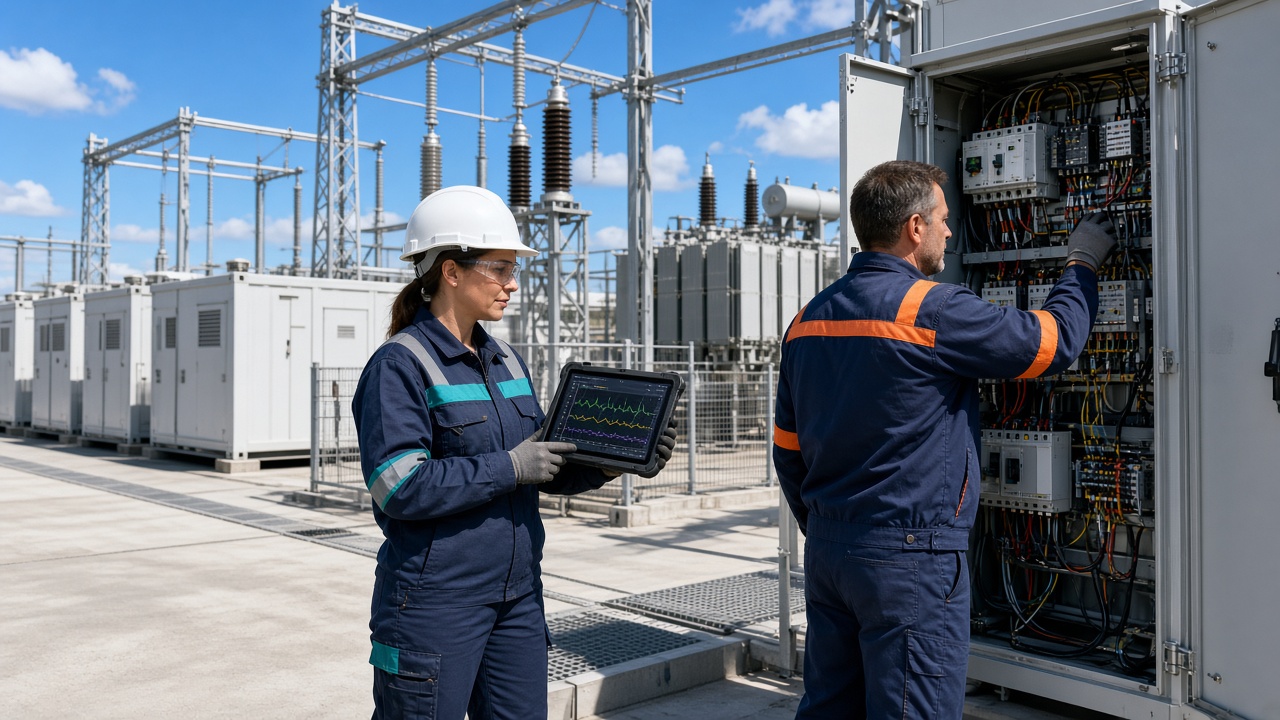
1. Commissioning is where the action is. Williamsdale, Summerfield, EnergyConnect and Huntly are all at, or just past, the commissioning stage. That means testers, protection specialists and commissioning electricians are in demand, and they're often the best-paid people on site. If you want to understand that role, start with my commissioning electrician guide.
2. HV is the multiplier. Almost every project above includes a new or upgraded substation, from Teebar's 275 kV yard to the transformers at Williamsdale. If you're a licensed electrician without HV experience, this is the time to get it. My substation electrician explainer covers the pathway.
3. Batteries need people after the ribbon is cut. A 15-year revenue deal, like the one Williamsdale has with the ACT Government, means a 15-year asset that needs maintenance, inspections, firmware updates and fault-finding. Operations and maintenance roles are the quiet, long-term winners here.
4. The work is spreading out. Canberra, the Fraser Coast, the Mid North of SA, the Waikato and the Peel region of WA. You don't have to live in a capital city to build a serious clean-energy career any more.
5. Problem-solvers win. Wagerup's platform redesign and Hallett's fast build both show that delivery takes people who can adapt. That's a skill you can't get from a textbook, and employers notice it.
My practical advice this month
- Get an HV switching or testing ticket if you haven't already. It shows up again and again in BESS and substation ads.
- Learn the gear. Megapacks, SolBanks, Saft units and Valo systems all have their own quirks. Manufacturer training on your CV is a real differentiator.
- Look at the contractors, not just the owners. Consolidated Power Projects, Enerven, Northpower and their peers do the hiring for these builds, often in waves.
- Keep your documentation spotless. ITRs, test sheets and commissioning records are the currency of this work.
- Set up job alerts by region, so you hear about projects like Teebar and Huntly Stage 2 before the crews are full.
I'm genuinely excited about this moment. A few years ago, a lot of these batteries were lines on a spreadsheet. Now they're steel, copper and silicon, humming away and keeping the lights on. That's real work, done by real electricians, and there's plenty more coming.
Ready for your next move? Browse the latest electrical jobs on ElectricalRoles, from battery and substation roles to commissioning and HV, and set up an alert so the right one finds you.