
NZ Grid Boost: Orion's $1.3b, Transpower's Panel and New Training
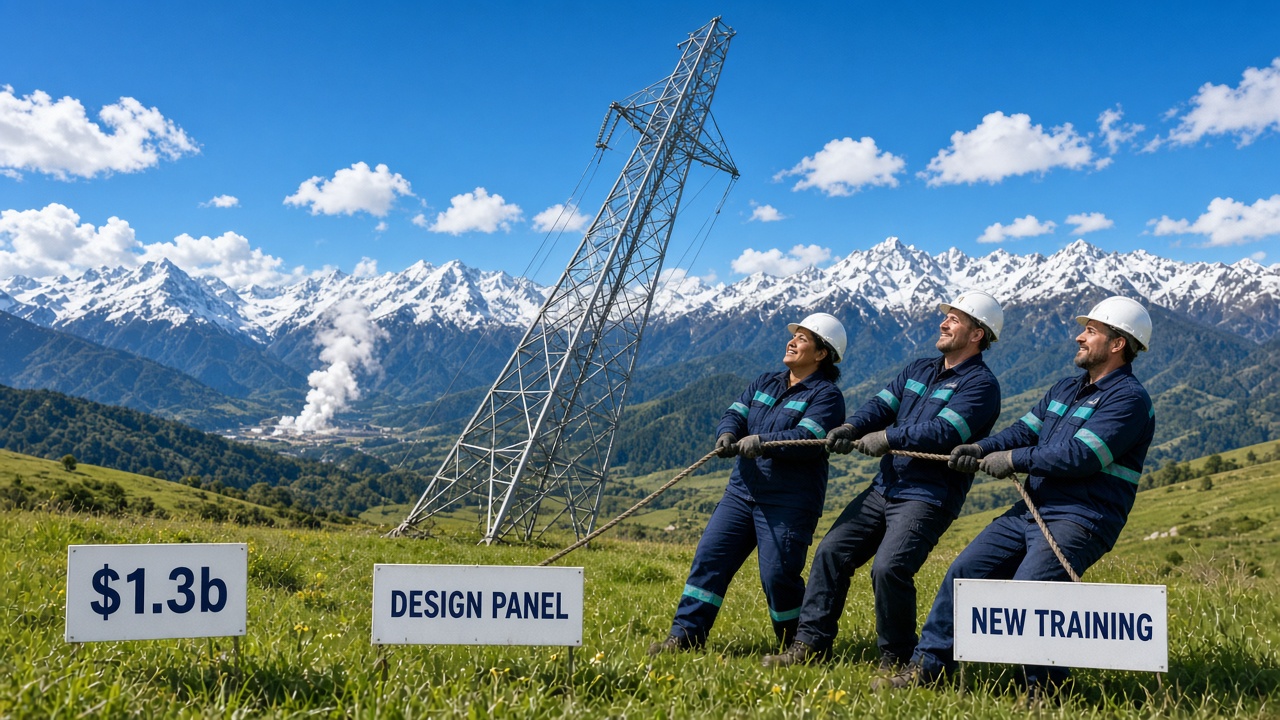
Orion's $1.3b Canterbury plan gets a draft tick, Transpower locks in design partners and REWs get new training. What it means for sparkies in NZ.
Most of the news we cover on this site comes out of Australia, so it's a real pleasure to turn the spotlight across the Tasman. The past week in New Zealand has been quietly huge for anyone who works on the network or holds an EWRB licence. A $1.3 billion investment plan for Canterbury got a draft green light, Transpower named the engineering firms that will design its next wave of grid work, a new geothermal connection was commissioned, and Kiwi sparkies picked up some genuinely useful new training options.
None of these are flashy headlines. But put them together and they tell a very clear story: New Zealand is gearing up to spend serious money on its electricity system for years, and it's building the workforce pipeline to match. Here's my read on what's happened and what I'd do about it.
Orion's $1.3 billion Canterbury plan gets a draft tick
On 10 November the Commerce Commission released its draft decision on Orion's customised price-quality path (CPP), the special investment plan lines companies can apply for when they need to spend well beyond their normal allowance. Orion asked for $1.5 billion. The Commission's draft approves about $1.3 billion for the five years from 1 April 2027 to 31 March 2032.
Why does Orion need it? Commissioner Nathan Strong was clear that the network is "currently performing well", but that "many of Orion's assets are now reaching the end of their expected physical lives." The Commission also pointed to significant population growth in areas like Selwyn, and the need to protect the network against earthquakes and severe weather. Interestingly, its draft also considered a targeted review of how Orion plans to use alternatives to traditional upgrades, like rooftop solar, batteries, EVs and flexible demand.
There's a cost to households, and I don't want to gloss over it. The Commission says the draft would add about $21 a month to an average Orion customer's bill by 2032, down from about $33 under Orion's own proposal. Orion says it's now working through what the draft means for its plans. Submissions close on 8 December, cross-submissions on 23 December, and a final decision is expected by 31 March 2027.
What it means for the workforce is simple: five years of locked-in renewal and growth work in Canterbury. Replacing ageing assets means substation upgrades, cable and overhead replacement, new connections for growing subdivisions and a lot of protection and control work. That's work for cable jointers, line mechanics, power technicians, substation sparkies and the contractors who support them. It also shows how a well-regulated network can plan years ahead, which is exactly the certainty that encourages employers to take on apprentices.
Transpower names its engineering design panel
Two days later, on 12 November, Transpower announced a new Engineering Consultant Design Panel to design its growing infrastructure programme. The members are AECOM, APD Global, Aurecon, Beca, ElectroNet, Ergo, Groundline, Jacobs, Lumen, Niko and Stantec. The panel covers substations, transmission lines, protection and automation, and telecommunications, and it starts on 1 January 2027 for an initial three-and-a-half years, with two possible three-year extensions.
The bit I love is the reasoning. Transpower's Executive General Manager Grid Development, Matt Webb, said the panel gives engineering firms "greater visibility of upcoming work, providing more confidence to recruit and develop people". Transpower also expects electricity demand to increase by 80% by 2050.
That's a long-term hiring signal. Designers create drawings, and drawings turn into substation builds, protection upgrades and commissioning programmes on the ground. If you're a protection technician, a substation electrician or a graduate engineer, those eleven firms (and the contractors who build what they design) are worth watching closely over the next year.
Geothermal and big loads: more connections, more commissioning
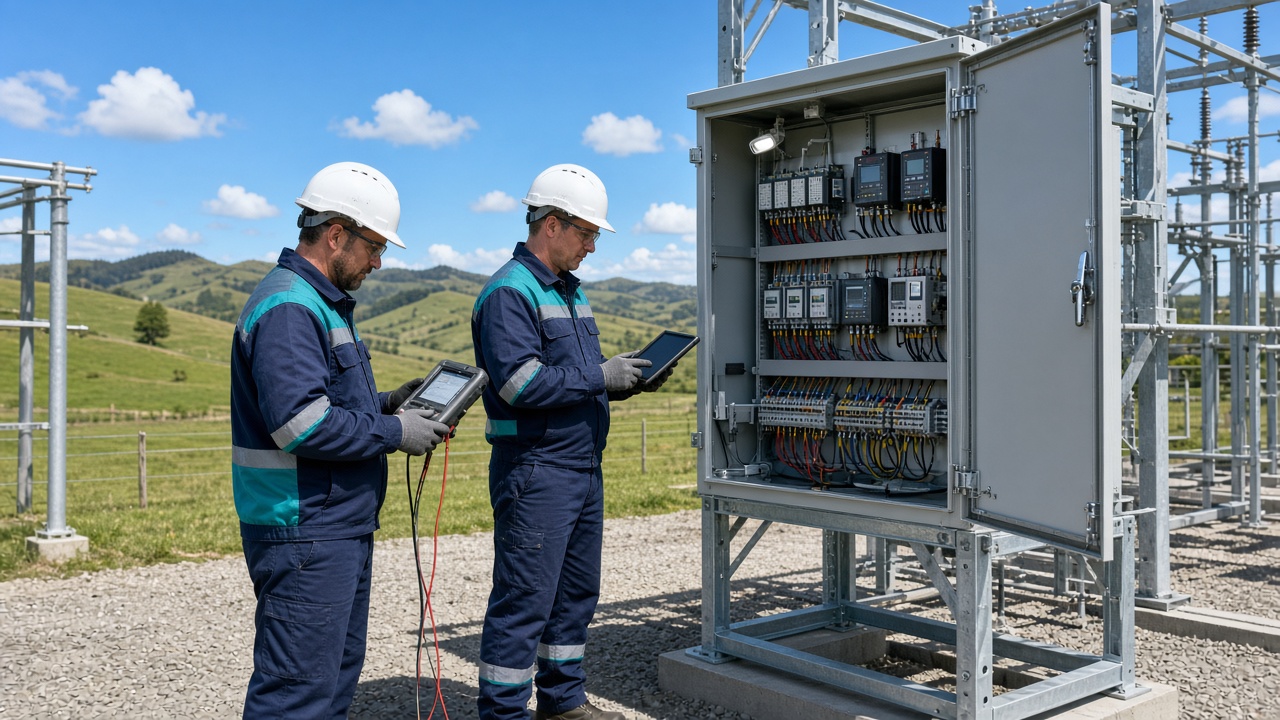
Transpower's November newsletter also noted that a new bay at Te Mihi has been commissioned for new geothermal generation. Geothermal is one of New Zealand's great natural advantages, and every new connection is a reminder that the country's renewable build isn't only solar and wind.
The same update flagged new guidance on commissioning large loads. Transpower's System Operator has published a technical guideline for commissioning large loads (GL-EA-1370), with a working definition of a large load as a consuming plant of at least 10 MW. That covers loads connected directly to the grid, or embedded in a distribution network where a sudden loss could affect voltage and stability by more than 0.5%. It sets out information-sharing, modelling, testing, operational communication and high-speed data requirements. Customers must submit an Asset Capability Statement. Transpower specifically notes that data centres "pose unique stability challenges", and says its System Security Forecast, due out in December 2026, has identified a number of new data centre developments.
Australian readers will recognise this story. We've written a lot about data centres needing their own power on this side of the ditch, and New Zealand is now writing its own rulebook. More large loads means more HV connections, more testing and more commissioning work, and NZ engineers and sparkies who get across these requirements early will be in demand.
New training: specialist endorsements, EV chargers and the EST pathway
The workforce side is moving too, and it's practical stuff you can act on.
Site Safe's REW courses now cover four extra endorsements. From 2 November, Site Safe lets Registered Electrical Workers complete recertification assessments for Mains Parallel Generation Systems, Medical Cardiac Protected Areas, Hazardous Areas and Mining Operations. Site Safe says these specialists previously often had to use separate providers. Now they can do their main classification assessment and endorsement theory in one session. If you're one of those specialists, that's a day back in your diary.
A new EV charger installation course. EVs and Beyond reports that Skills Trades Training has built a home EV charging installation and commissioning course with Schneider Electric. It's open to registered electrical workers with a current EWRB practising licence. It runs about 28 hours over eight weeks (roughly 20 hours online plus an eight-hour practical workshop in Auckland, Christchurch or Wellington) and costs $750 including GST. It also introduces smart charging, vehicle-to-home and vehicle-to-grid. Enrolments open on 30 November.
Updated teaching guidelines for Electrical Service Technicians. MBIE has published version 1 of its Teaching Guidelines for Electrical Service Technician, taking effect from November 2026. The EST registration covers maintenance and servicing work, and the guidelines set out the exam prescription and practical assessments. It's a reminder that there are more ways into the NZ electrical workforce than the full electrician route.
And of course, the big compliance milestone landed on 12 November: new installation work must now follow AS/NZS 3000:2018 and the other newly cited standards. If you missed it, our Wiring Rules deadline explainer has the details.
My take: Aotearoa is quietly building a decade of work
I'm genuinely optimistic about New Zealand right now. A regulator that backs long-term network investment, a grid owner giving its design partners years of visibility, new geothermal coming online, and training providers making it easier for sparkies to upskill. That's a healthy industry getting ready for growth, not one bracing for a downturn.
Is it all smooth sailing? No. Bills are a real pressure for Kiwi households, and the Commission has been careful to trim Orion's plan. But electrification only works if the wires are there, and this week's news says they will be.
What I'd do this month
- Canterbury network people: if you're a line mechanic, cable jointer or power technician, start talking to Orion's contractors about 2027 work. The pipeline is about to firm up.
- Protection and substation specialists: keep an eye on the eleven panel firms and who wins their construction packages.
- Specialist REWs: if you hold a hazardous areas, mining, medical or mains parallel generation endorsement, check whether Site Safe can roll your recertification into one session.
- Residential sparkies: put 30 November in the calendar if EV charging is on your wish list.
- Everyone: make sure your work is on the 2018 Wiring Rules.
If you're ready for your next move on either side of the Tasman, browse the latest electrical jobs across New Zealand and Australia.