
AI Factories Go Regional: What 230 MW of Pods Means for Sparkies
WinDC plans 230 MW of modular NVIDIA AI factories in regional Australia, while EdgeConneX lands 450 MW in the cities. Here's what it means for electricians.
For the last couple of years, the data centre story in Australia has mostly been a city story. Western Sydney, Melbourne's west and north, a few big campuses in Brisbane and Perth. Huge buildings, huge grid connections, huge queues. Two announcements in the past few weeks suggest the map is about to get a lot bigger, and for electricians in regional Australia, that could be very good news.
The news: 230 MW of modular AI factories, built where the power is
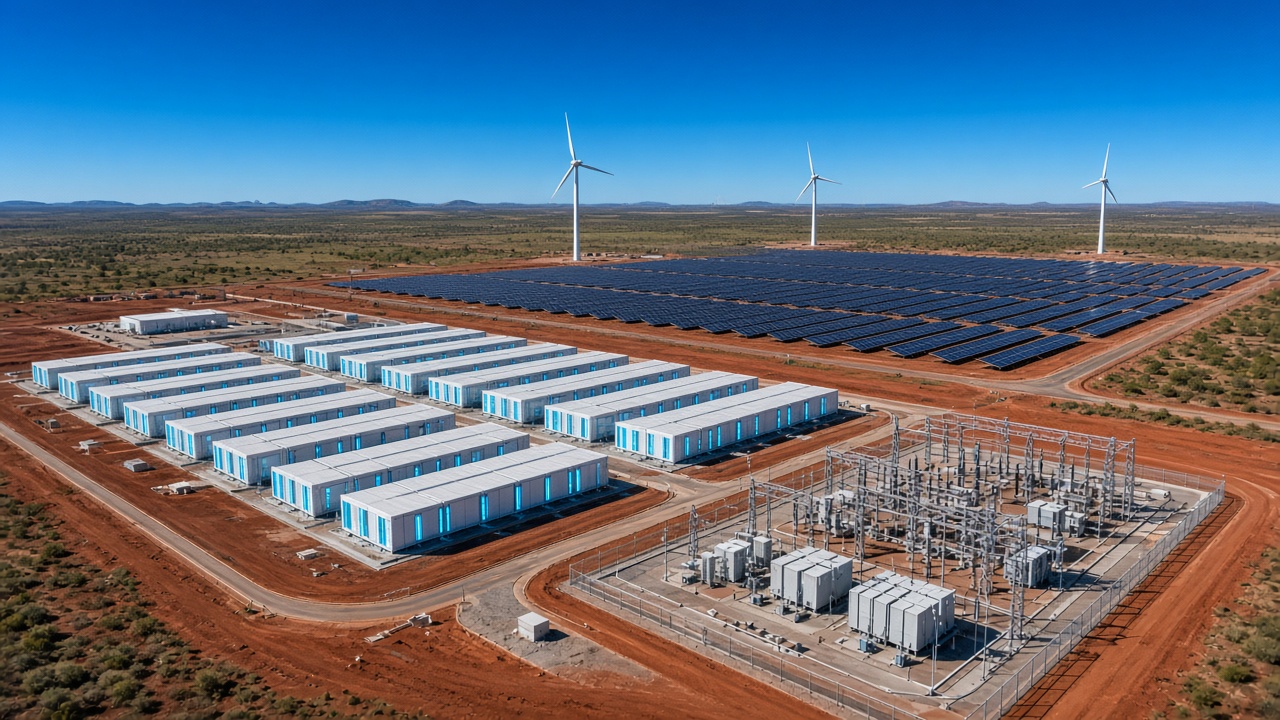
On 22 October, Australian company WinDC announced plans to deploy 230 MW of modular AI factory capacity across regional Australia in 2027. The trigger was NVIDIA's unveiling in Berlin of the DSX Pod, a blueprint for complete AI factories that are built, tested and shipped in modular containers, powered by NVIDIA's Vera Rubin architecture. NVIDIA selected WinDC's US partner, Armada, as one of a small number of companies delivering DSX Pods globally from early 2027.
The split of responsibilities is interesting. According to WinDC, customers bring their own NVIDIA hardware allocations, Armada supplies the modular factory units (including its Leviathan platform), and WinDC provides the land, the power and the local operations. NVIDIA says the factory-built approach can cut deployment at a prepared site from around six months to about 14 days, as ChannelLife reported.
This isn't coming out of nowhere. WinDC, founded in 2019, commissioned its first Armada unit in January 2026 and announced an initial 11 MW program in March, as ECD noted on 28 October. The jump from 11 MW to 230 MW is the headline.
The bit that should make every electrical contractor sit up is the connection model. WinDC says it connects behind the meter, directly at the point of generation, using electricity that would otherwise be wasted or curtailed and avoiding a multi-year wait for new grid connections. Founder and CEO Andrew Sjoquist put it bluntly: "The race is won on time to power. WinDC and Armada skip the grid queue and build compute at the energy source, delivering capacity across Australia in months, not years."
Sites haven't been named yet. WinDC says locations will be announced alongside the regional communities that host them, with local benefit programs to follow.
Meanwhile in the cities: EdgeConneX lands with 450 MW secured
The regional story is landing alongside a big metro one. On 14 October, global data centre developer EdgeConneX entered the Australian market through a 50-50 joint venture with Stockland to develop, own and operate hyperscale data centre campuses, starting in Sydney and Melbourne. The initial portfolio has 450 MW of power secured, with more power applications and planning in progress.
EdgeConneX also quoted Data Centres Australia's latest economic impact report, which estimates that capturing the AI export market could add up to $4.1 billion in annual economic activity by 2030 and support up to 17,120 additional jobs.
Put those two announcements together and you get a clear picture: AI infrastructure in Australia is splitting into two tracks. Massive, grid-connected hyperscale campuses in the capitals, and fast, modular, power-first deployments out where the solar, wind and generation already are.
Why this matters for sparkies
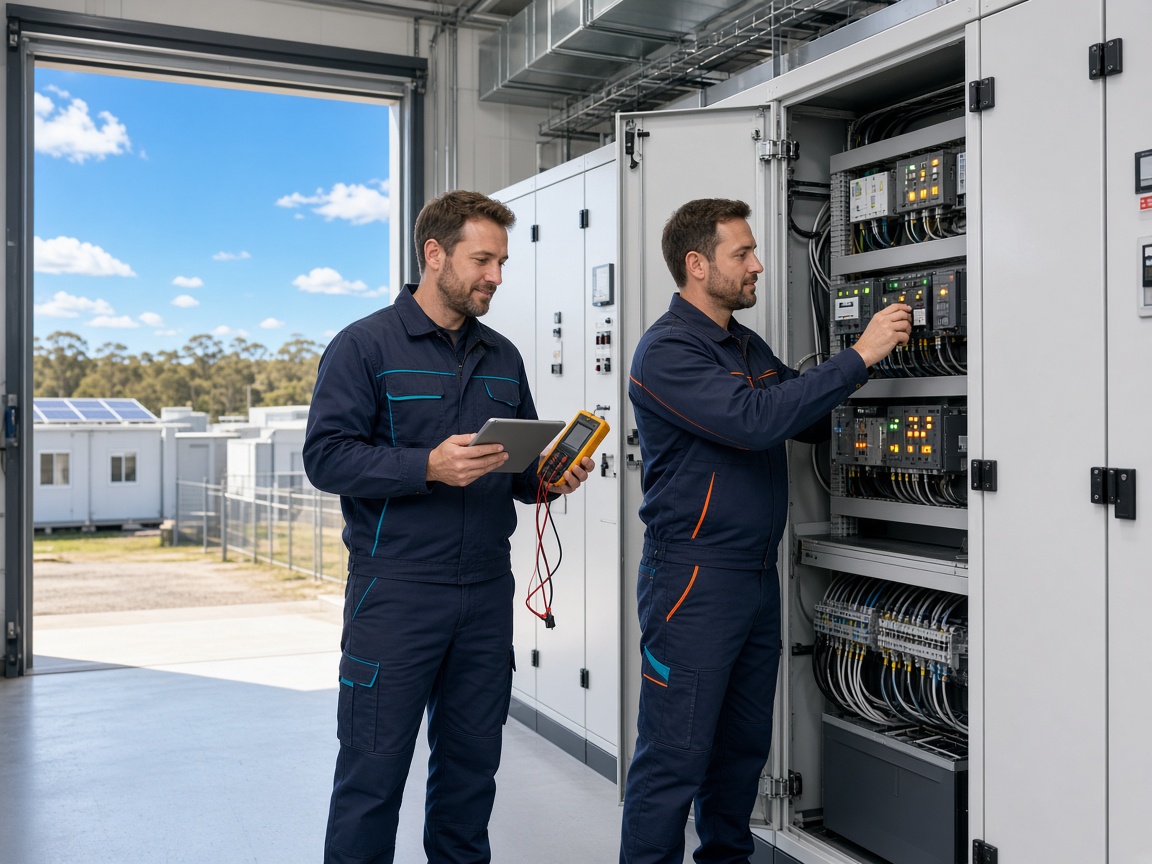
I've written before about what a data centre electrician does and about Powering Skills Organisation's estimate that data centres alone add around 13,000 workers to Australia's energy trades requirement. What's new here is where some of that work could happen.
A modular AI factory might arrive on a truck, pre-built and pre-tested, but it doesn't plug itself in. My read on the kind of electrical work a power-first, behind-the-meter site needs:
- HV and MV connection work. Tapping into generation at the source means transformers, switchgear, protection and metering, the same skill set you'd see on solar farm and substation jobs.
- Earthing, bonding and cable reticulation. Every pod needs a properly designed earthing system and serious cabling between generation, switchrooms and the units themselves.
- Commissioning and testing. Fast deployment only works if the site is ready and verified. That means protection testing, insulation resistance testing, thermal imaging and a lot of careful documentation.
- Ongoing maintenance and operations. WinDC has said it will provide local operations. Somebody has to keep the power and cooling running 24/7, and those people will live near the sites.
The 14-day deployment figure is the clever bit, and it also shifts where the hard work sits. If the factory is built offsite, the critical path on site becomes site preparation and power. That's electrical work. Contractors who can turn around HV connections, switchboards and commissioning quickly, and to a very high standard, will be the ones these operators want to keep coming back to.
The regional opportunity, and a dose of realism
I'm genuinely optimistic about this. For years, the best data centre work has pulled skilled electricians towards the capitals. A model that puts compute next to regional solar and wind farms could create technical jobs in towns that are already hosting the energy build-out, and give local contractors a reason to invest in HV and commissioning capability rather than watching fly-in crews take the work.
But let's stay realistic. No sites have been announced, 2027 is a target, and modular data centres are still a young market here. Behind-the-meter projects also have their own regulatory, network and commercial hurdles, and plans like these can change shape as they progress. I wouldn't restructure a business around one announcement.
What I would do, if I were a regional contractor or an electrician in a renewable energy zone:
- Get your HV credentials in order. HV switching and access authorisations, plus testing and commissioning experience, are the skills that open the door to this kind of work.
- Build relationships with the solar and wind farm operators near you. If compute is going to co-locate with generation, the people already maintaining those assets are well placed.
- Watch for site announcements. WinDC has committed to announcing locations with host communities. When a site lands near you, that's the time to introduce yourself, not when tenders close.
- Think about operations, not just construction. Long-term maintenance roles at 24/7 critical facilities are steady, well-paid and local. That's a career, not just a project.
The bigger picture
What excites me about this moment is that the energy transition and the AI build-out are no longer two separate stories. They're merging. Generation that would otherwise be curtailed becomes the power source for compute. Regional towns that host solar farms could also host AI factories. And the common thread running through all of it is electrical work: connecting, protecting, testing and maintaining.
Australia has the land, the sunshine and the trades skill base to do this well. The constraint, as always, is people. If you're an electrician who wants to be part of the next wave of infrastructure, now's a great time to skill up in HV, commissioning and critical power.
Browse current data centre, HV and commissioning roles on our jobs page. The AI factories are coming, and someone has to switch them on.