
Sparky News: Battery Rebate Review, FTAs and NZ Solar Surge
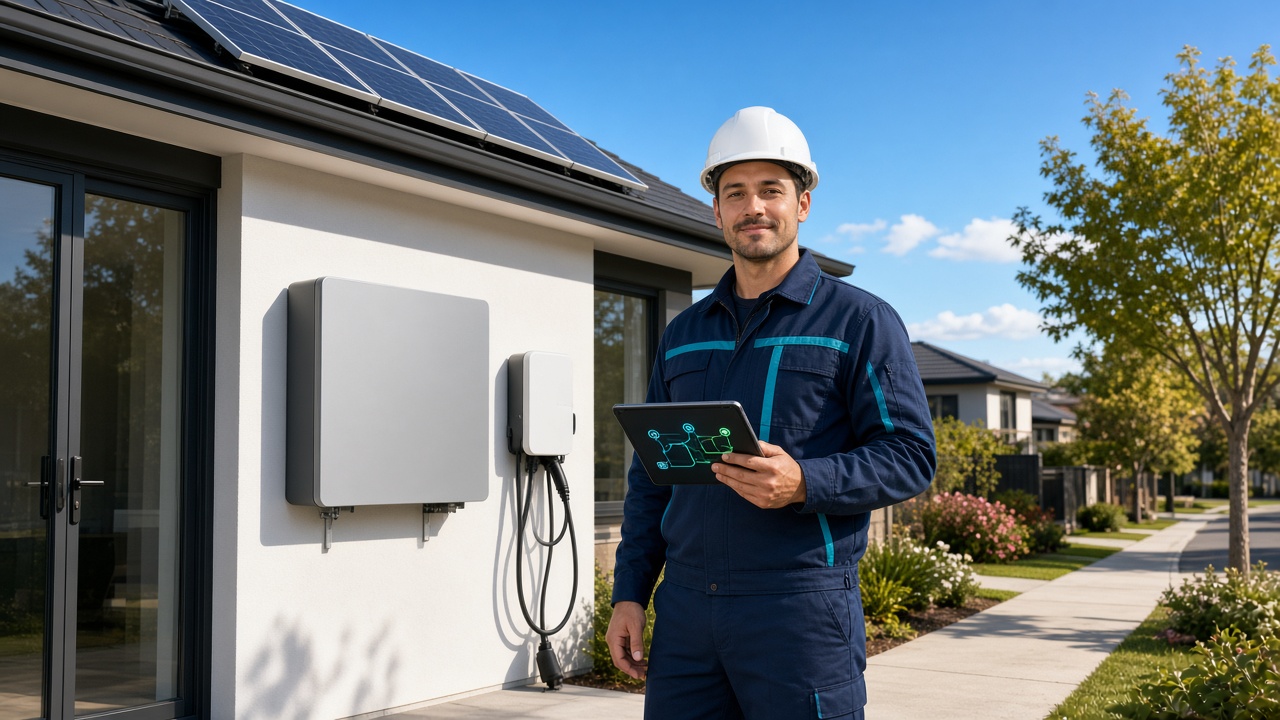
Battery rebate under review, Flexible Trading Arrangements live, a plug-in solar decision due and NZ solar surging. What it all means for AU and NZ sparkies.
What a fortnight. If you wire houses, fit batteries, run commercial jobs or work on the big renewable builds, a lot just moved at once: Canberra is looking at the battery rebate, a new market rule went live on 1 November, plug-in solar is heading for a December decision, and New Zealand keeps lining up serious solar. Here's my read on what it all means for sparkies on both sides of the Tasman, and what I'd actually do about it this month.
The battery rebate: under review, but the next real change is already locked in
Let's start with the one your customers are asking about. On 7 November the Australian Financial Review reported that Treasury is drafting options to scale back the $7.2 billion Cheaper Home Batteries Program ahead of the mid-year budget update (MYEFO). According to the AFR, the scheme has subsidised more than 600,000 systems since it started in July 2025. Finder, citing the same report, says the options include a smaller upfront discount or tying the discount to joining a virtual power plant (VPP).
The ABC reported that the Prime Minister didn't rule out means-testing, while Environment Minister Murray Watt called the program "phenomenally successful". So: options, not decisions. Nothing has been cut.
What is certain is the step-down that's already law. The DCCEEW program page sets the STC factor at 6.8 per usable kWh from May to December 2026, falling to 5.7 on 1 January 2027, then dropping every six months to 2.1 in the second half of 2030. The size tiers that started on 1 May also stay: full rate up to 14 kWh, 60% from 14 to 28 kWh, and 15% from 28 to 50 kWh. Finder puts the cut on 1 January at roughly $240 to $1,120 per system, depending on size, at a $40 certificate price.
The detail that matters most for your diary: the discount depends on the install date, not the date the customer signs. So here's what I'd do:
- Expect a December rush, and plan for it now. Anyone who signs in late November will want the job finished before New Year. Be honest about your capacity rather than over-promising.
- Don't sell fear. Tell customers what's in law (the 1 January step-down) and what's only speculation (the Treasury options). It builds trust, and trust gets you referrals in 2027.
- Get VPP-literate. If a VPP condition does come in, the installers who can explain VPP offers clearly and commission the systems properly will win the work. It's a skill worth picking up whatever happens.
My take: even a trimmed rebate leaves a huge installed base of batteries needing servicing, upgrades and integration with EV chargers. That work doesn't disappear when a subsidy changes.
Flexible Trading Arrangements are live, and commercial sparkies should take note
This one flew under the radar, but I think it's a real opportunity. As Electrical Connection reported, Flexible Trading Arrangements (FTAs) came into effect in the National Electricity Market on 1 November 2026.
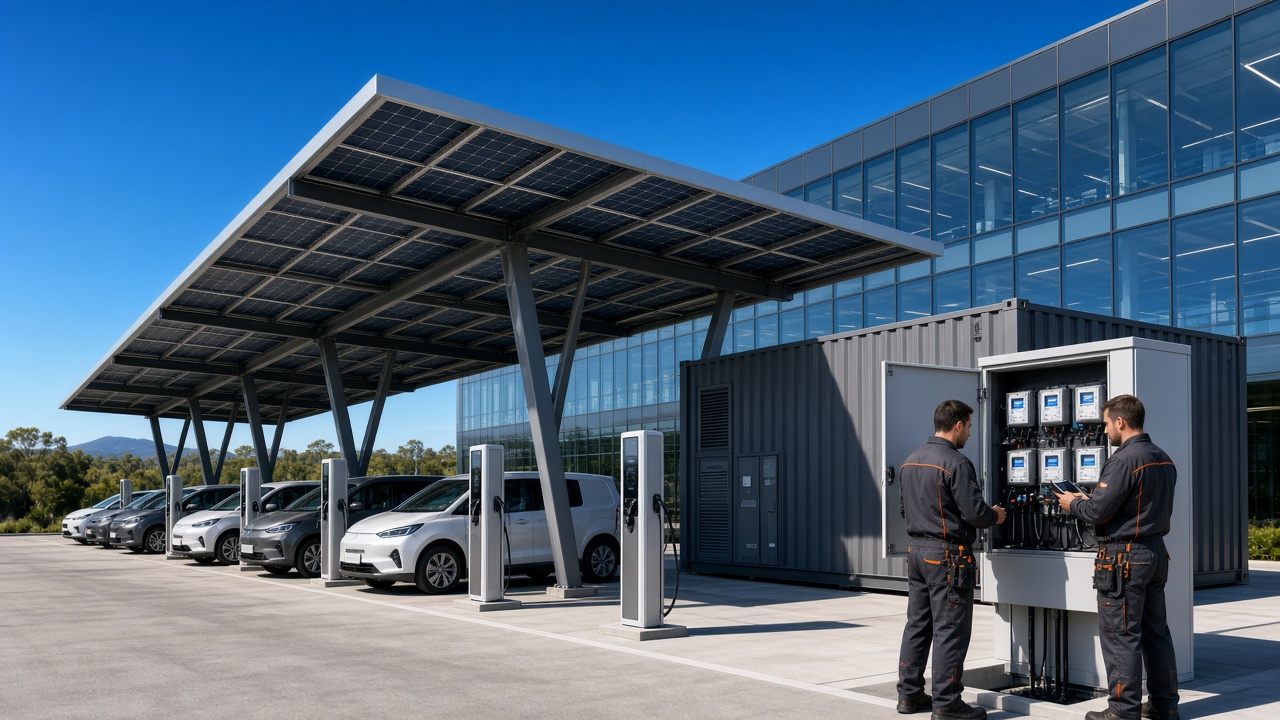
Put simply, large energy customers can now separate flexible assets like batteries, EV chargers and solar from the site's main supply, and have them measured and settled on their own through secondary settlement points behind the main connection point. That means a business could use one energy provider for the building and another for its EV fleet chargers, all on the same premises. Measurement at those points uses Type 8 metering. This follows Type 9 metering, which started on 31 May 2026 for small flows like smart streetlights and kerbside EV chargers.
Why should a sparky care? Because every secondary settlement point is physical work: metering, switchboard changes, sub-circuits, commissioning and documentation. Commercial sites with depot charging, rooftop solar and a battery are exactly the jobs where this applies. If you do commercial or industrial work, now's a good time to talk to your metering contacts and get across the requirements. The contractors who understand FTAs early will be the ones facility managers call.
Plug-in solar: a national decision is due in December
Plug-in or "balcony" solar is back in the headlines. The ABC reported this week that advocates want plug-in solar and batteries legalised nationally by mid-2027, so renters and apartment dwellers can cut their bills. Energy ministers agreed in September to explore pathways for "safe deployment" and are due to report back in December.
Master Electricians Australia, NECA and the ETU have all urged a careful approach. MEA and NECA want plug-in devices restricted to a dedicated circuit with a plug that can't go into a normal outlet. Energy Minister Chris Bowen told a Solar Citizens webinar that plug-in solar would be legalised, but that the safety process "cannot be rushed", and said he'd asked Standards Australia to fast-track the work. Western Australia is running its own process and is "on track" to finish in 2027, according to a WA official quoted by the ABC. (We covered WA's move here.)
I'm optimistic about this. Germany has added more than a million plug-in systems in two years by capping their output. Done properly, plug-in solar brings more households into the energy transition, and almost every version of "done properly" involves a licensed electrician somewhere: a dedicated circuit, a switchboard check, labelling, or a proper upgrade to rooftop solar once the customer is hooked. Keep an eye on the December communiqué. If dedicated circuits become the rule, that's a steady stream of small, tidy jobs for residential sparkies.
Skills: the pipeline is full, and training is catching up
New research from the Powering Skills Organisation, reported by News24, found that 72% of surveyed electrotechnology training providers are at or above capacity. It also found that only about a third of Australia's roughly 48,000 electrical contracting businesses employ an apprentice. CEO Anthea Middleton put it plainly: "Demand is rising into a system that is already full." The good news in the same research is that electricians were one of only two critical occupation groups to grow in 2026.
On the upskilling side, Swinburne has released five new microcredentials for licensed electricians, covering integrated systems where solar, batteries, EV chargers, loads and the grid all interact. They focus on configuration, commissioning, testing and fault-finding, and keeping up with changing standards. There are also new learning modules for Cert III apprentices. The materials were built with TAFE Gippsland, South West TAFE and Federation University, and will be shared with TAFEs across Victoria.
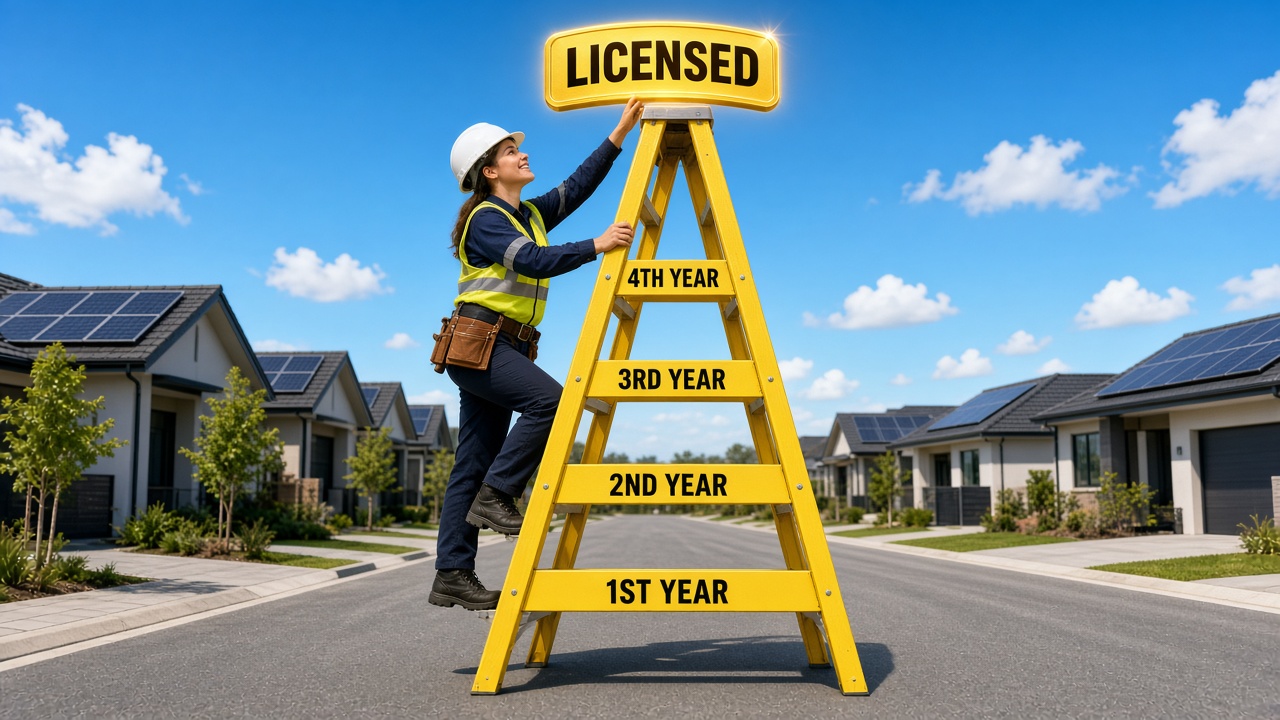
My advice, especially if you're a small contractor: the bottleneck is employers, not willing apprentices. If you've been on the fence about putting on a first-year, this is the moment. Smaller contractors already train about 71% of apprentices, according to the PSO, and there's government support out there. Take a look at our guide to who's hiring apprentices for a starting point.
Compliance reminder: the regulator is watching battery installs
A quick one, because it matters. On 9 November Electrical Connection reported that Energy Safe Victoria has laid 23 charges against a contracting business and its director over alleged non-compliant solar and battery installs, failing to comply with a rectification notice, and providing misleading information. Some defects were picked up through Solar Victoria's audit program, and the case was due before court on 11 November.
The lesson isn't to panic. It's that audits are real and the paperwork trail matters. With a December rush coming, don't let volume squeeze quality: test properly, photograph properly, and fix rectification notices quickly. Our guide to doing commercial solar by the book has more on this.
New Zealand: big solar keeps moving
Across the Tasman, the solar pipeline keeps growing. On 9 November Meridian announced that its proposed Western Bays Solar Farm on the western side of Lake Taupō has been referred for fast-track consideration. At up to 420 MW (870 GWh a year), Meridian says it would power about 113,000 homes, roughly 2% of New Zealand's current generation, with the option of up to 250 MW of on-site batteries offering up to eight hours of storage. Meridian plans to lodge the full application early next year.
Meanwhile, Meridian's joint venture with Nova Energy at Te Rahui, near Rangitāiki southeast of Taupō, is building its first 200 MW stage. The project substation is expected to connect to the national grid by late November 2026, with solar farm commissioning expected to start in 2027.
For Kiwi sparkies and power technicians, that's a steady ramp of substation, DC and commissioning work in the central North Island. If you're thinking about the move, our power technician explainer and solar farm electrician guide are good places to start.
A shout-out to the best in the trade
To finish on a high: Master Electricians Australia has announced its 2026 Excellence Awards winners. RESINC Solar & Batteries took Master Electrician of the Year, Andrew Male of ESI Solutions won Tradie of the Year, Letteshia Kerin of Jesse Kerin Electrical won the Women in Contracting Award, and EDC Electrical, Design and Construction won Clean Energy Project of the Year. Congratulations to everyone recognised. It's great to see clean energy, quality residential work and new businesses all celebrated together, because that's the industry we're heading into.
What I'd do this month
- Batteries: plan December capacity now, tell customers what's in law and what isn't, and learn VPPs inside out.
- Commercial: get across FTAs and Type 8 metering before your clients ask.
- Residential: watch the December plug-in solar decision, because dedicated circuits could become a nice little earner.
- Business owners: put on an apprentice if you can, and look at microcredentials for your licensed team.
- NZ: the central North Island is where solar construction is heading. Get your registration and tickets in order.
The demand side of this industry has never looked stronger. If you're ready for your next move, browse the latest electrical jobs across Australia and New Zealand.