
Where the REZ Jobs and Sparky Apprenticeships Are Right Now
ACEREZ raises its 100th tower, the South West REZ eyes 1,690 local jobs a year and apprentice programs open up. Where the REZ work is and how to get in.
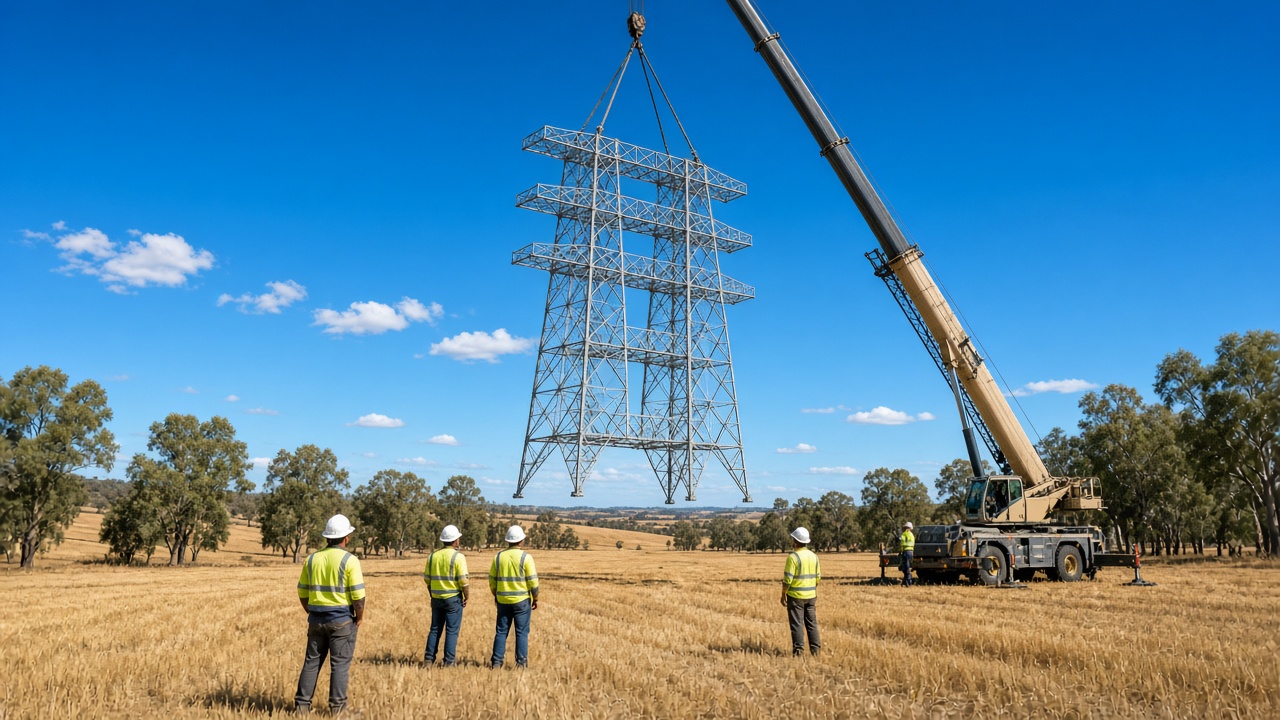
This week, crews in the NSW Central West hit a milestone that tells you exactly where the electrical jobs are heading. The ACEREZ consortium announced it has raised its 100th transmission tower in the Central-West Orana Renewable Energy Zone (REZ): a 70-metre, 48-tonne, double-circuit lattice tower built to carry two independent 500 kV circuits.
One tower doesn't make a career. But a hundred of them, with stringing underway and the energy hubs well advanced, is a very clear signal. Renewable energy zones have moved from maps and consultation papers to steel in the ground, and the people who'll wire, test, commission and maintain all of it are being recruited and trained right now.
So here's my round-up of where the REZ work and the sparky apprenticeships actually are this month, across NSW, Victoria and New Zealand, plus some practical advice if you want a piece of it.
Central-West Orana: from towers to switch-on
Central-West Orana was Australia's first REZ, and it's the one furthest along. According to ACCIONA, the zone covers 20,000 square kilometres, will initially transmit 4.5 GW (enough for around 1.8 million homes) and grows to 6 GW by 2038. The build includes 90 km of 500 kV line, 150 km of 330 kV line and eight substations, running from Elong Elong in the west to Barigan Creek in the east via the Merotherie power centre.
ACEREZ CEO Steve Masters put the milestone down to "project managers, engineers, operators, riggers, lineworkers and support teams", and said the focus is on delivering energy "from 2028". That date matters for sparkies. Towers and stringing are line crew territory, but the closer a project gets to energisation, the more the work shifts to substations, protection, secondary systems, testing and commissioning. That's the window where licensed electricians and HV-ticketed techs become the bottleneck.
EnergyCo's jobs and opportunities page for the zone puts some numbers on it:
- An annual average of around 1,850 direct jobs during construction.
- More than 930 ongoing operational roles expected from 2034.
- Renewable energy projects connecting to the new line have committed to over 250 apprentices throughout construction.
That last figure is the one I'd circle if I were a school leaver or a career changer in Dubbo, Mudgee, Wellington or Gilgandra.
The apprenticeship model that actually fits a construction project
One of the most sensible ideas I've seen this year is the Central-West Orana Group Training Organisation program, backed by $1.5 million from the NSW Government and delivered by local not-for-profit Skillset with EnergyCo and the Department of Education.
The problem it solves is real. A construction contract on a REZ might run for two years. An electrical apprenticeship runs for four. Plenty of contractors would happily take on an apprentice for their package but can't commit to the full term. Under the GTO model, employers host apprentices for the duration of their project, and if the contract ends, Skillset places the apprentice with another employer so they keep training. The program also includes free pre-apprenticeship and pre-employment training, and it supports the workforce targets on these projects: a minimum of 20% apprentices in the trade workforce and 20% "learning workers" across the total project workforce.
It's open to host businesses and to job seekers, and EnergyCo's Skills Coordinators can point you in the right direction at cworez.skills@det.nsw.edu.au. Dubbo Regional Council is also delivering REACT, an $11.24 million Renewable Energy Awareness and Career Training Centre funded through EnergyCo's Community and Employment Benefit Program.
South West REZ: 1,690 local jobs a year
Further south, the South West REZ stretches from Dinawan Substation in the east to Buronga in the west. EnergyCo is working with four renewable projects that will add 3.56 GW of generation, and it forecasts an average of about 1,690 direct jobs per year in the local area during construction, plus hundreds of ongoing operational roles.
On 13 November, EnergyCo announced an online industry update for local businesses on Thursday 26 November, 2pm to 3pm, with representatives from Bullawah Wind Farm, Dinawan Energy Hub, Pottinger Energy Park, the Department of Primary Industries and the Industry Capability Network (ICN). EnergyCo specifically lists "electrical and safety testing" among the region's existing strengths.
If you run a small electrical contracting business anywhere between Wagga, Hay, Balranald and Mildura, I'd tune in. And register on ICN Gateway while you're at it, because that's where major contractors look for local suppliers. Test and tag, temporary site power, site office and camp electrical, comms and security systems all have to come from somewhere, and the "local first" push is genuine.
New England REZ: the next big wave
If Central-West Orana is the first wave, New England is the next. EnergyCo's environmental impact statement for the New England REZ transmission project is on public exhibition until 26 November, as The Current reports. It proposes about 300 km of 500 kV and 330 kV lines from north of Armidale to Bayswater near Muswellbrook, with five energy hubs. Construction is planned to start in 2028 and run for about six years, with 2.4 GW energised in 2032 and 6 GW by 2034. The EIS estimates a peak construction workforce of about 1,400 people.
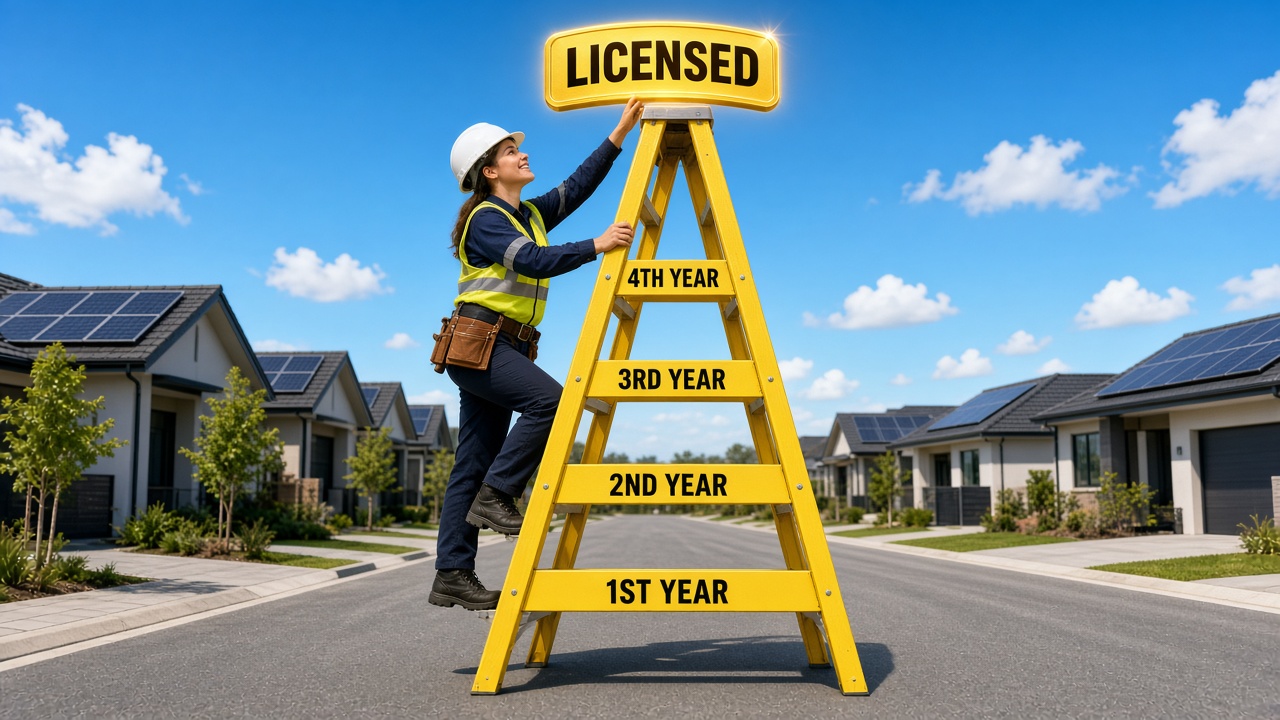
Do the maths on that timeline. A Year 10 student in Tamworth or Armidale today could start an apprenticeship in 2027 or 2028 and be a freshly licensed sparky right as the New England substations head towards commissioning. That's not a bad way to start a career.
Victoria: academy doors and a western link
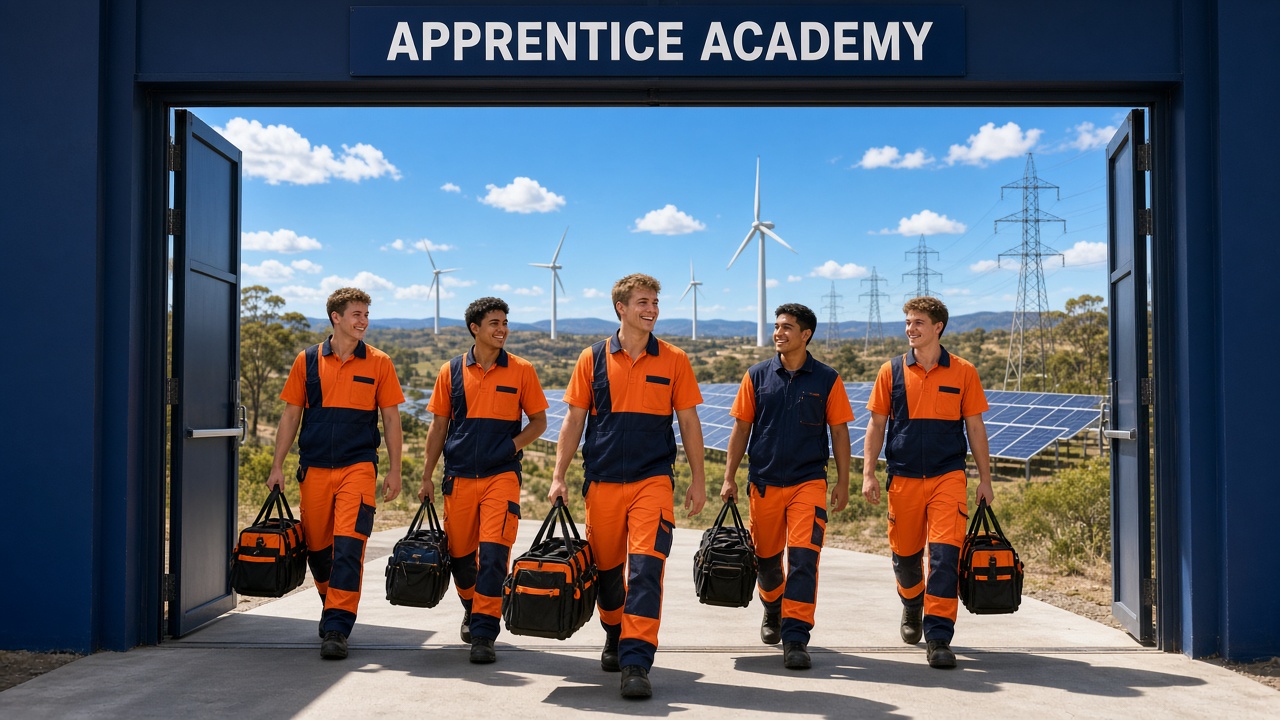
In Victoria, the SEC Apprenticeship Academy is getting ready to open, with a pilot of 40 electrical apprentices delivered with NECA Education & Careers and the ETU, starting early next year ahead of the Academy's launch in the first quarter of 2027. The longer-term goal is 2,000 electrical trade apprentices over four years. We covered the detail in our SEC Apprenticeship Academy explainer, and registrations go through the NECA Education & Careers site.
On the transmission side, the Western Renewables Link, a proposed 190 km, 500 kV overhead line from near Bulgana in western Victoria to Sydenham in Melbourne's north-west, is estimated to generate up to 700 full-time construction jobs and more than 1,000 indirect jobs if it proceeds to construction. ACCIONA and Genus have been appointed to build it for AusNet.
The national picture: more apprentices, and more finishing
The good news isn't just in the REZs. NCVER's March quarter 2026 data showed electrical apprentice commencements up 19% year on year, to a record 6,870 in the quarter. The federal government's release on the same data said trade apprentice completions rose 10%, the best result in a decade, and that the Key Apprenticeship Program offers new apprentices in housing construction or new energy industries $10,000 over the course of their apprenticeship, with settings locked in until 30 June 2029.
More starts, more completions, and a pipeline of real projects for them to work on. I'll take that.
A quick look across the Tasman
New Zealand's grid needs people too. Ventia is running an expression-of-interest campaign for Transmission Line Mechanic Trainees on Aotearoa's high-voltage National Grid, with earn-while-you-learn training on tower and pole replacement work in places like Auckland, Wellington and Hawke's Bay. It's physical, outdoor work with travel, and Ventia notes scaffolders often make great transmission line people. If you're in NZ and like heights, it's worth a look.
How to get into REZ and transmission work
Here's my practical advice, depending on where you're starting from.
If you're not in the trade yet:
- Talk to the Skills Coordinators. In the Central-West Orana zone, email cworez.skills@det.nsw.edu.au. They know which programs are open and which hosts are looking.
- Do a pre-apprenticeship. The GTO program includes free pre-apprenticeship and pre-employment training. Turning up with a Cert II and a white card puts you ahead of most applicants.
- Get your driver's licence. REZ work is regional and spread out. No licence is a deal-breaker for a lot of hosts.
- Back yourself as a mature-age applicant. Farmers, mechanics, plant operators and miners already understand regional work, safety culture and long days. That's valuable.
If you're an apprentice:
- Ask your employer or GTO about rotations on renewable or network projects. Under the GTO model, moving between projects is the point.
- Learn to read single-line diagrams now. It's the language of substations and it makes you instantly more useful on an HV site.
If you're a licensed sparky:
- Go after HV tickets. HV switching and access authorisations, EWP, working at heights, confined space and current LVR and CPR are the baseline for most substation and commissioning crews.
- Look at substation, protection and commissioning roles. Our explainers on substation electricians, commissioning electricians and lineworkers cover pay and pathways.
- Think about timing. Central-West Orana is targeting energisation from 2028 and New England builds from 2028 to 2034. Upskill over the next 12 to 18 months and you'll arrive just as the commissioning crunch hits.
- If you run a business, register on ICN Gateway and join the South West REZ webinar on 26 November.
My take
For years the energy transition has been described in gigawatts and dollars. What I love about this month's news is that it's finally being described in towers, apprentices and actual jobs in actual towns. A 70-metre tower in the Central West is a pretty good symbol of where Australian sparkies are heading: up, out into the regions, and into some of the most interesting electrical work this country has ever built.
If you want in, now is the time to start. Browse the latest electrical jobs across Australia and New Zealand, including apprenticeships, HV, substation and renewables roles.