
What Does a Solar and Battery Electrician Do? Pay and Pathways
Solar and battery electricians in Australia and NZ: what the job involves, real pay from live ads, SAA accreditation steps and where the career goes next.
Of all the electrical roles I've covered in this series, from data centres and substations to FIFO mining and lineworkers, the solar and battery electrician is the one you're most likely to see driving past your house. Their vans are in every suburb now, and the numbers explain why. According to pv magazine's wrap of All Energy Australia 2026, more than 550,000 residential battery systems have been installed in the 15 months since the federal Cheaper Home Batteries program launched. The program subsidises roughly 30% of the cost of an eligible system.
On top of that, this month brought a fresh round of grid-connection rule changes in New South Wales and Victoria, and those make the job more technical. It also makes it more valuable. So here's my take on what a solar and battery electrician actually does in Australia and New Zealand, what it pays based on real ads running right now, how you get accredited, and where I think the role is heading.
What does a solar and battery electrician do?
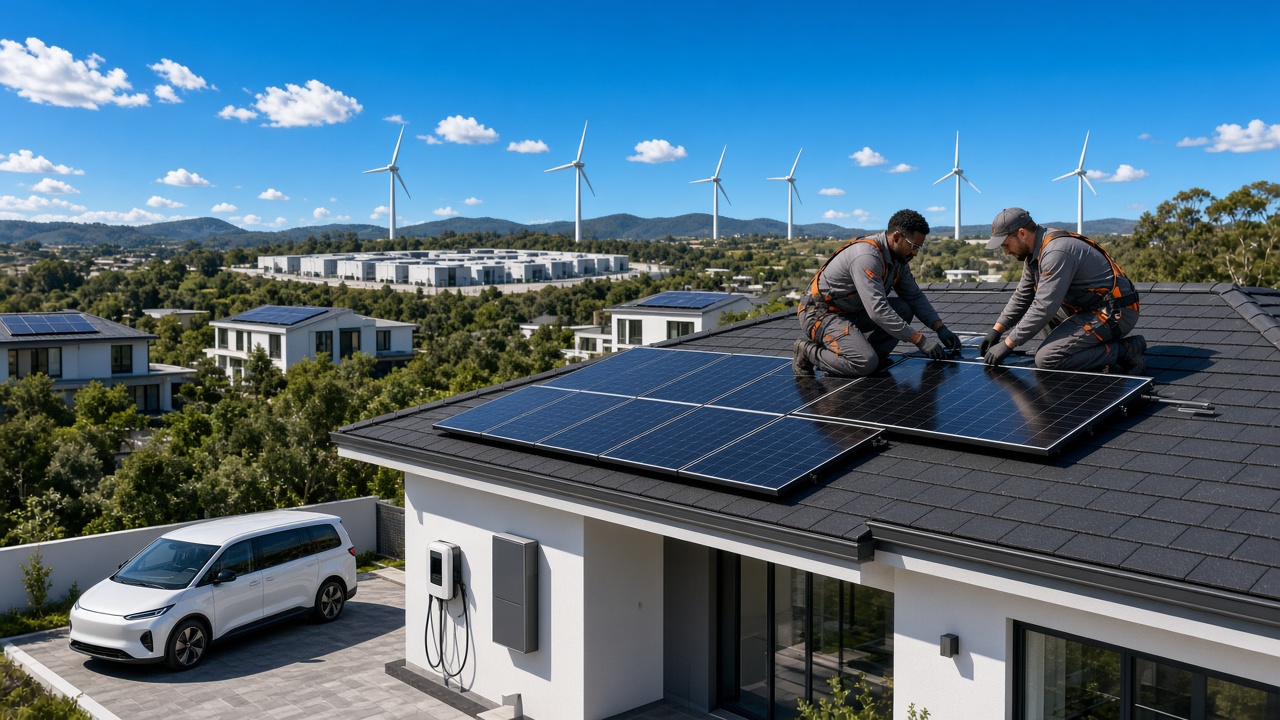
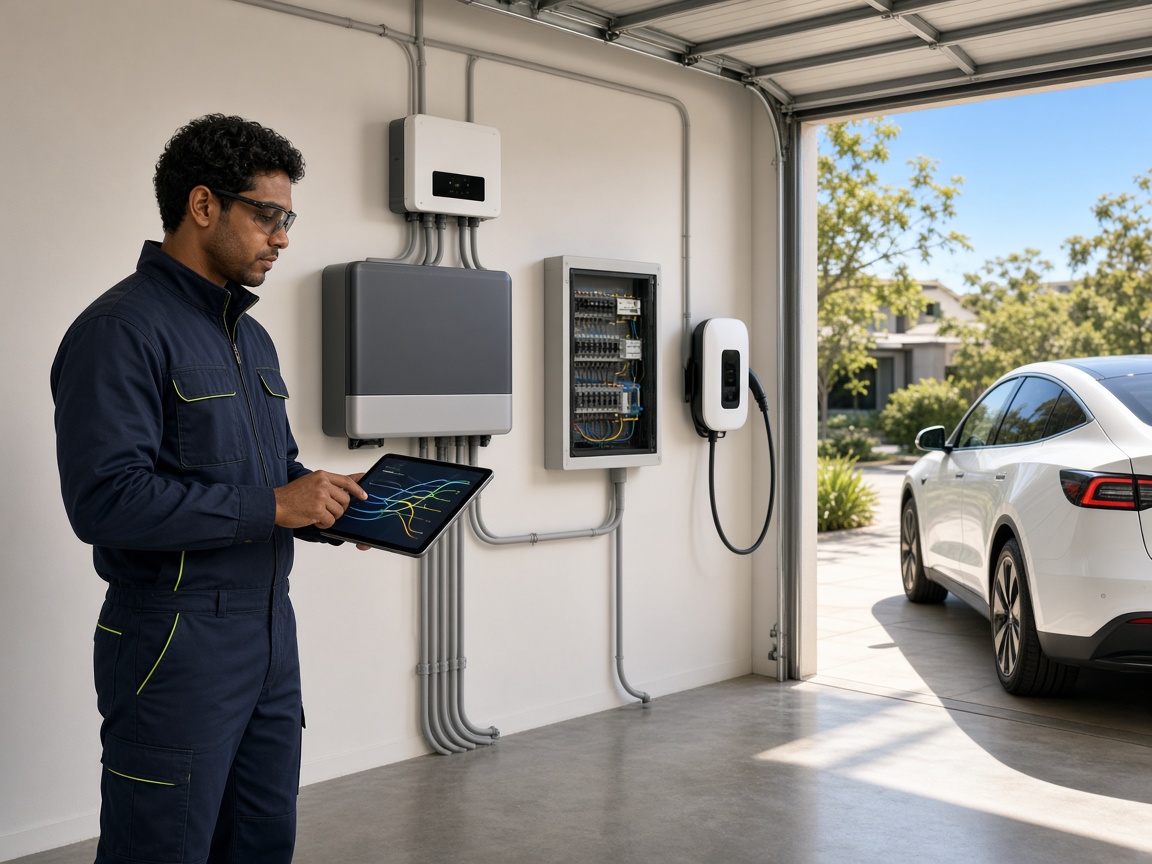
At its simplest, a solar and battery electrician designs, installs, commissions and services rooftop PV systems, home and business batteries, and increasingly the gear that connects them: hybrid inverters, smart meters, EV chargers and home energy management systems. In practice, a typical week looks something like this:
- Site assessments and design: checking the switchboard, roof, shading and the customer's load profile, then sizing panels, inverter and battery so the system actually suits how the household uses power.
- Installation: mounting arrays, running DC and AC cabling, fitting isolators and protection, and installing battery cabinets in a compliant location.
- Switchboard work: often the hidden part of the job. Many older boards need an upgrade before a battery can go in.
- Commissioning and grid connection: configuring the inverter, setting export limits, proving it all communicates with the network, and lodging the paperwork with the distributor and regulators.
- Service and fault-finding: firmware updates, monitoring alerts, warranty swaps and getting systems from the last decade back online.
- Customer education: walking people through the app so they actually get the savings they paid for.
That commissioning step has changed a lot in the past few weeks, and I think it's where good sparkies now earn their premium.
November 2026: the job just got smarter
In Victoria, from 1 November 2026, every solar inverter installed has to comply with CSIP-AUS 1.2 (SA TS 5573:2025), the national standard that lets inverters and other distributed energy resources talk to the network. CitiPower and Powercor say that also applies to batteries and vehicle-to-grid EV chargers that may be subject to network control for emergency backstop or flexible exports. They also note that many existing inverter models may get there with a firmware update, so check with the manufacturer before you rip anything out.
In New South Wales, the CER Installer Portal went live from 2 November for Endeavour Energy and Essential Energy customers, with Ausgrid following from 23 November. Endeavour says flexible exports are becoming the default for eligible new and upgraded systems, letting customers export up to 10 kW per phase most of the time, compared with 1.5 kW on the fixed plan. I covered the portal in detail in our NSW installer portal explainer.
Put those together and the message is clear. A solar and battery install is now a connected-device job as much as a wiring job. The sparkies who are comfortable with inverter firmware, network communications, export settings and customer Wi-Fi are the ones customers will ask for by name.
What does it pay? Real numbers from live ads
I don't like vague salary ranges, so I went through the solar electrician ads running on SEEK in Melbourne this week. There were 231 listings when I checked. A snapshot of what employers are advertising:
- A-grade solar and battery electrician (SAA accredited): $140,000 to $160,000 a year (Solar Revolution, Lynbrook), and $130,000 to $160,000 a year (Variety Solar)
- Hourly A-grade roles: $65 to $85 an hour, pitched as $130K to $160K OTE (Advantage Solar), and $55 to $65 an hour plus super, van, RDOs and paid overtime (Solargenic)
- Lead service technician: $50 an hour plus super, vehicle and a monthly RDO, with SAA accreditation fully funded (Jet Solar, Rowville)
- Subcontract solar sparky: $80 to $90 an hour (CTS Group)
- Installation manager: $130,000 to $150,000 with a sign-on bonus and take-home vehicle
- Solar installer (non-lead): $80,000 to $95,000 a year
- Third-year solar electrical apprentice: $55,000 to $75,000 a year (Advantage Solar)
- Trade assistant on a solar crew: $35 to $45 an hour
Training provider CET puts the general range for solar-accredited electricians at $90,000 to $150,000+, depending on experience, region and project size. That lines up with what I'm seeing. Melbourne is one market, so regional and other state rates will vary, but the pattern is consistent: SAA accreditation plus battery experience adds a real premium over a general A-grade rate. Vans, fuel cards and bonuses are standard extras, not perks.
How to become a solar and battery electrician in Australia
The pathway is very clear, which is part of why I like this role for younger sparkies.
1. Get your electrical licence. You'll need an unrestricted electrical licence. If you're not there yet, our guide on how to get your electrical licence in Australia walks through it. Plenty of solar firms take apprentices, as the ads above show, so you can get solar exposure while you train.
2. Do the post-trade training. Solar Accreditation Australia (SAA) runs the accreditation scheme. There are three main accreditation types: Grid-Connect PV, Grid-Connected Battery Systems (GCBS) and Stand-Alone Power Systems. Each needs specific units of competency from an RTO, and SAA wants the Statement of Attainment dated within two years of your application.
3. Apply and pass the exam. SAA says applications take about 3 to 5 business days to process. After that you complete the accreditation agreement, the code of conduct, the mandatory modules (including two battery courses for GCBS) and a 90-minute accreditation exam in its CPD Hub. You'll also need a current public liability certificate of currency.
4. Know the sign-off rules. Accredited installers can't sign off more than two installations a day, solar or battery. There's an exemption for up to ten a day when you're installing in stages at one site, like an apartment block or retirement village. That rule matters for how you plan your week and how employers structure crews.
One thing to note: GCBS accreditation is what lets you take part in the Cheaper Home Batteries Program and create STCs, so if batteries are where you want to work, it isn't optional.
And in New Zealand?
There's no SAA-style accreditation scheme across the Tasman. You need to be a registered and licensed electrician, and you work to the cited standards. That's especially timely right now, because NZ's transition to the newly cited standards, including AS/NZS 5033:2021 for PV and AS/NZS 4777.1:2024 for grid-connected generation, finishes on 12 November. I've written up what NZ sparkies need to do before the Wiring Rules deadline. The skills are almost identical on both sides of the ditch, which makes this one of the most portable specialisations in the trade.
Where the career goes next
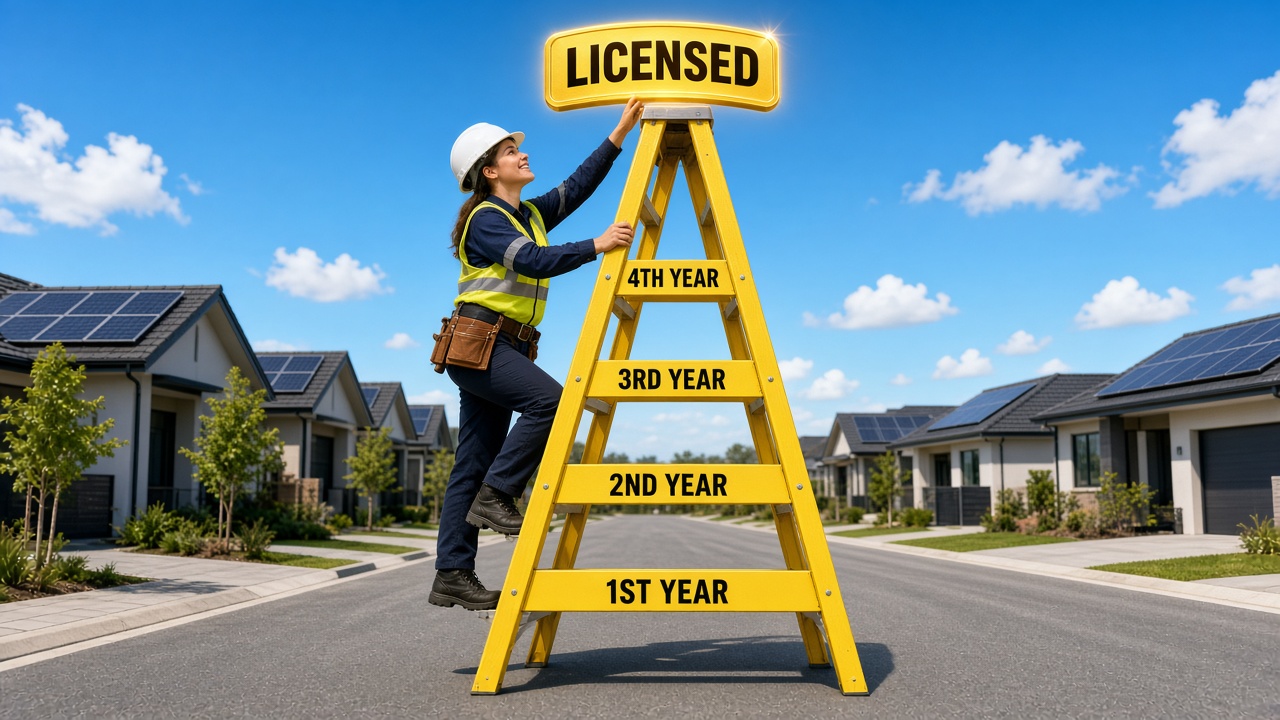
The thing I love about this role is that it has a ladder, and it's not just "install more panels".
- Commercial and industrial solar. With the SRES cap lifted from 100 kW to 1 MW, pv magazine reports the industry expects a lot of small to medium commercial projects to open up. Bigger systems mean bigger switchboards, three-phase work and more design responsibility. I covered the rules in our mid-scale commercial solar post.
- Grid-scale batteries. Rystad Energy's David Dixon told Renew Economy the NEM's utility battery fleet is on track to grow from about 26 GWh to almost 60 GWh by the end of 2028, based on projects already at financial close or under construction. Residential battery experience is a great stepping stone into commissioning roles on those sites.
- Design, estimating and team leadership. Installation manager and design roles pay well and get you off the roof more often.
- Running your own business. Plenty of the best solar businesses in Australia were started by one sparky with a ute and a good reputation.
My advice if you're weighing it up
If you're an A-grade electrician who likes tech, likes dealing with people and wants work that keeps getting more interesting, this is one of the best moves you can make in 2026. Get your GCPV and GCBS accreditation, make friends with inverter firmware and network portals, and treat every install as a chance to impress a customer who'll tell their neighbours about you.
If you're an apprentice, look for a solar firm that will put you on batteries and commissioning, not just carrying panels. That experience compounds fast. And if you're an employer, the ads show where the market is: funded accreditation, vans, RDOs and clear progression win the good people.
Ready to have a look? Browse the latest solar, battery and electrical jobs on ElectricalRoles across Australia and New Zealand.