
Hazardous Area Electrician: What They Do, EEHA Pay and Pathways
Hazardous area electrician guide for Australia and NZ: what EEHA electricians do, real pay from current LNG and gas ads, the tickets you need and who's hiring.
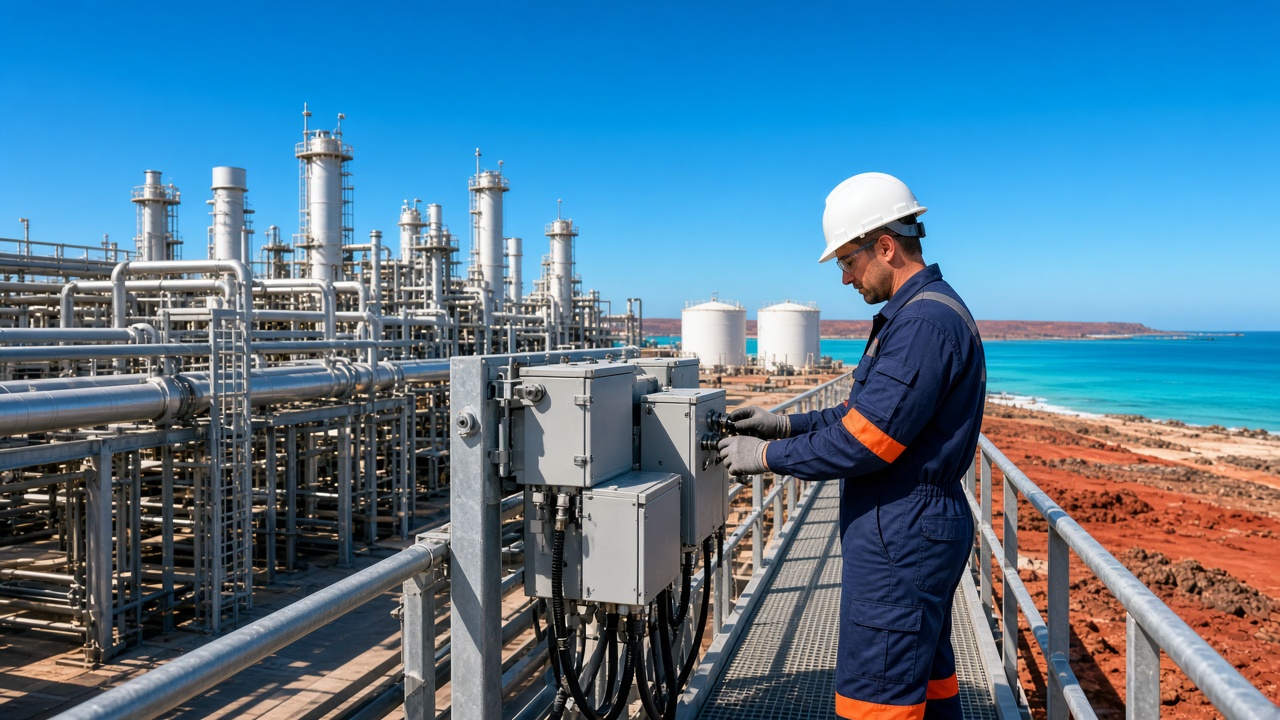
Quick answer: a hazardous area electrician is a licensed electrician who installs, inspects and maintains electrical equipment in places where flammable gas, vapour or combustible dust could be in the air, such as LNG plants, gas fields, fuel depots, mines and grain handling sites. In Australia you add the post-trade UEE42622 Certificate IV in Hazardous Areas – Electrical (the "EEHA" ticket) to your licence; in New Zealand you apply for the EWRB's Electrician (Endorsed Hazardous Areas) registration. Current FIFO ads for EEHA electricians on LNG projects advertise base rates of around $58 to $60 an hour before penalties and allowances.
Some of the best-paid electrical work in Australia happens in places where a single spark in the wrong spot simply isn't allowed. LNG plants, gas compressor stations, fuel depots, chemical plants, grain handling, underground coal. The electricians who work there carry one extra qualification that changes their career: EEHA, short for Electrical Equipment in Hazardous Areas.
This is the next instalment of our "what does a ___ do" series, and I think hazardous area work is one of the smartest upgrades a licensed sparky can make. It's precise, it's respected, it pays, and there's a serious amount of it on offer right now.
What a hazardous area electrician actually does
A hazardous area is anywhere flammable gases, vapours or combustible dusts could be present in the air. In those zones, ordinary electrical gear can become an ignition source, so everything has to be selected, installed and maintained to explosion-protection standards (the AS/NZS 60079 series).
Day to day, that means:
- Installing Ex-rated equipment. Motors, lighting, junction boxes, instruments and control stations certified for the zone they're going into, whether that's flameproof (Ex d), increased safety (Ex e), intrinsically safe (Ex i) or another protection technique.
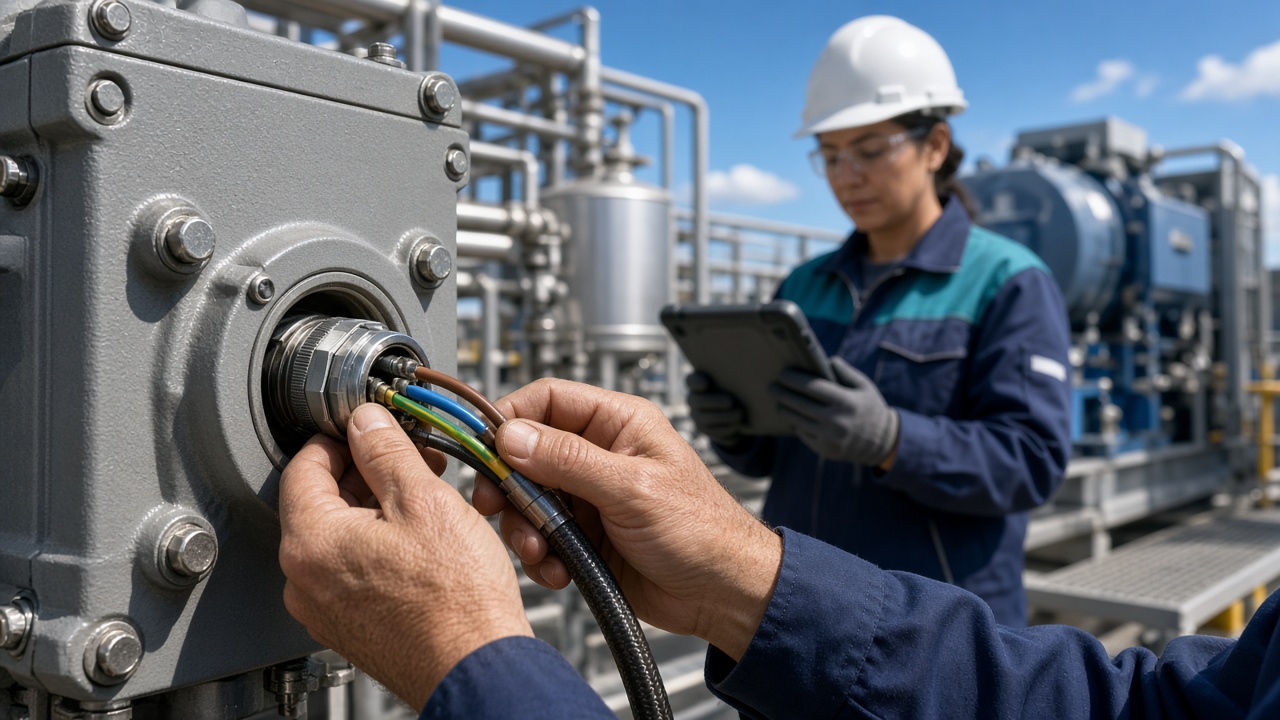
- Cable glanding and terminations done perfectly. Selecting the right gland for the cable and the equipment, and terminating it so the protection technique still works. In hazardous areas, glanding is a craft.
- Inspections and documentation. Detailed inspections of existing equipment, logging defects, and keeping the hazardous area dossier and inspection records up to date. You'll hear the terms detailed, close and visual inspections a lot.
- Maintenance and fault-finding. Keeping pumps, VSDs, motors, emergency systems and control circuits running safely in live plants.
- Big construction scopes. On major projects, it's heavy industrial work: MCC rooms, switch rooms, cable ladder, HV and mains cable pulls, and motor and isolator upgrades, all inside classified zones.
Current job ads paint the picture well. A Techforce ad for 24 EEHA electricians on a brownfields LNG scope lists new MCC rooms and switch rooms, cable tray and ladder, HV and mains cabling, compressors, motor and isolator upgrades, and "terminations and glanding in HA areas". That scope is said to run well into the back end of 2027.
On the maintenance side, Downer is advertising for a Hazardous Area Electrician across Origin Energy facilities in Queensland's Darling Downs gas fields. The work covers hazardous area installations, including VSDs, pumps, motors, emergency and control circuits, hazardous area inspection reports and electrical testing, on an 18/10 FIFO roster with two weekends home a month.
Where the work is right now
Hazardous area skills used to be thought of as "an oil and gas thing". It's broader than that, and that's what makes it such a good career insurance policy.
LNG in the Pilbara. Monadelphous is hiring EEHA electricians for its Pluto Train 1 Modification Project in Karratha, doing electrical, instrumentation and commissioning work to modify a live LNG plant so it can process Scarborough gas. It's a 2/1 FIFO/DIDO roster with a project completion bonus, and points of hire across Australian capital and regional cities.
Big industrial builds. Clough (part of Webuild) lists EEHA as mandatory for electricians on Project Ceres, the Perdaman urea plant in Karratha, which it describes as the largest in Australia and expects to create 2,000 jobs during construction.
Queensland gas. CrewSELECT has been recruiting hazardous area electricians for a gas compressor station build in Miles on a 2:1 roster with camp and meals, covering power and control cabling, HV terminations, fibre and commissioning.
Fuel and defence infrastructure. UGL is advertising a Maintenance Electrician – Hazardous Areas role based in Robina, maintaining fuel storage and fuel transfer systems for the Defence fuel network. It's a 38-hour week with an early finish on Fridays, optional travel to places like Weipa, and support to gain your EEHA if you don't already have it. I love that one, because it shows you don't need to go FIFO to build hazardous area experience.
And beyond those ads, hazardous areas turn up in wastewater treatment, chemical and fuel terminals, flour mills and grain silos (dust is a hazard too), mining and processing plants. Wherever there's a flammable atmosphere, there's a need for EEHA-competent electricians.
What it pays
Honest answer first: hazardous area pay depends on whether you're on a construction project, a maintenance contract or a permanent operator role, and on the roster. But the current ads give a useful picture:
- Brownfields LNG, Karratha: an Energised ad on FIFOWorks offers a $59.71/hr base plus penalties, a $5.40/hr site allowance, a project completion bonus and redundancy accrual on a 2/1 roster. FIFOWorks estimates that works out to roughly $91/hr on average once overtime, weekend rates and allowances are included. That's their modelled figure, not a guaranteed rate, but it shows how quickly a FIFO package stacks up.
- LNG construction via Techforce: a $58.02/hr base plus penalties, electrical and site allowances, a project completion bonus and redundancy, on 11.5 paid hours Monday to Friday and 12 on weekends.
- Gas compressor station, Miles QLD: CrewSELECT advertised an $84.53/hr flat rate on a 2:1 roster with camp accommodation and meals.
Compare those with a typical metro commercial rate and you can see why so many sparkies make the jump. The usual caveat applies: always compare the full package (base, allowances, completion bonus, overtime, super and roster) rather than the headline hourly rate.
Tickets and pathways in Australia
Start with your trade and licence. Every role above needs a full electrical licence in the state you're working in (a WA licence for the Pilbara jobs, a QLD licence for Darling Downs and Miles). If you're still getting there, our guide to getting your electrical licence in Australia walks through it.
Then get your EEHA. The current national qualification is the UEE42622 Certificate IV in Hazardous Areas – Electrical, a post-trade qualification for licensed electricians. Jobs and Skills WA describes it as covering the selection, installation, commissioning, maintenance and testing of explosion-protected equipment across gas and dust environments. It's delivered by registered training organisations, with WA providers in Perth, the Pilbara, the Goldfields and the South West.
Keep it current. This is the bit people miss. Employers want recent competency. Monadelphous asks for EEHA "within 2 years", Downer asks for certification "within 5 years", and Techforce says "within 5 years essential or willing to refresh". Training providers such as PMV note that AS/NZS 60079.14 expects ongoing training without setting a fixed interval, and that many employers look for a refresher every two to three years. My advice: treat your EEHA like a living ticket, not a certificate in a drawer.
Add the supporting tickets. The same ads keep asking for:
- LVR and CPR (often within the last year)
- Provide First Aid
- Gas Test Atmosphere (GTA)
- Construction White Card
- Working at heights, and an EWP high risk work licence for some roles
- Confined space entry (often desirable)
- A driver's licence and the ability to pass a pre-employment medical, including drug and alcohol testing
Having these sorted before you apply makes you much easier to mobilise, and on FIFO projects that hire in waves, "ready to go" often beats "slightly more experienced".
Tickets and pathways in New Zealand
New Zealand handles this through registration. The Electrical Workers Registration Board has an Electrician (Endorsed Hazardous Areas) class. To get it, you need:
- At least two years registered as an Electrician with the EWRB
- At least two years of practical experience doing an electrician's prescribed electrical work
- At least one year (2,000 hours) of practical experience in a hazardous area, or similar experience the Board accepts
- Proof of the knowledge and skills, either through a reference from a supervising employer or licensed worker, or by completing the New Zealand Certificate in Electrical Equipment in Explosive Atmospheres (Level 4)
It's a clear, structured pathway, and it's worth knowing about if you're an Aussie EEHA electrician thinking about a move across the Tasman, or a Kiwi looking at Australian FIFO work.
Is it right for you?
Hazardous area work suits electricians who:
- Love precision. A gland that's nearly right is wrong. If you take pride in neat, correct work, you'll fit right in.
- Like paperwork that means something. Inspection records and dossiers are how a plant proves it's safe. Good documentation is part of the craft.
- Enjoy industrial environments. Big plant, big motors, big cable. If you like heavy industrial work, this is home.
- Are open to rosters. Not every role is FIFO, but many of the highest-paying ones are.
It's also a natural fit if you're already in instrumentation or maintenance. If that's you, read our guides to the instrumentation electrician and maintenance electrician roles, because EEHA turns up in both. If the FIFO side appeals, our FIFO mining electrician guide covers rosters and site life, and the commissioning electrician guide is worth a read too, because so much hazardous area construction work finishes in commissioning.
How I'd break in
- Get your licence and a couple of years of solid industrial experience. Most employers want at least two years of construction or plant work.
- Do the Cert IV in Hazardous Areas early. Even before you land a hazardous area job, having a current EEHA puts you in a different pile of CVs.
- Look for "we'll support your EEHA" roles. Employers like UGL are offering support to gain the qualification. That's a brilliant way in.
- Stack your site tickets. LVR/CPR, first aid, GTA, White Card and heights, all current, all on your CV.
- Start on a brownfields or maintenance crew. Working in a live plant teaches you more about hazardous areas than any classroom.
- Keep refreshing. Book your refresher before it lapses, and keep learning as standards and equipment change.
I'm really optimistic about this corner of the trade. The energy system is changing fast, but fuel terminals, gas plants, processing facilities and industrial sites all need safe, compliant electrical work, and that need isn't going away any time soon. Hazardous area skills travel well between industries and between countries, and they pay well while you build them.
If it sounds like your kind of work, browse the latest hazardous area and industrial electrical jobs on ElectricalRoles.com.au and set up an alert so the next EEHA role comes straight to you.