
What Does an Instrumentation Electrician Do? E&I Pay and Pathways
What E&I and I&C technicians actually do, what they earn, the dual-trade tickets you need in Australia and the NZ route into instrumentation careers.
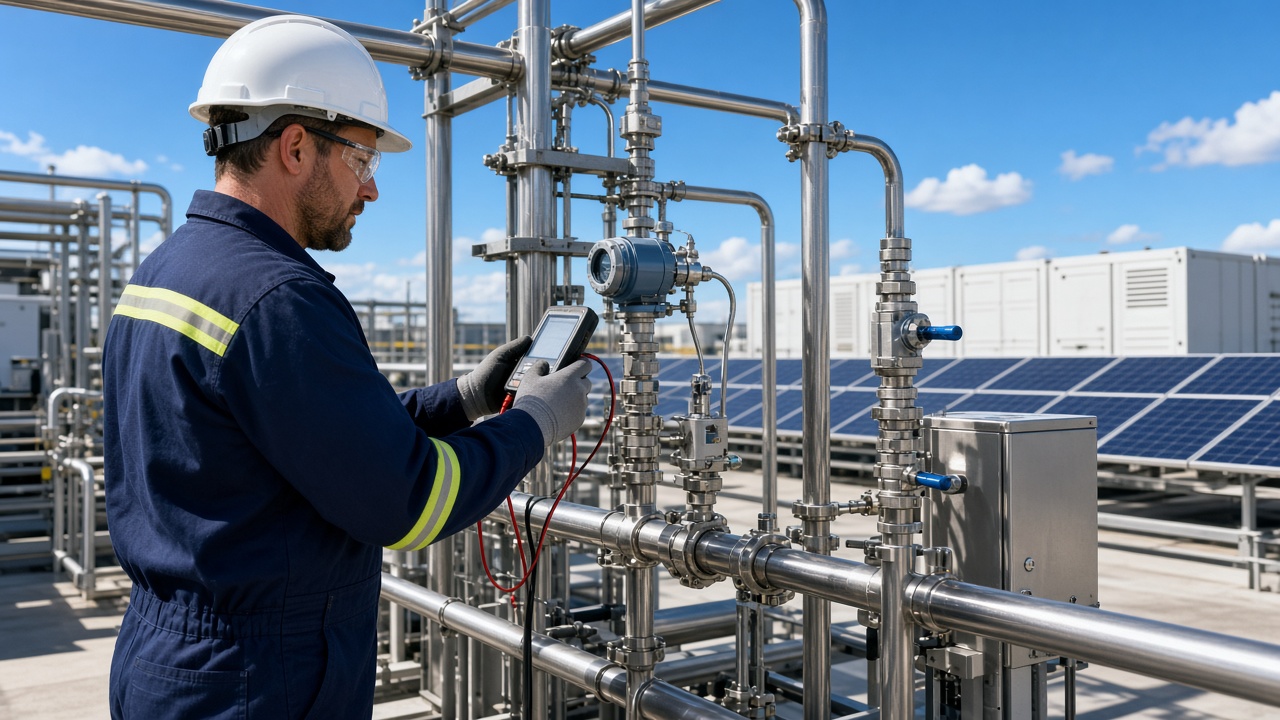
Walk into any power station, mine, water treatment plant, gas facility or food factory in Australia or New Zealand and you'll find thousands of small devices quietly running the show. Pressure transmitters, flow meters, level sensors, temperature probes, control valves and analysers all feed data into PLCs and control systems that keep the plant safe and making money. The people who install, calibrate and fault-find all of that are instrumentation electricians, usually called E&I (electrical and instrumentation) technicians or I&C (instrumentation and control) technicians.
It's one of my favourite roles in the whole electrical world, because it sits right where the trade meets technology. You need the hands of a sparky and the head of a process engineer. And as plants get more automated and more data-driven, I think it's one of the most future-proof careers a young electrician can choose.
This is the next instalment of our "what each electrical role does" series, after the data centre electrician, substation electrician, FIFO mining electrician and lineworker. Here's what the job involves, what it pays, the qualifications you need on both sides of the Tasman, and how to get there.
What an instrumentation electrician actually does
An electrician makes sure power gets where it needs to go safely. An instrumentation tech makes sure the plant knows what's happening and can react to it. In a typical week you might:
- Calibrate field instruments, checking a pressure or flow transmitter against a reference standard and recording the "as found" and "as left" results.
- Fault-find control loops, tracing why a tank level reading is drifting or why a valve won't respond, from the field device through the cabling and I/O to the PLC.
- Maintain control valves and actuators, including the pneumatic side, which is often where a sparky's comfort zone ends.
- Test alarms and safety trips so that when something goes wrong, the plant shuts down the way it was designed to.
- Read loop drawings, P&IDs and cause-and-effect documents, which become your second language.
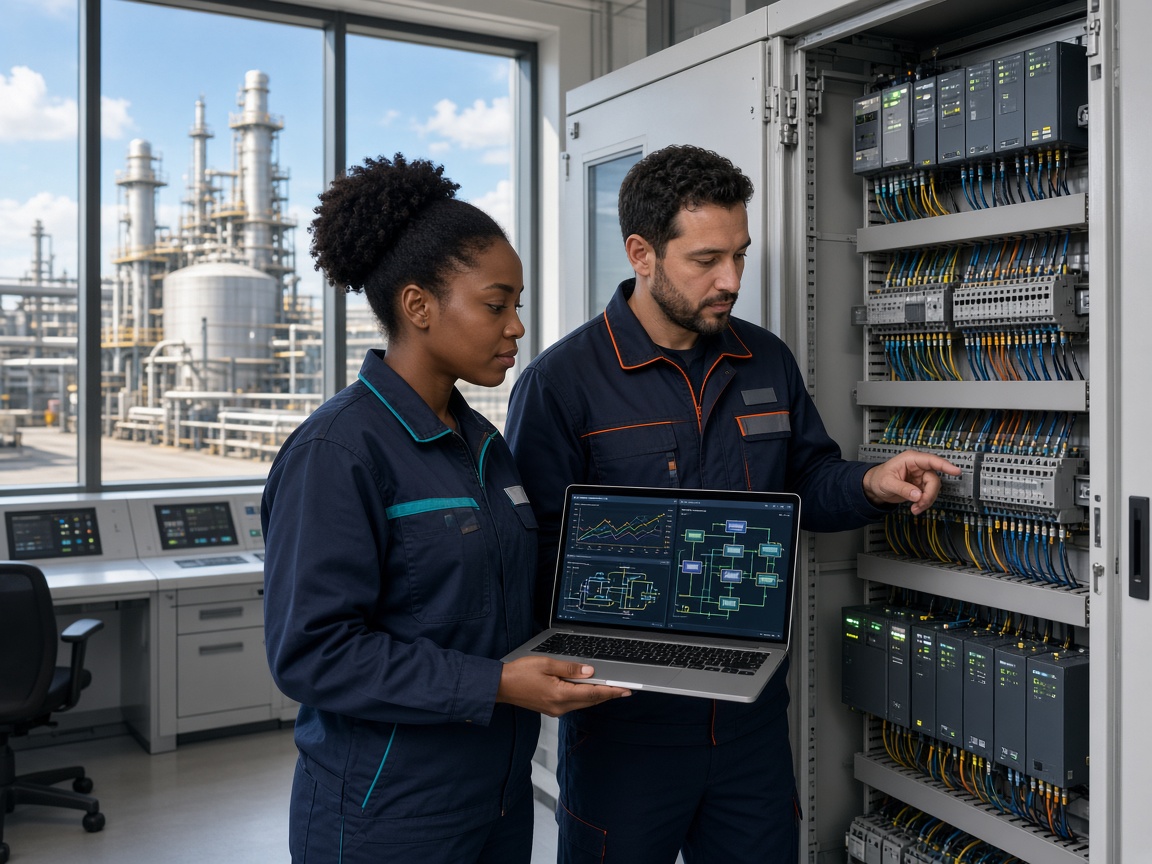
- Work on PLCs, HMIs and industrial networks, from changing a setpoint to diagnosing a comms fault.
The FIFO Hub's E&I technician guide sums up the core duties in a similar way: calibrate instruments, fault-find electrical and control loops, maintain actuators and control valves, test alarms and trips, read loop drawings, and keep calibration and defect records. That last one matters more than people think. In regulated industries, if it isn't documented, it didn't happen.
Because most E&I techs are also licensed electricians, the job usually includes general electrical maintenance too: motors, variable speed drives, switchboards, lighting and isolations.
A real example: what employers are asking for right now
To make this concrete, look at a role listed on our board in early November 2026. Stanwell, the Queensland Government-owned energy business, is hiring an Instrumentation and Control Technician at Tarong Power Station near Kingaroy. The job involves routine maintenance and calibration of process instrumentation, complex fault-finding, supporting the electrical and mechanical teams and mentoring electrical and I&C apprentices.
What they want is a good snapshot of the standard E&I profile: a QLD electrical licence, electrical trade certification, a Certificate III in Instrumentation and Control, and heavy industry experience. The benefits list includes weekly pay, 12.75 per cent super, an annual incentive and a Monday-to-Thursday four-day week. Applications for that role close at 11:55pm on 4 November 2026. If you've missed it, don't worry: new E&I and I&C roles come up regularly, so check the latest instrumentation and electrical jobs.
That combination of licence plus instrumentation ticket is what employers mean when they say "dual trade", and it's the key to the better-paid roles.
What instrumentation electricians earn
Pay varies a lot depending on industry, roster and whether you're permanent or on a project. The FIFO Hub's rate guide (dated 28 September 2026) puts indicative annual cash for E&I technicians at $135,000 to $190,000 gross, generally before super, in the resources sector. It quotes indicative hourly ranges of $72 to $92 for day and project work and $85 to $105 for night or campaign work. Those are broad comparisons, not award minimums, and the guide itself warns they're not an offer.
The site also lists controls technician roles, a natural next step, at around $140,000 to $200,000.
My advice on pay is the same as I give every sparky: when you compare offers, ask whether the number is base salary, total cash or a package that includes super. Ask which roster and point of hire it assumes, and how overtime, nights, allowances and travel are handled. A "$180k" FIFO job and a "$140k" residential job with a four-day week and no flights can be closer than they look once you factor in time at home.
Outside mining and oil and gas, pay is usually lower but the lifestyle is often better. Think power stations, water utilities, food and beverage plants, pharmaceuticals and, increasingly, large battery and data centre sites where building management and control systems are everywhere.
How to become an instrumentation electrician in Australia
There are two main routes.
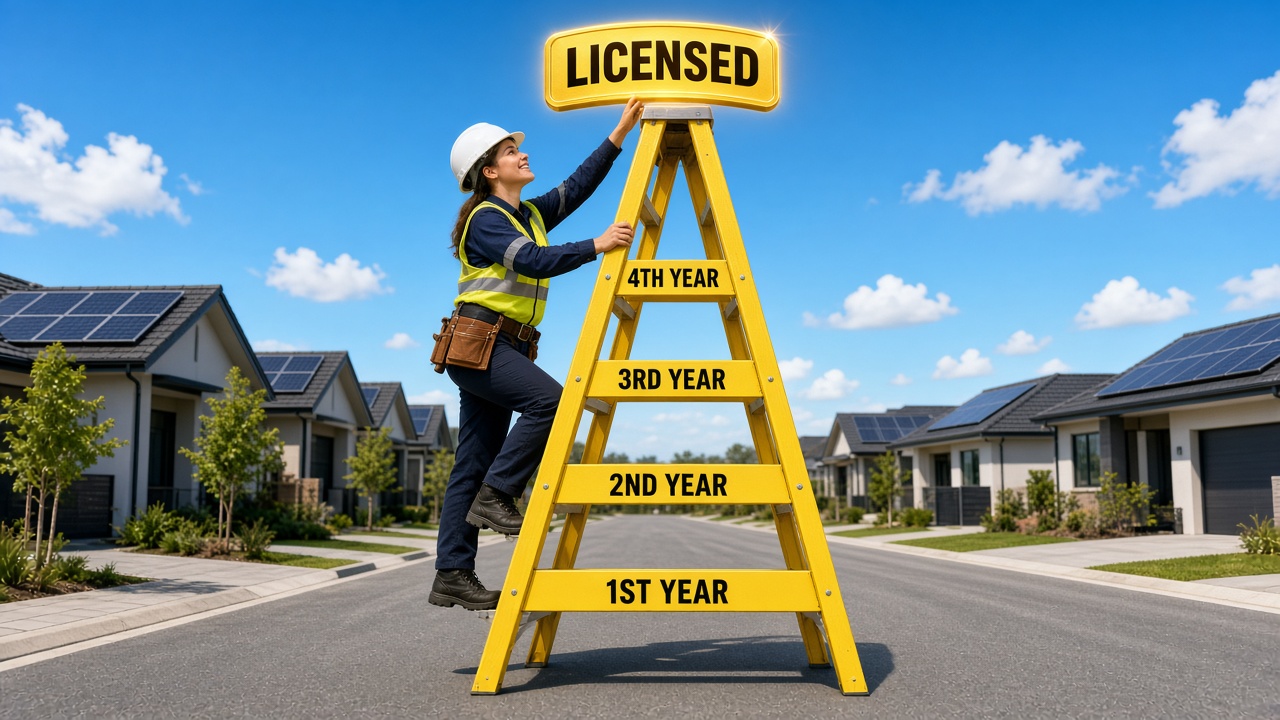
1. The dual-trade apprenticeship. Some employers and training providers offer a combined apprenticeship covering the electrician qualification and instrumentation. TAFE Queensland, for example, runs a dual award of the UEE30820 Certificate III in Electrotechnology Electrician and the UEE31225 Certificate III in Instrumentation and Control. It teaches standard electrical installation, testing and fault-finding alongside PLCs, control systems and industrial instrumentation. As with any apprenticeship, you need an employer first.
2. Electrician first, instrumentation second. Plenty of E&I techs qualify and get licensed as electricians, build experience on fixed plant, then add the instrumentation qualification. That's the path The FIFO Hub describes: qualify and licence in the core trade, build fixed-plant electrical depth, add formal instrumentation capability, then develop loop, PLC and process understanding.
It's worth knowing what the instrumentation qualification actually covers. According to training.gov.au, UEE31225 (which replaced UEE31220 in July 2025) includes core units on PLC programming, setting up PID and advanced PID control loops, configuring HMIs and industrial networks, and solving problems in pressure, flow, level and temperature measurement. Elective units include hazardous areas work, such as entering classified hazardous areas and installing and maintaining explosion-protected equipment.
My tip: if you're heading towards oil and gas, LNG, chemicals or mining, pick up hazardous areas competencies early. They're often the difference between getting a call back and not.
One important point. The instrumentation certificate on its own carries no licence. training.gov.au notes that no licensing requirements apply to it. If you're doing electrical work, you still need your state or territory electrical licence. With a national electrical licence model heading to treasurers in December, moving between states may get easier, but for now your licence is still state-based.
And in New Zealand?
New Zealand does it differently. The main qualification is the New Zealand Certificate in Industrial Measurement and Control (Practice) (Level 4), delivered on the job. EarnLearn launched a refreshed version in August 2026, built around new skill standards developed by Waihanga Ara Rau with industry. It typically takes about 14 months, 11 of the assessments are done on the job, and trainees enrolling from 1 September 2026 go into the new programme. EarnLearn says it's currently the only provider of the qualification.
It's aimed at manufacturing, food processing, utilities and infrastructure, which is a good reminder of where Kiwi I&C jobs actually are: dairy processing, water, energy and heavy industry. As in Australia, if your work strays into prescribed electrical work, you need the relevant electrical registration and practising licence as well.
Is it right for you?
You'll probably love E&I work if you enjoy puzzles more than repetition, you like knowing why something works rather than just that it works, and you're comfortable switching between a multimeter, a laptop and a calibrator in the same hour. It suits people who are methodical and keep good records.
It's less fun if you hate paperwork or want to see a finished job at the end of every day. A lot of the satisfaction comes from a fault solved or a plant that just runs, which is quieter than walking away from a finished switchboard.
Why I'm bullish on this role
Every big trend I talk about on this blog runs on instrumentation and control: the AI data centres going up across the country, grid-scale batteries, hydrogen and green metals pilots, water security projects and increasingly automated mines and factories. All of them need people who can make sensors, controllers and electrical systems work together safely. Automation doesn't remove the E&I tech. It makes them more important.
If you're an apprentice deciding where to specialise, or a licensed sparky who's feeling a bit bored, this is one of the smartest moves you can make. Start by talking to your employer about instrumentation training, then browse the latest instrumentation, E&I and electrical jobs across Australia and New Zealand. Employers looking for dual-trade talent can post roles there too.